A royal body represented in public
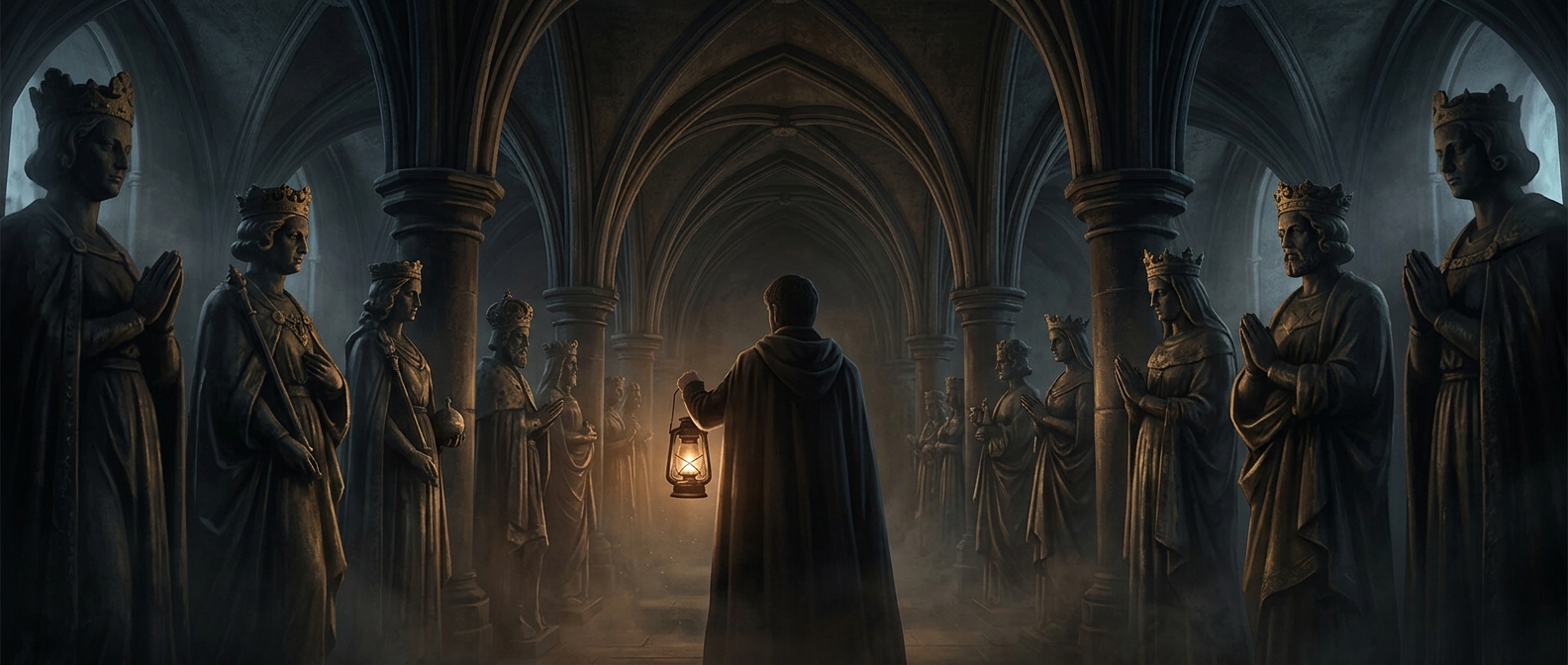
Before a royal funeral reached the abbey, the person being mourned could be represented by a lifelike figure carried above the coffin. These funeral effigies gave the procession a visible human presence: mourners could see a face and form where the deceased themselves could no longer appear. Made from materials including wood and wax, they were designed to look like people, not merely to mark a grave.
From ceremony to museum case
An effigy’s first purpose was ceremonial, but its survival created a second life. Once the funeral was over, the figure could be kept rather than discarded. Westminster Abbey’s collection preserves these objects outside the procession that gave them meaning, allowing visitors to examine them at close range.
That change in setting alters their effect. In a funeral, the figure stood for a sovereign in a public rite; behind glass, its still face can seem strangely present. The eerie quality comes partly from the effigy’s double role: it is both a crafted likeness and a surviving object from a ceremony of death.