How fire remade the French Quarter
The French Quarter’s name reflects its founding, not every building’s appearance. Two major fires—in 1788 and 1794—destroyed large parts of the city while New Orleans was under Spanish rule. Rebuilding gave Spanish officials a chance to replace vulnerable wooden structures with safer construction, and it left the neighborhood with a distinctly different look.
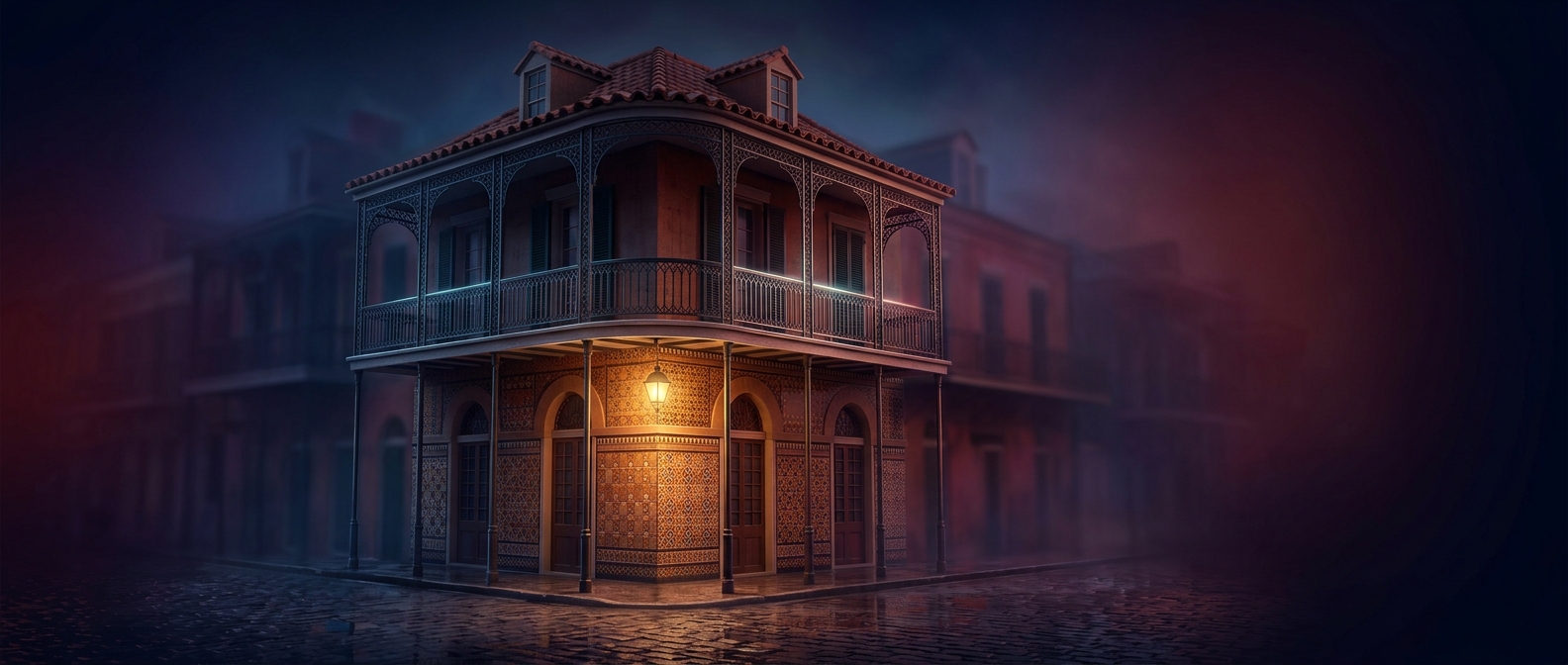
Brick walls, stucco finishes and tile roofs helped make buildings less likely to burn as easily as their wooden predecessors. The broad galleries and wrought-iron balconies that came to define many street fronts also suited a hot, humid climate: they offered shade and airflow while extending living space toward the street.
A Spanish-era look, built for New Orleans
The result was not a simple copy of buildings in Spain. New Orleans builders adapted Spanish colonial forms to local weather, materials and Creole ways of life. Balconies, for example, could overlook the street, while homes often opened inward onto courtyards that provided a more private, shaded retreat. Brightly painted façades add another layer to the Quarter’s appearance, making its streets feel lively even where the underlying walls are masonry.
That mix is why the French Quarter can look Spanish without ceasing to be French Creole. The fires changed what could be built; Spanish-era rebuilding shaped how it was built. A walk past an iron balcony or stucco wall is, in effect, a glimpse of a city adapting its architecture to both disaster and climate.