A museum planned for a different purpose
The Prado’s story begins not as an art museum but as a project for science. In the late 18th century, architect Juan de Villanueva designed the building in Madrid to house a Natural History Cabinet. Its broad, unfinished galleries were meant to serve a public institution, but construction was still incomplete when war disrupted the project.
From galleries to military quarters
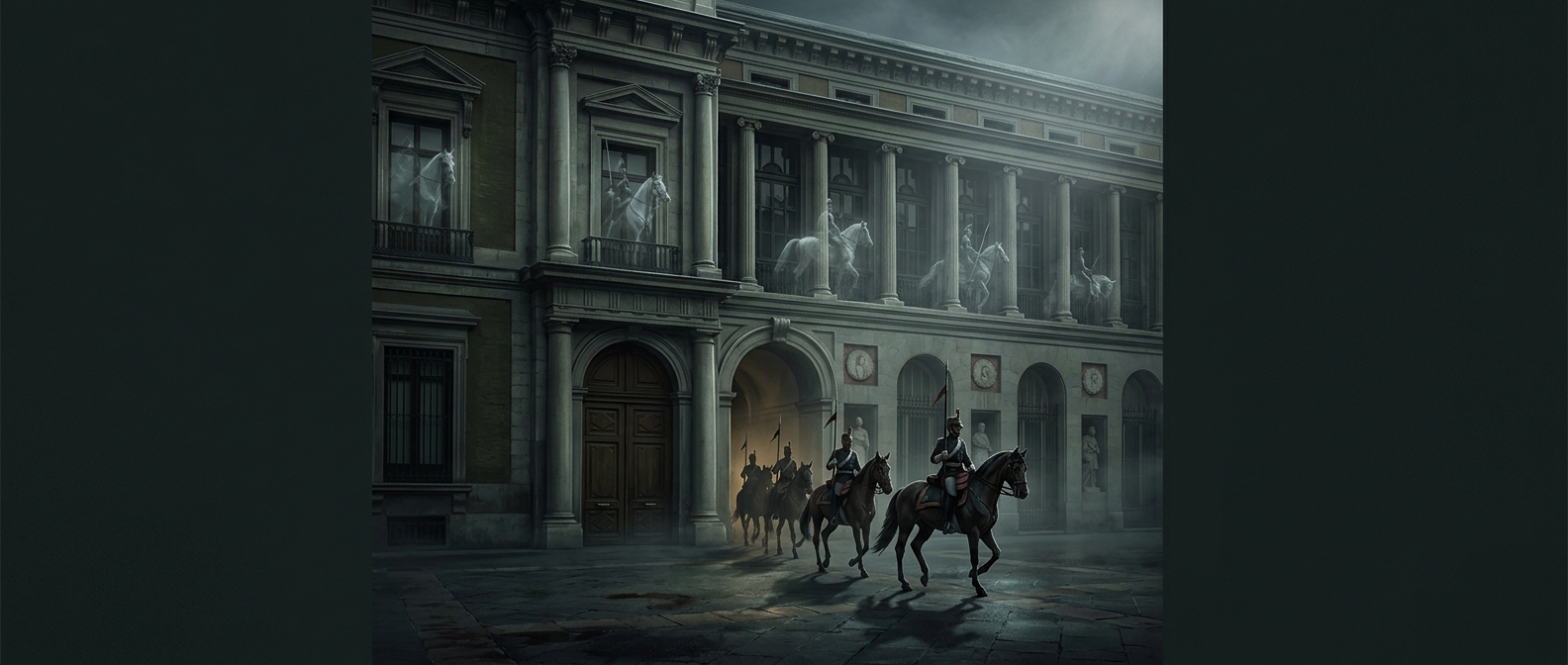
During the occupations, troops put the unfinished spaces to practical use: horses were stabled inside, and weapons were stored there. The change was more than a strange footnote. A building with large open rooms and no completed museum operations could be adapted to the immediate needs of an army—while the institution it had been designed for waited.
After the conflict, the building’s role shifted again. It opened in 1819 as the Royal Museum of Paintings, the institution that became the Prado. The contrast is striking: rooms intended for scientific collections, then used for military logistics, ultimately became galleries for one of the world’s major art collections. The Prado’s walls had to outlast the war before they could fulfill a very different public purpose.