A private route beneath the grounds
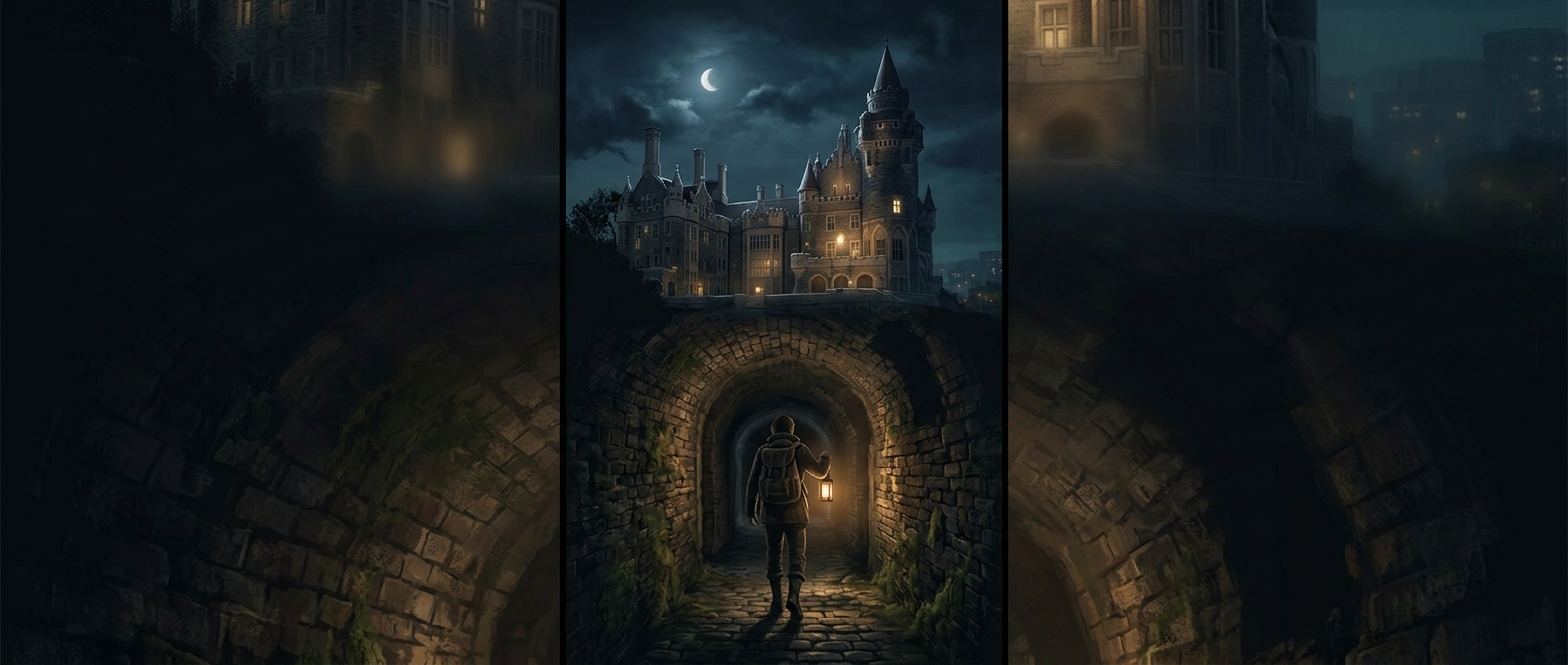
The tunnel’s significance lies in the connection it creates: the main residence and the hunting lodge were separate buildings, but residents could move between them underground. Instead of treating the grounds as an open-air walk, the passage made the two destinations part of a sheltered route.
That would have mattered in a Canadian setting, where snow, rain, and bitter cold can make even a short walk uncomfortable. The tunnel also offered a more private way to travel than crossing the grounds in view of others. Those are practical advantages of the design, though they do not, by themselves, establish why it was built.
A change in how the estate worked
A passage hundreds of feet long is more than a shortcut: it makes the lodge feel like an extension of the residence while preserving the distance between the buildings above ground. For visitors, the contrast is part of the appeal. A landscape that appears to separate the two structures conceals a direct link underneath.