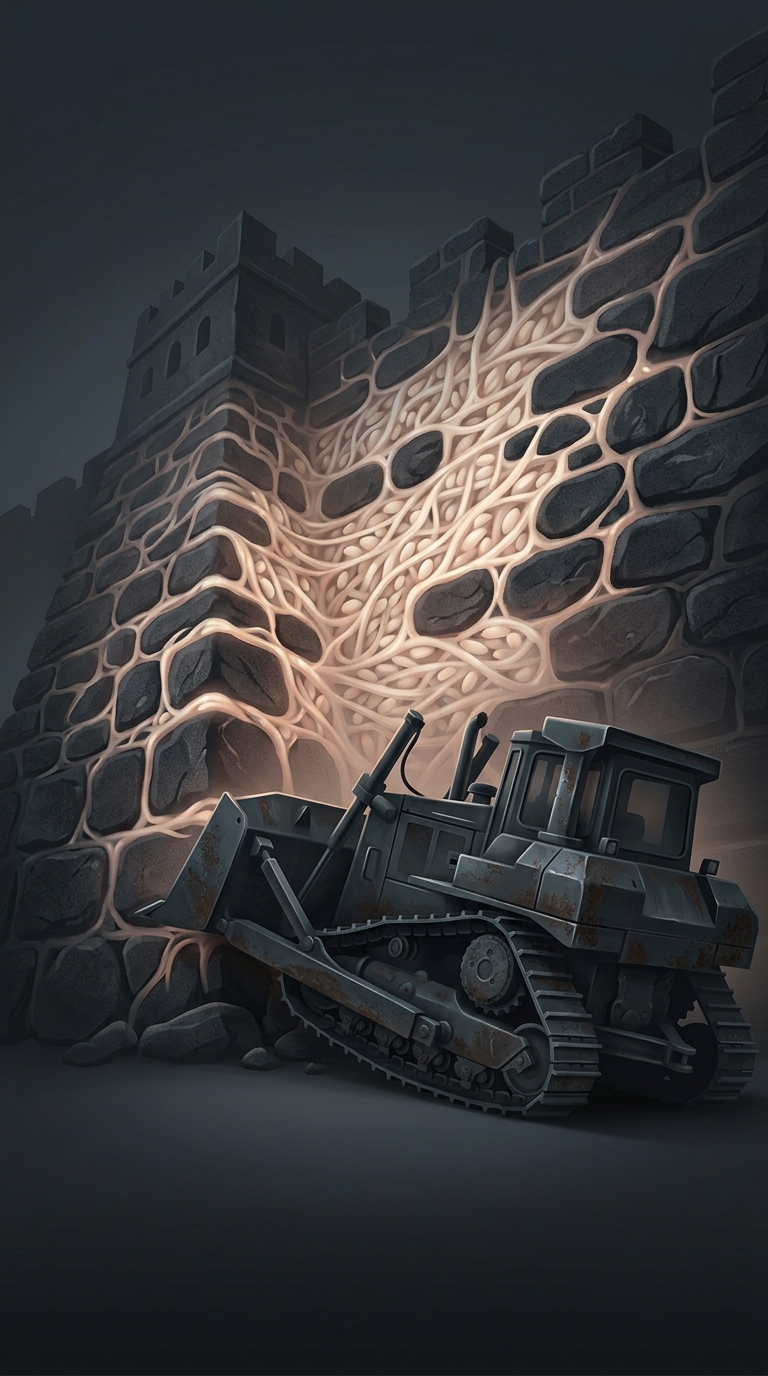
Why rice made Ming mortar tougher
Ming builders did not add rice to every stretch of the Great Wall. The technique was used in some construction and repair work, where a mixture of lime and sticky rice helped bind masonry. Its advantage came from combining two materials that behave differently: lime hardens into a mineral binder, while sticky rice contributes starch that changes how the mortar sets and holds together.
From soft paste to stone-like joint
Slaked lime is limestone that has been heated and then mixed with water. As lime mortar dries, it reacts with carbon dioxide in the air and gradually turns back into calcium carbonate—the same mineral found in limestone. That slow hardening lets the mortar fill gaps between stones and lock them into a continuous structure.
Sticky rice contains amylopectin, a starch that can interact with the lime’s mineral components. In effect, it helps make the hardened mortar denser and less prone to breaking down when exposed to water. The result is not simply “glue”: it is a composite material, with the rice starch reinforcing a mineral matrix.
A repair material built to last
That durability mattered in a wall exposed to rain, temperature changes, and shifting ground. Strong joints helped keep stones in place over time, although the wall’s survival also depends on its masonry, terrain, maintenance, and local weather. The rice-lime method is a reminder that builders could improve a basic material through practical experimentation long before modern materials science gave the process a name.