A wall built from whatever the landscape offered
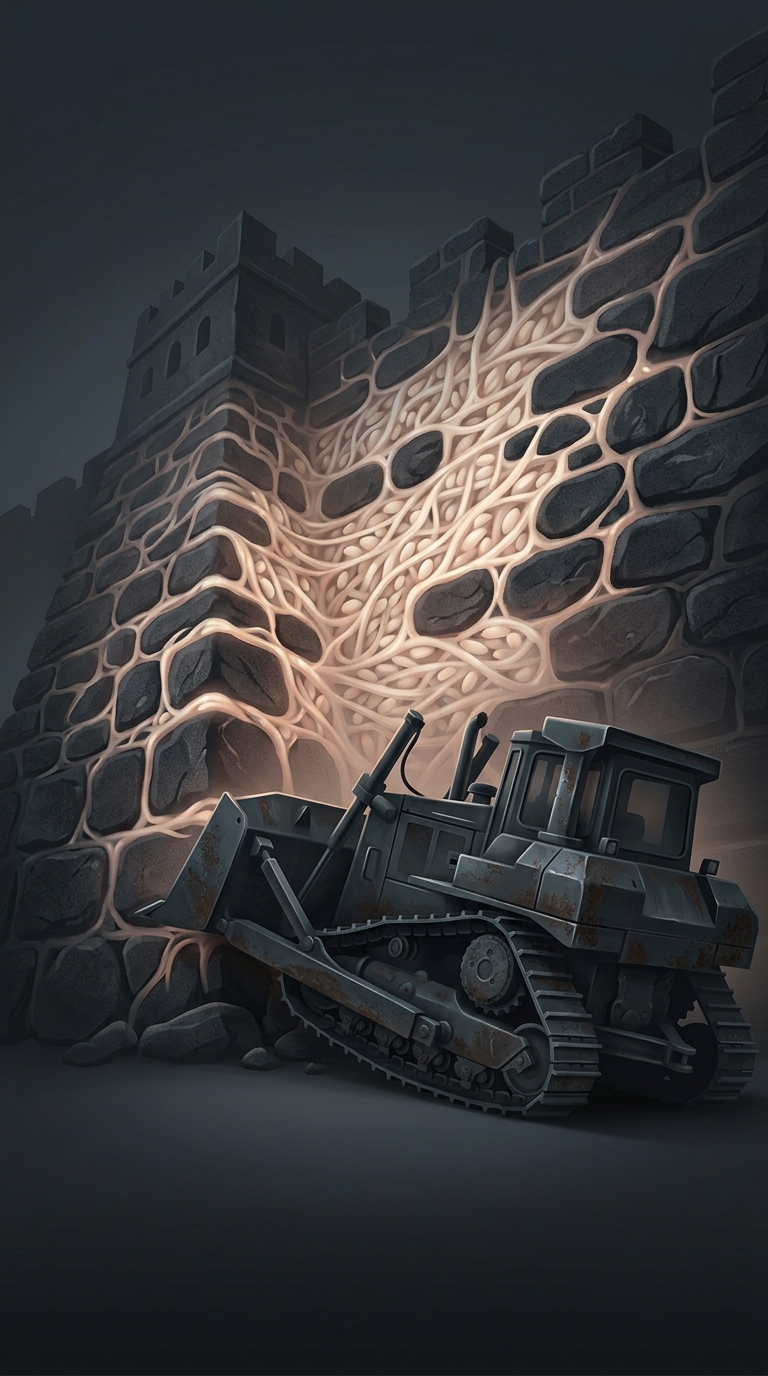
The Great Wall is not one uniform masonry barrier. Built and rebuilt across different periods, its surviving stretches include stone and brick sections as well as walls made from rammed earth—soil compacted in layers. That variety matters: a high brick rampart can remain conspicuous for centuries, while an earthen wall exposed to rain and wind can gradually soften, slump, and blend back into the surrounding ground.
Why nearby materials mattered
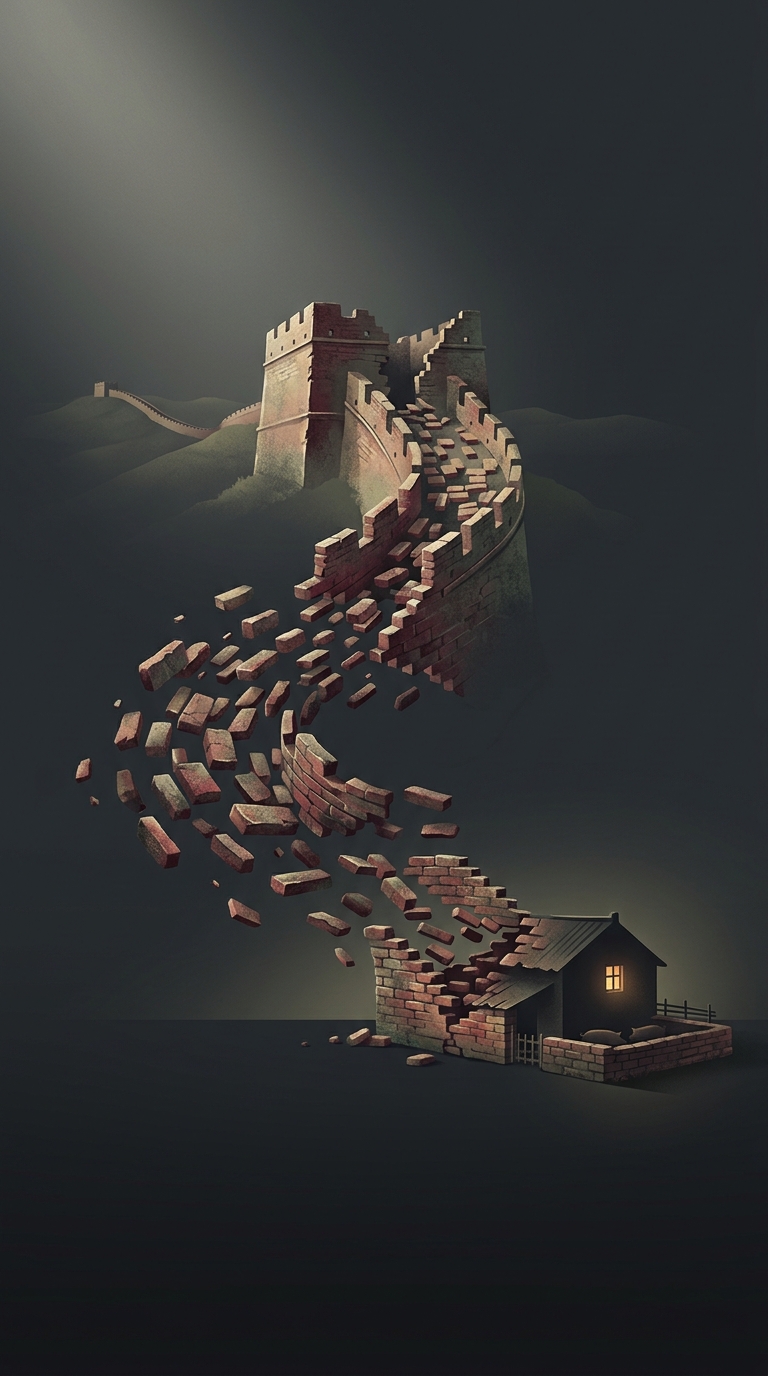
In villages beside the wall, its masonry was a ready source of building material. Reusing bricks or stones close at hand could save the effort of bringing new material from elsewhere. Each small removal might seem practical rather than dramatic, but taken together over many years, removals can weaken a section and make it more vulnerable to weather and collapse.
The challenge for preservation is not simply to repair a famous landmark. The wall runs through remote terrain and across many communities, so keeping watch over every stretch is far harder than maintaining a compact monument or a restored visitor site. Conservation also has to account for different materials: replacing missing bricks may help a masonry section, but it cannot by itself protect an exposed earthen one from erosion.
The wall beyond the postcards
Restored stretches offer a striking view of the wall as a continuous fortification. In less accessible places, it can be a low ridge, scattered stones, or a damaged trace in the landscape. That contrast is the consequence of centuries of changing use and exposure: the Great Wall survives not as one untouched structure, but as a varied historical landscape whose most familiar appearance is only one part of the story.