From hardship to a journey
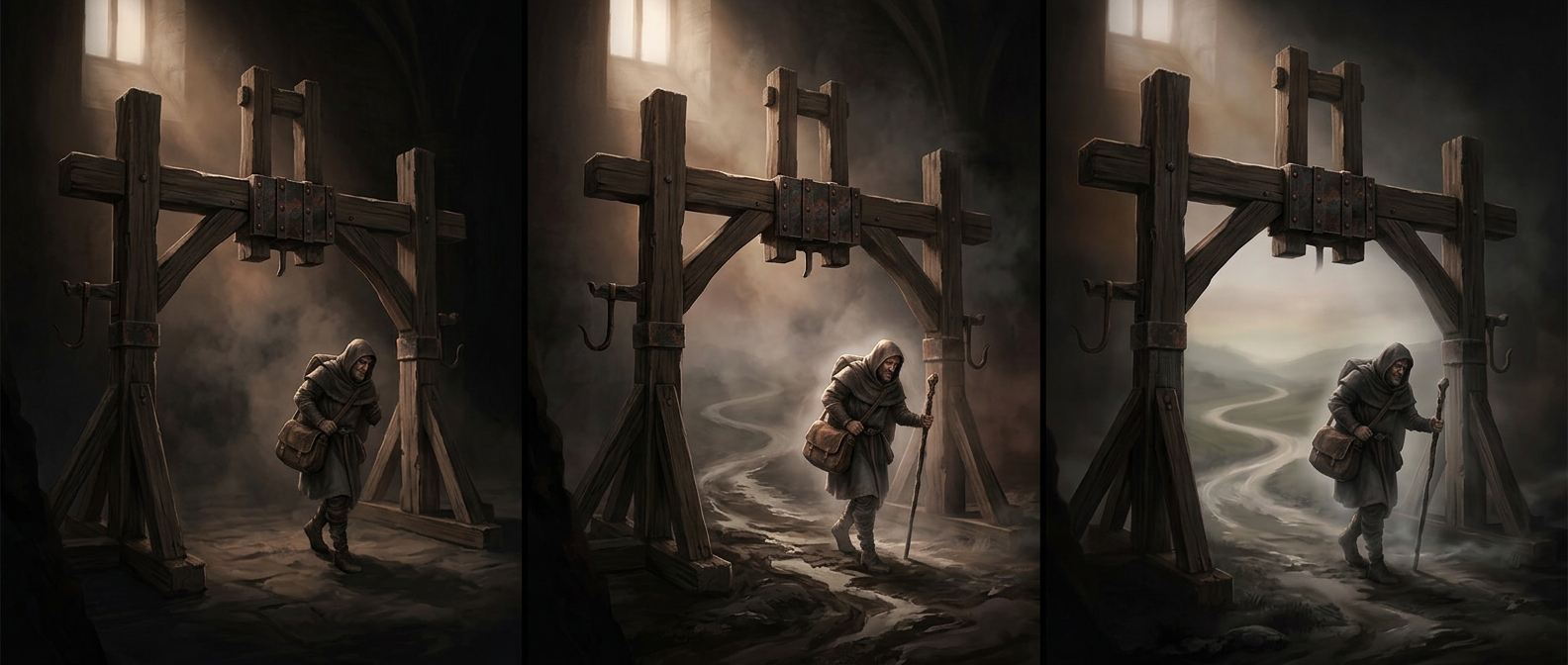
The word’s history follows a change in what people thought a journey involved. In Old French, travail referred to hardship or painful exertion, and it is traditionally linked to tripalium, the name of a torture instrument. The exact path from the instrument’s name to the broader idea of suffering is less certain than the later shift in meaning.
As travail came to mean labor and difficulty, it could describe the strain of making a long trip. English adopted travel in the Middle Ages, when journeys were often slow, uncomfortable, and physically demanding. The word gradually stopped emphasizing the hardship and came to mean the journey itself.
A trace of the older meaning
English still keeps the family resemblance between travel and travail, which means hard work or effort. The contrast is telling: a word once associated with suffering now commonly suggests leisure, discovery, or escape. Its older sense survives mainly as a reminder that, for much of history, getting somewhere could be an ordeal in its own right.