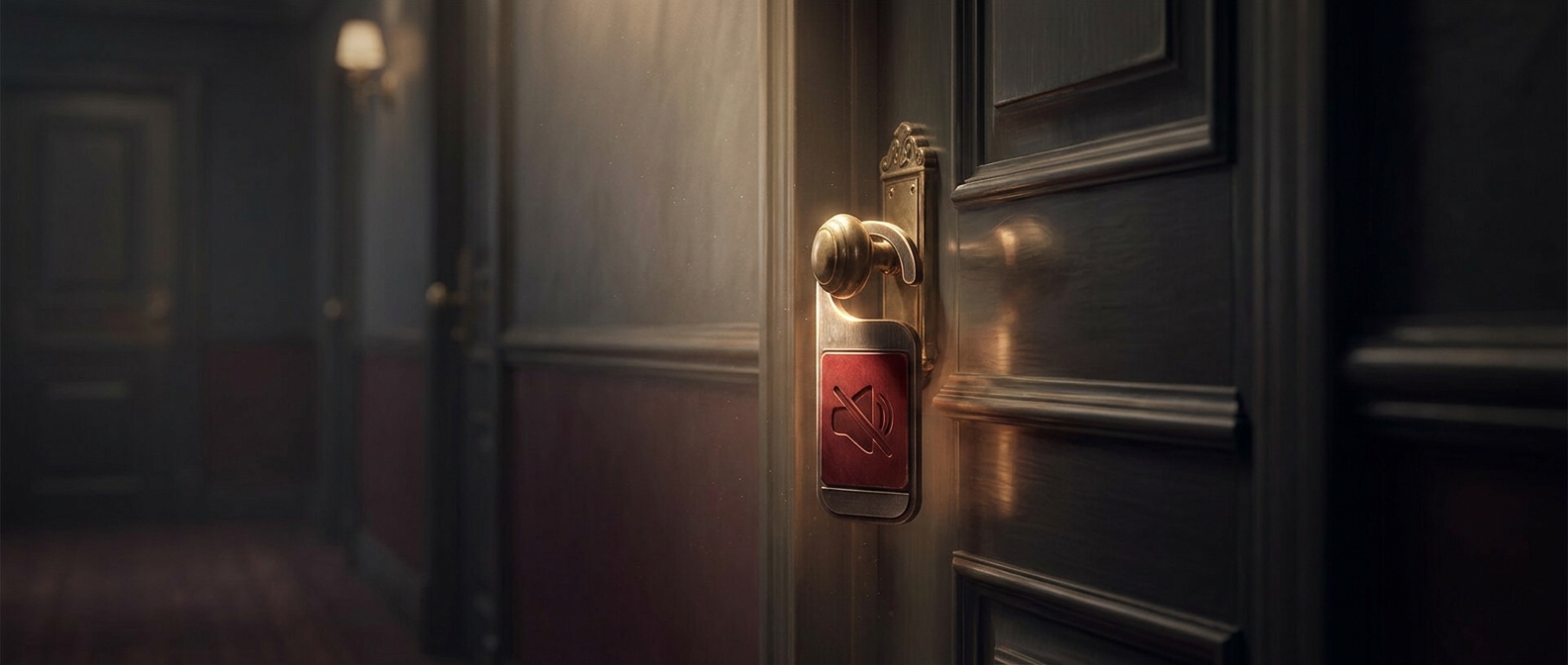
A small signal that changed hotel housekeeping
A hotel room creates an awkward problem for staff: they need to know when a guest is ready for service, but knocking can interrupt sleep, bathing, or private time. In the early 20th century, door hangers offered a simple answer. A guest could place a visible message on the outside of the door, letting staff make a decision before they knocked or tried to enter.
Turning a private preference into a clear instruction
The hanger worked because it moved communication into the hallway. Housekeepers could check a door while making their rounds and distinguish a room that should be left alone from one that could be serviced. That mattered in busy hotels, where staff had to coordinate many rooms efficiently without asking each guest in person.
The device also gave guests a measure of control over a service that otherwise depended on staff approaching the room. Instead of hoping a knock came at a convenient moment, they could signal their preference themselves. A simple piece of card made privacy legible to the people responsible for cleaning.
Why the idea endured
The hanger required no special equipment or explanation: it used the door itself as a message board. That practical design helped make a brief request—leave this room undisturbed—easy to notice and act on. Its familiar descendants still translate a guest’s preference into a visible instruction, even as hotels have added other ways to request or postpone service.