Why a Hallway’s Last Room Can Feel Bigger
Hotel floors are usually organized around a corridor, with rooms repeated along either side. That repetition makes the building easier to plan, but it can leave an awkward patch of floor area where the corridor ends or turns. A corner room may absorb some of that leftover space instead of stopping at the same narrow footprint as the rooms beside it.
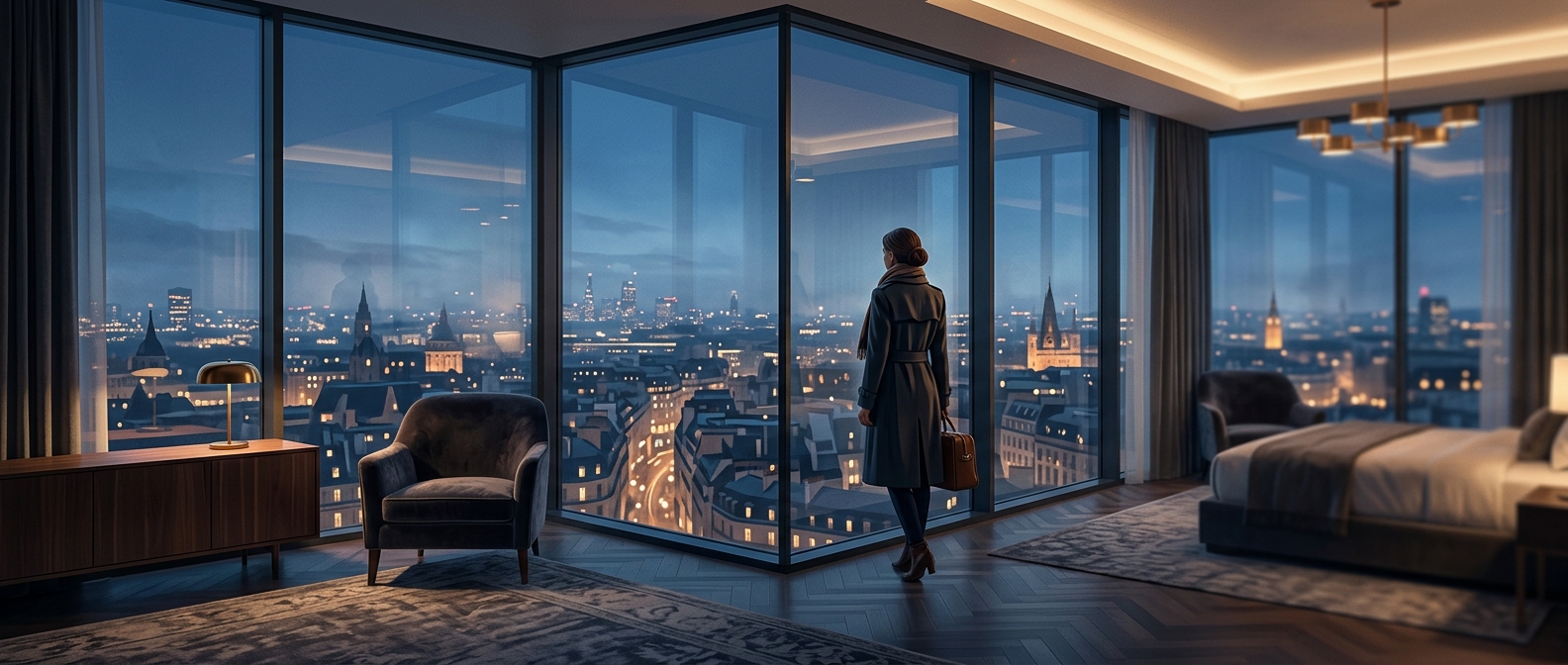
The result is often a room with an extra stretch of floor near the entrance or beside the bed—useful for opening a suitcase or setting down bags without blocking the walkway. The gain may come from a wider room, a less regular shape, or both; it does not necessarily mean the bed area is larger.
The Building’s Shape Sets the Limits
A corner room is not automatically spacious. The building’s outline, the position of stairs and elevators, and the arrangement of windows all affect how much of that end space can become usable room. In some hotels, the corner is taken up by a service area or a structural wall; in others, the room’s unusual shape makes the extra floor area less convenient than it looks on a plan.
So the advantage is a byproduct of fitting rooms around a particular floor plan, not a guaranteed feature of every corner booking. When it works, the difference can be modest but practical: your open suitcase can sit out of the path between the door and the bed.