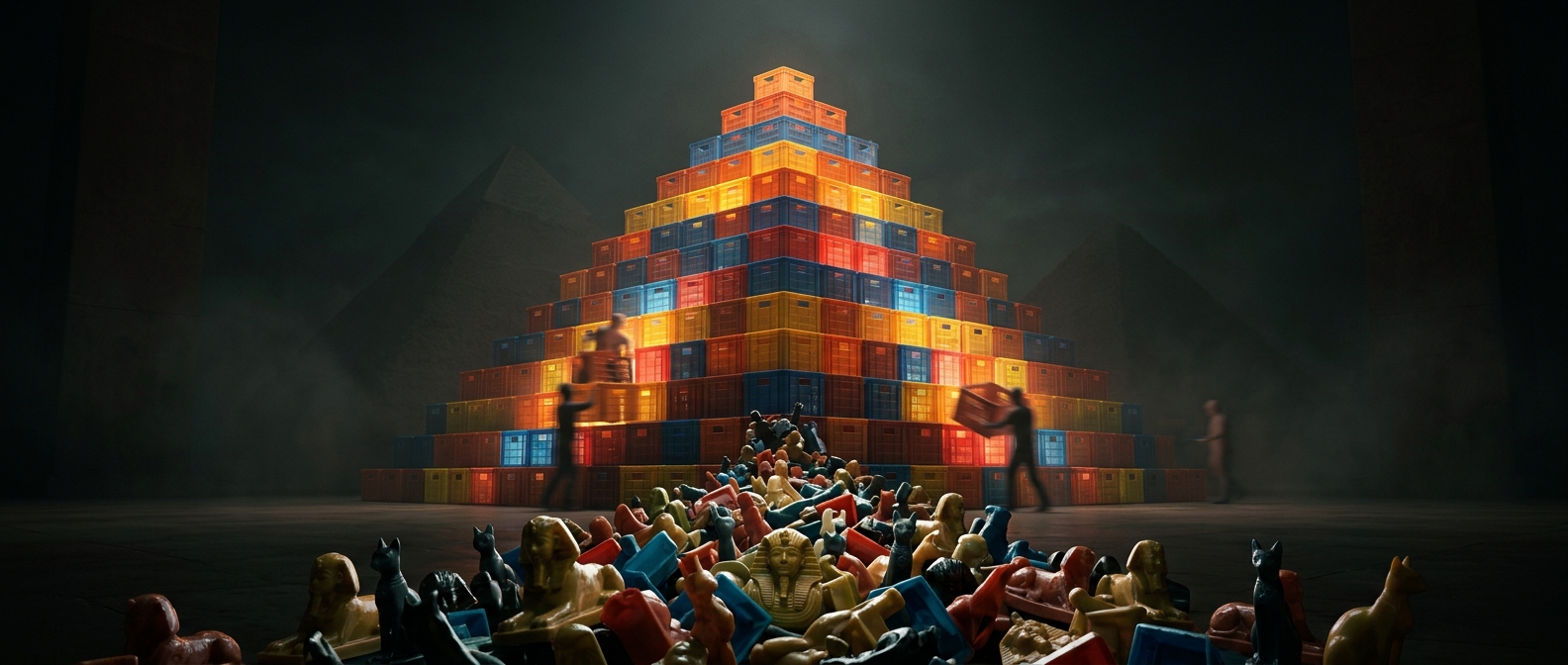
A pyramid made by a mold, not a mason
A small pyramid souvenir can look like a miniature piece of Egypt, yet its production may have little to do with the place it represents. In injection molding, equipment forces softened resin—a moldable plastic-like material—into a shaped cavity. Once it cools and hardens, the mold opens and the same form can be made again and again.
That repeatability makes it possible to produce identical trinkets far from the tourist site where they are sold. The pyramid’s shape carries the local meaning; the material and manufacturing process belong to a wider supply chain.
Why a cheap trinket can cost much more at the stall
The quoted cost of 50 cents is a production-side figure, not necessarily the seller’s total cost. Finished goods have to be moved, stored, and distributed before they reach a shop or market stall. Retailers also set prices based on what visitors will pay for a small, portable reminder of a trip.
A 2,000% markup signals a large gap between that stated cost and the selling price. It does not, by itself, tell us how much the vendor keeps: the selling price also has to cover other expenses, and “markup” can be used loosely in everyday descriptions.
The souvenir’s two kinds of value
The object’s physical form can be inexpensive to reproduce, while its meaning depends on where a traveler buys it and what it recalls. That contrast is part of the souvenir economy: a mass-produced resin pyramid can still serve as a personal token of Egypt, even when the factory that made it was somewhere else.