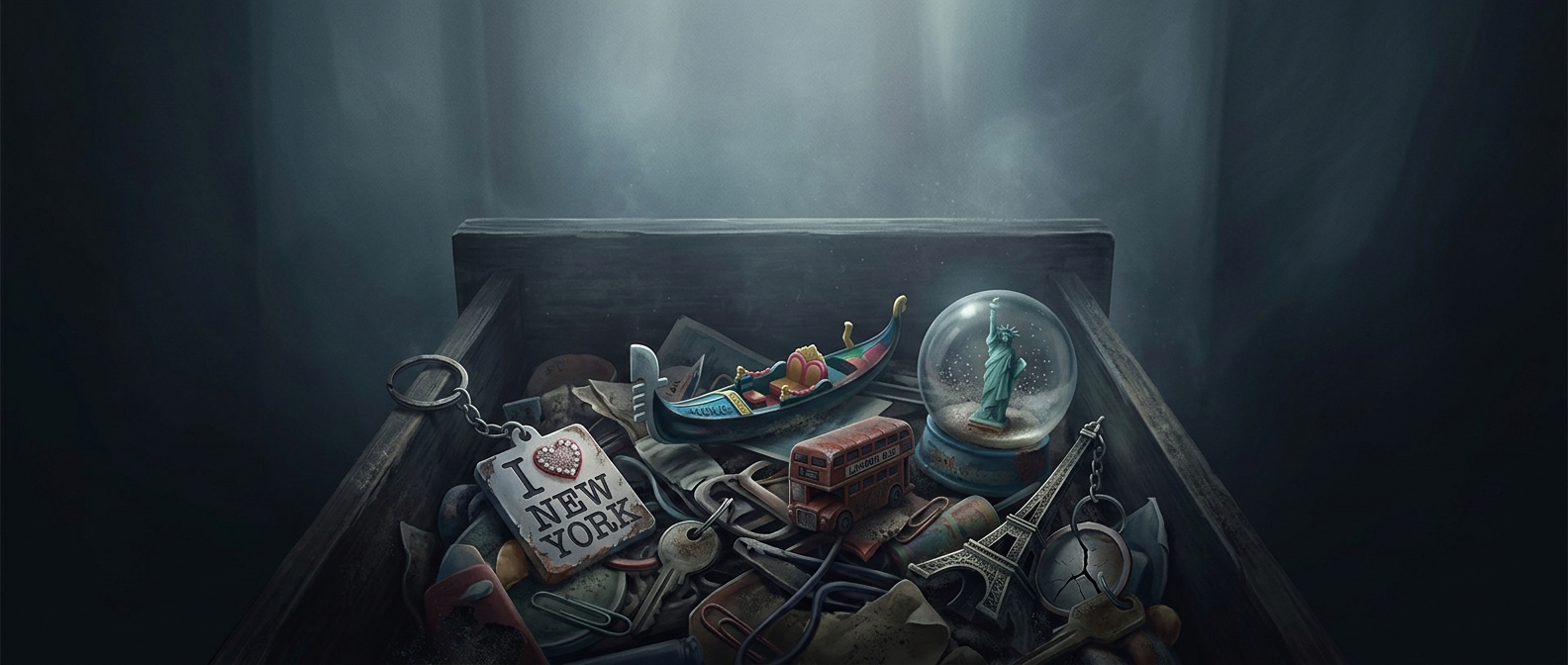
Why a Vacation Keepsake Loses Its Place at Home
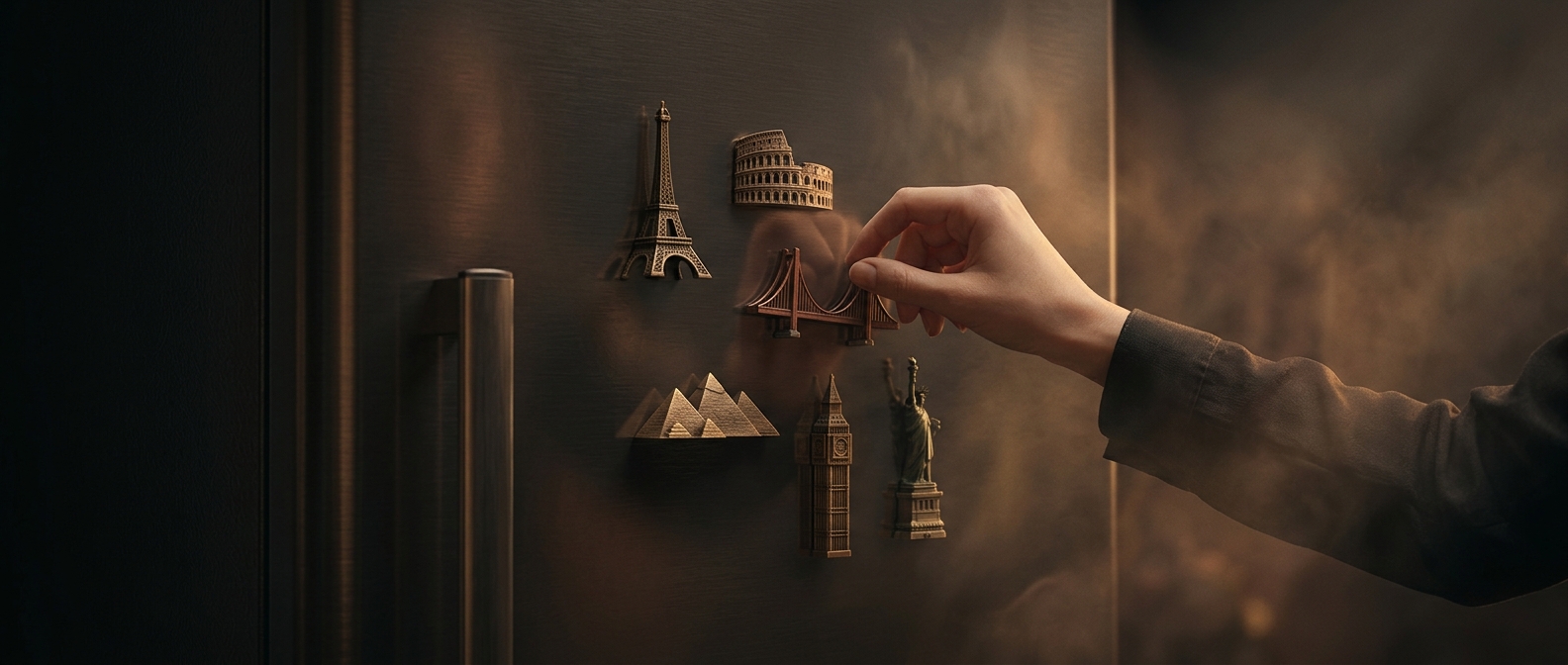
A souvenir is chosen in a setting that gives it meaning. A miniature landmark may stand for a view you just saw, a day with family, or the feeling of being somewhere unfamiliar. In the shop, the object is tied to that experience; at home, it has to compete with everything already on the shelf.
That shift exposes a practical problem: many souvenirs are designed to be easy to carry and instantly recognizable, not useful in daily life. A figurine may be too small to serve a purpose and too specific to fit naturally into a room. If there is no obvious place to display it, it gets moved aside—often to a drawer, where it stops collecting dust but also stops being seen.
The Memory Can Outlast the Object
Buying the keepsake can also feel like a way to make a trip last. But the object does not preserve the whole experience; it offers one cue to it. Once the trip is no longer fresh, that cue may not feel important enough to justify keeping the item on display. A photo, story, or later visit can hold the memory more vividly than a small ornament does.
This is why the drawer is a familiar destination: the souvenir can still feel too meaningful to discard, yet too awkward to give a place in the home. Its value belonged partly to the moment of travel, not just to the object itself.