A small tool for sewing away from home
A thimble protects the fingertip that pushes a needle through cloth. For Victorian women who sewed while traveling, that simple guard made it practical to mend or stitch without a full sewing setup. A loose button or small tear could be dealt with on the journey, rather than waiting until home.
Its size helped: a thimble was easy to carry, and it could be used wherever there was enough light and room to work. It turned sewing—a familiar household skill—into something portable.
From working tool to keepsake
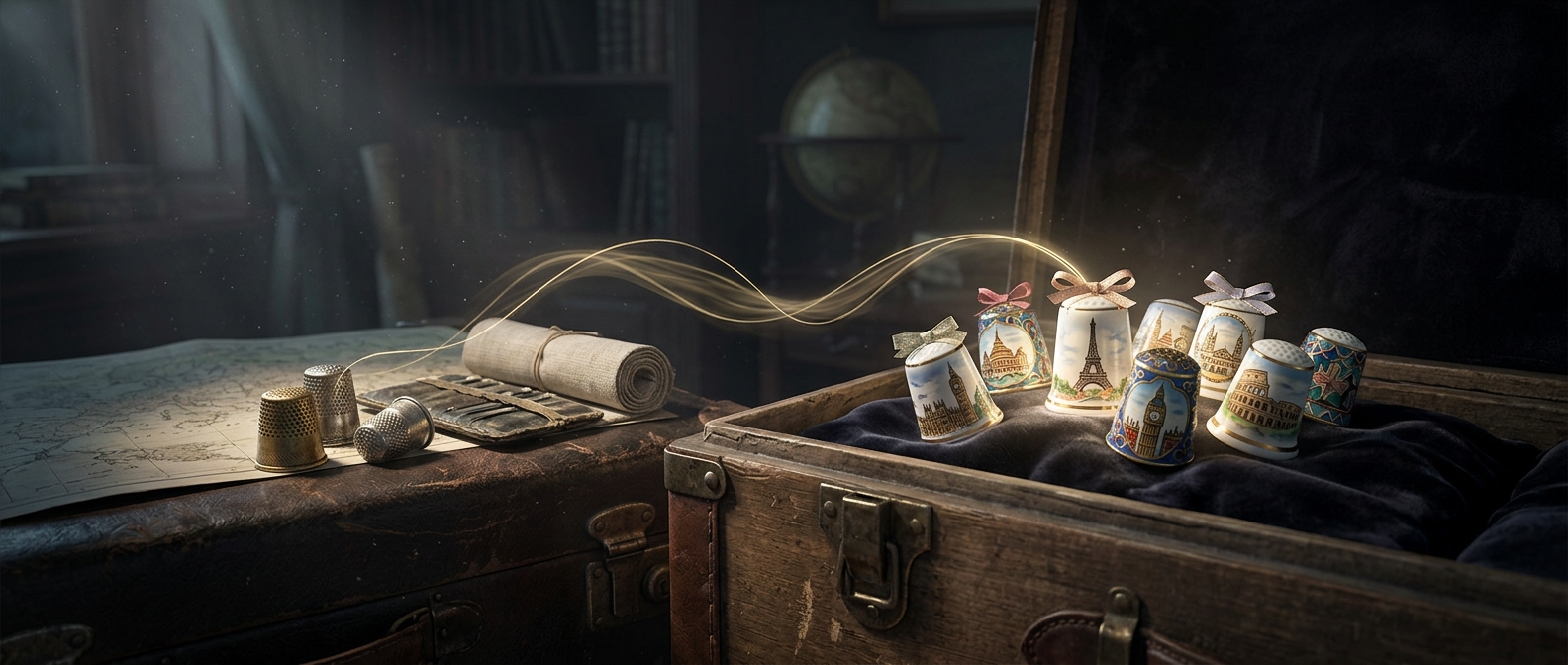
A souvenir thimble could serve both purposes: useful for sewing and marked as a reminder of a place visited. As travel keepsakes became objects to collect and display, the thimble’s role shifted. Its small surface offered room for a place name or decorative design, while its recognizable shape made it easy to arrange alongside other mementos.
That change is visible in how many are kept today. A tool once brought along for practical repairs may now sit behind glass, preserving not only a destination but a glimpse of the everyday work travelers carried with them.