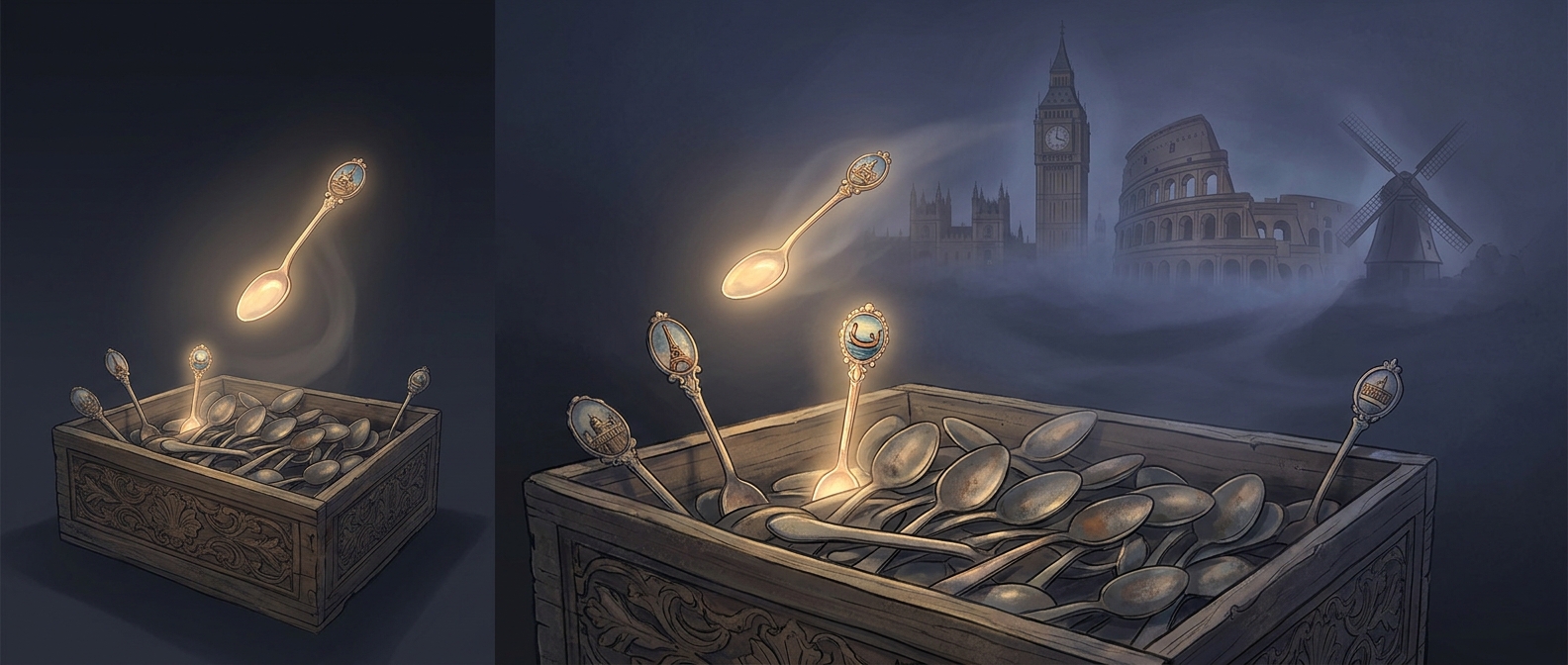
How a city became a keepsake you could hold
As travel became a more visible part of public life in the late 1800s, visitors wanted souvenirs that identified where they had been. A spoon stamped or decorated with a city’s name did that in a compact, familiar object. Unlike a view too large to carry or a memento with no clear location attached, it announced its destination at a glance.
Practical object, displayable memory
The spoon’s appeal came from a useful tension: it was made for an everyday task, yet a commemorative design could turn it into a keepsake. Owners could put it away with household utensils or display it as a reminder of a trip. The city name also made each spoon legible to other people—an object could prompt a conversation about a place without needing an elaborate explanation.
That same clarity encouraged collecting. A traveler could keep spoons from different stops, each one marking a destination in a growing set. The souvenir worked because it joined travel memory to a recognizable object and a specific place. What began as a small memento could become a portable record of where someone had been.