When daylight vanished over the Halys
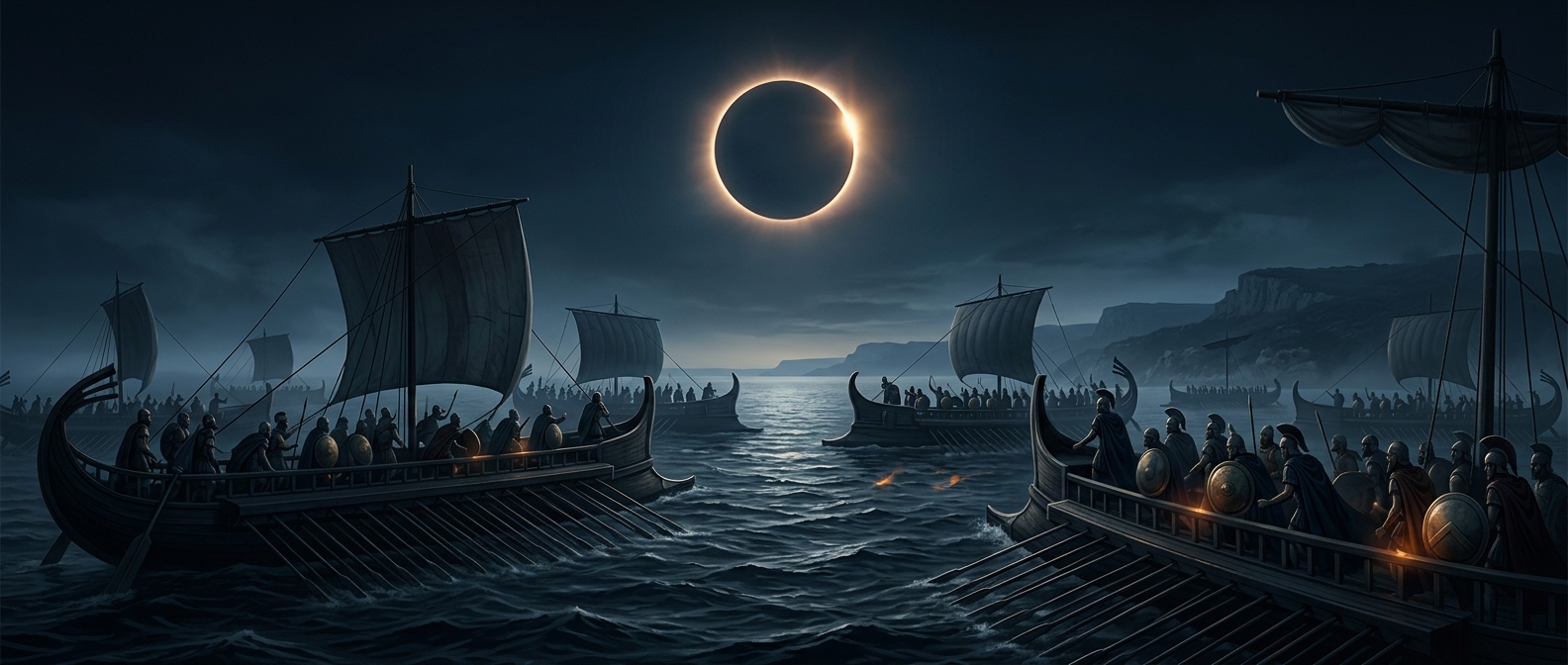
The battle is usually identified as the conflict between the Lydians and the Medes, fought near the Halys River in what is now Turkey. The main surviving account comes from the Greek historian Herodotus, writing generations later. He says the armies had been at war for years when an eclipse turned day into night—and both sides abruptly stopped fighting.
For soldiers who had no way to predict the event, the change was more than an inconvenience. A solar eclipse occurs when the Moon passes between Earth and the Sun; during a total eclipse, the Sun’s bright face disappears and the sky darkens. In the ancient world, such a sudden break in the natural order could be read as a divine warning. Neither army needed to agree on exactly what it meant to see a reason to pause.
From battlefield shock to a negotiated boundary
The darkness created an opening for leaders to end a war that neither side had decisively won. Herodotus says representatives arranged peace, with the Halys River set as the boundary between the kingdoms. The settlement was reinforced by a marriage between members of the two royal families, turning a military truce into a political bond.
The eclipse is often dated to 585 BCE, though the episode’s details come through an account written long after the event. Its importance lies not simply in the spectacle, but in the way a shared, startling experience changed what the armies were willing to do. The sky did not dictate the treaty; it gave both sides a moment when stopping could seem safer—and more defensible—than pressing on.