stackyFACTS
Transport

Why airships couldn’t dock at the Empire State Building

HERE’S THE INTERESTING PART

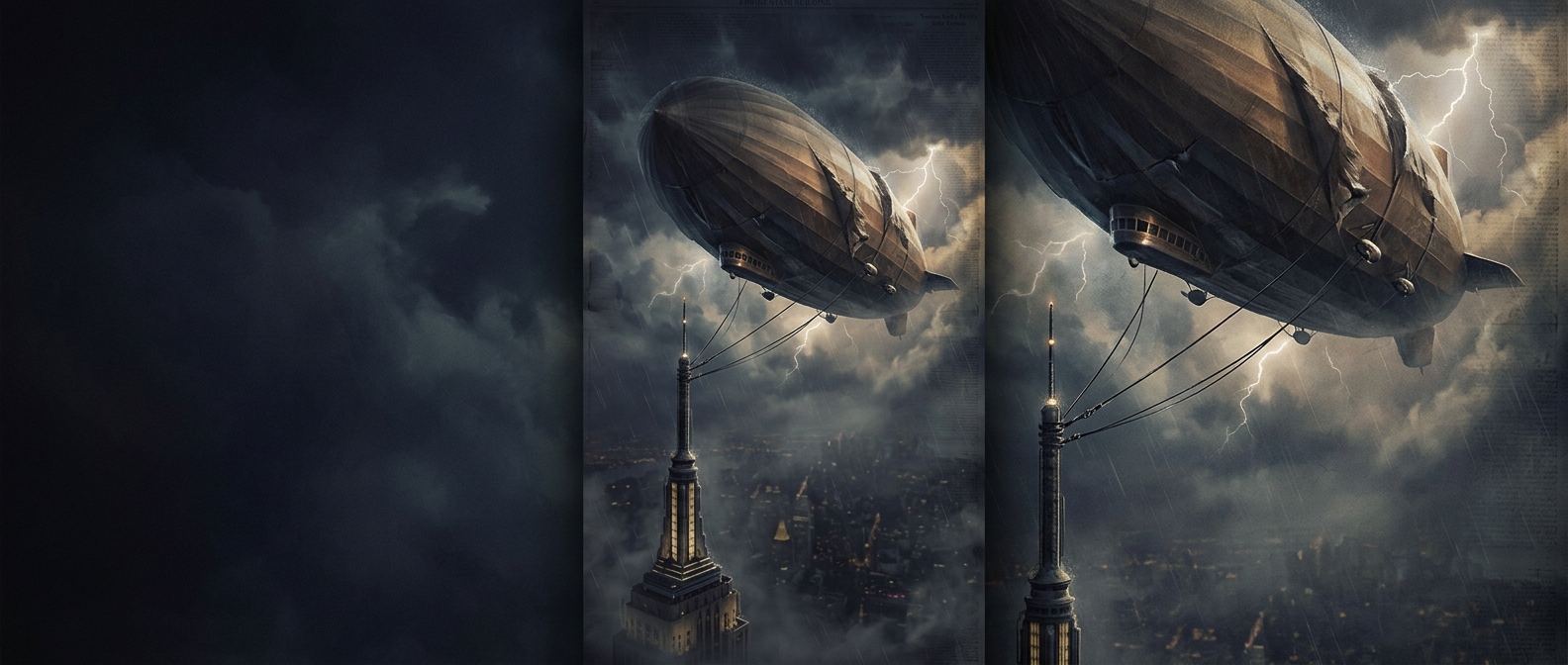
Imagine parallel parking a skyscraper in a hurricane. In the 1930s, visionaries thought it would be a brilliant idea to dock massive zeppelins directly to the spire of the Empire State Building. In reality, fierce urban updrafts turned the airships into massive aluminum kites, violently throwing them around and nearly snapping the mooring mast in half before the idea was mercifully abandoned.
Why airships couldn’t dock at the Empire State Building
STACKY / Transport
One discovery leads to another.

Keep exploring facts in this topic.

Transport →


STACKY FOR IPHONE

A bigger world.
One discovery
at a time.

Keep discovering with Stacky. Interesting facts in an app that is always within reach.

Download on the App Store
ONE MORE DISCOVERY?

Keep exploring

All in this topic →
Transport

Mapping invisible atmospheric trade winds and actively dodging treacherous mountain updrafts allows the monumental Airlander 10 hybrid airship to effortlessly transport giant…

Blimps are back, but instead of blowing up, they are playing a massive game of atmospheric 4D chess. Because modern airships don't rely on forward speed to…

Discover more
Zeppelins navigate at much lower altitudes than jet planes
Transport

Zeppelins navigate at much lower altitudes than jet planes

Because they rely strictly on gas buoyancy rather than aerodynamic lift, blimps rarely bother climbing higher than a few thousand feet. If they tried to reach…

Discover more
German engineers constructed the gas cells of early Zeppelin airships during World War I using the outer membrane of cow intestines, a material known as goldbeater's skin.
Transport

German engineers constructed the gas cells of early Zeppelin airships during World War I using the outer membrane of cow intestines, a material known as goldbeater's skin.

German engineers constructed the gas cells of early Zeppelin airships during World War I using the outer membrane of cow intestines, a material known as…

Discover more
Zeppelin hangars were big enough for indoor rain
Transport

Zeppelin hangars were big enough for indoor rain

Constructing sheds large enough to hold floating behemoths led to accidental meteorological phenomena. The interior volume was so outrageously massive that…

Discover more
Modern blimps mostly use nonflammable helium for buoyancy
Transport

Modern blimps mostly use nonflammable helium for buoyancy

After realizing that filling giant floating fabric bags with explosive hydrogen was a distinctly terrible idea, the industry wisely pivoted. Modern airships…

Discover more
Passenger airships utilized lightweight aluminum frames
Transport

Passenger airships utilized lightweight aluminum frames

When you are building a flying luxury hotel, weight is everything. Historical rigid airships abandoned heavy steel for complex frames made of duralumin, an…

Discover more
StackyMore discoveries in the app
Download on the App Store