How a Wind-Up Toy Stores Motion
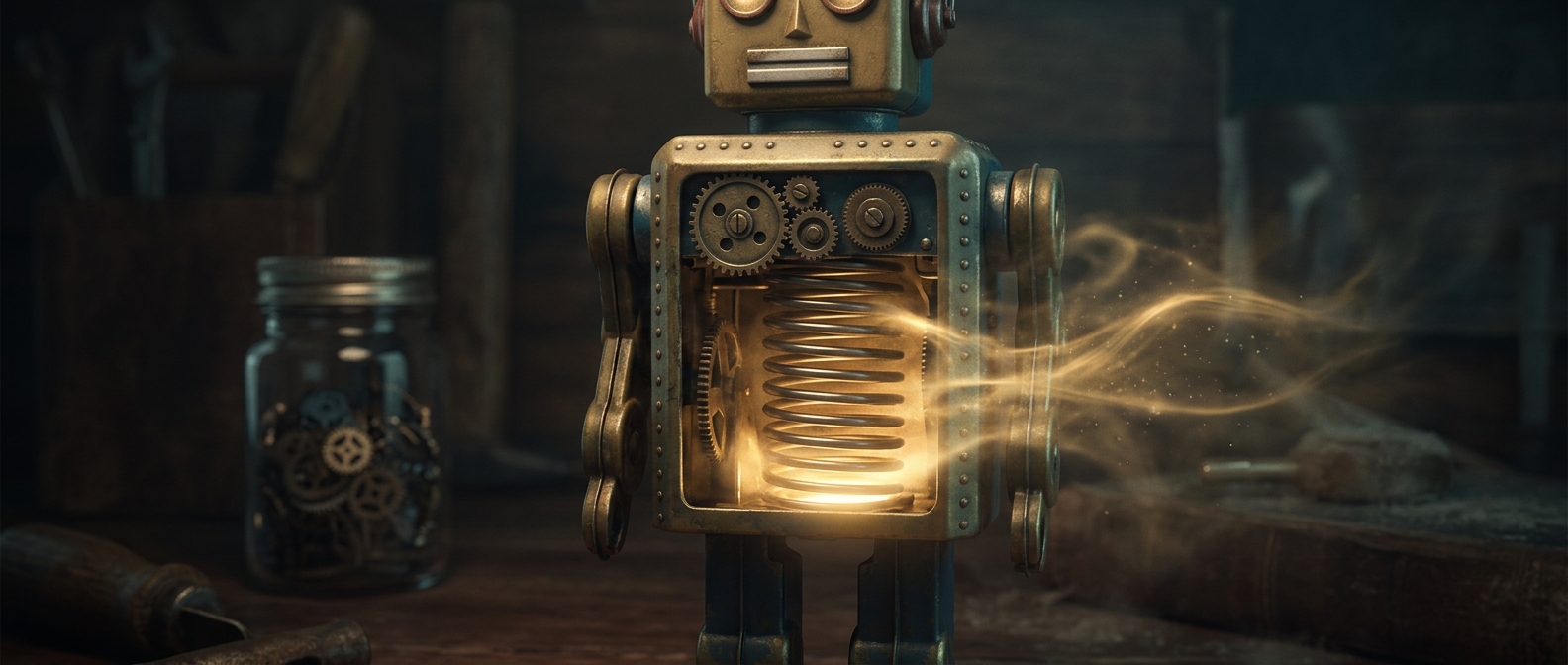
Turning the key does more than get the toy ready to move: it bends a strip of spring steel into a tightly wound coil. The metal resists that bend, much like a ruler pressed against a table springs back when released. In the toy, the coil holds that stored mechanical energy until the spring is allowed to unwind.
Why the Toy Doesn’t Unwind All at Once
The spring’s inner end is attached to a post, while its outer end connects to the toy’s mechanism. As the spring relaxes, it turns a shaft. A small gearbox—a set of interlocking wheels with teeth—passes that rotation to the wheels, legs, or other moving parts.
The gears also manage the spring’s uneven push. A fully wound spring exerts more force than it does near the end of its unwind. Gear ratios trade speed for force, helping the toy move in a controlled way rather than simply releasing all its stored energy in one burst. Friction in the gears and moving parts slows the mechanism too, though it also gradually drains energy as heat.
A Simple Mechanism with a Built-In Limit
Unlike a battery-powered toy, a wind-up toy has no steady supply of energy: its motion comes only from the work put into the spring by turning the key. Once the spring has unwound, the gears stop driving the toy. The key can wind it again, storing energy for another run—but the toy’s movement and duration are limited by how much energy the spring can safely hold.