What the Babalon Working Was Meant to Do
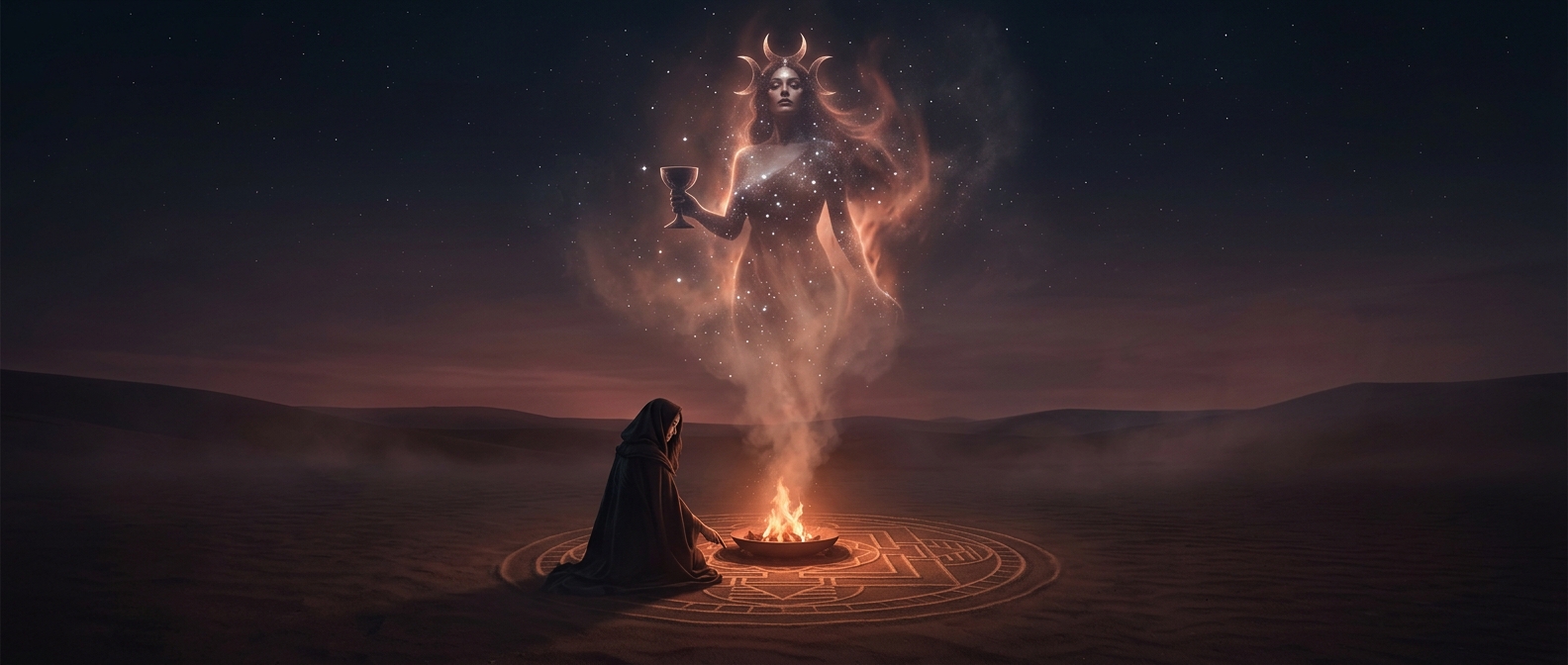
In 1946, occultist Jack Parsons and writer L. Ron Hubbard carried out a series of rituals in the California desert that became known as the Babalon Working. Their aim was not simply to praise a goddess: they hoped their ceremonies would bring Babalon into earthly life through a human being.
Babalon is a figure in Thelema, a religious and magical movement associated with the teachings of Aleister Crowley. In that tradition, she represents a force of spiritual freedom and desire. The practitioners treated ritual—focused words, symbols, and repeated acts—as a way to interact with such forces, not merely as theater or private meditation.
How the Ritual Became a Personal Encounter
The working unfolded over several weeks, with Parsons performing invocations and Hubbard serving as a partner in the operation. Soon afterward, Parsons met artist Marjorie Cameron. He came to understand her as the human embodiment of Babalon, and she became involved in his occult circle.
That sequence gave the working its lasting story: an attempt to summon a goddess seemed, to its participants, to find a human counterpart. It does not establish that a supernatural being appeared. It shows how an occult framework can shape the meaning people assign to an unexpected encounter—and how a ritual’s hoped-for result can become a living relationship. For Parsons, Babalon was no longer only an idea invoked in the desert; he believed he had met her in person.