Why a Body Is Exposed Rather Than Buried
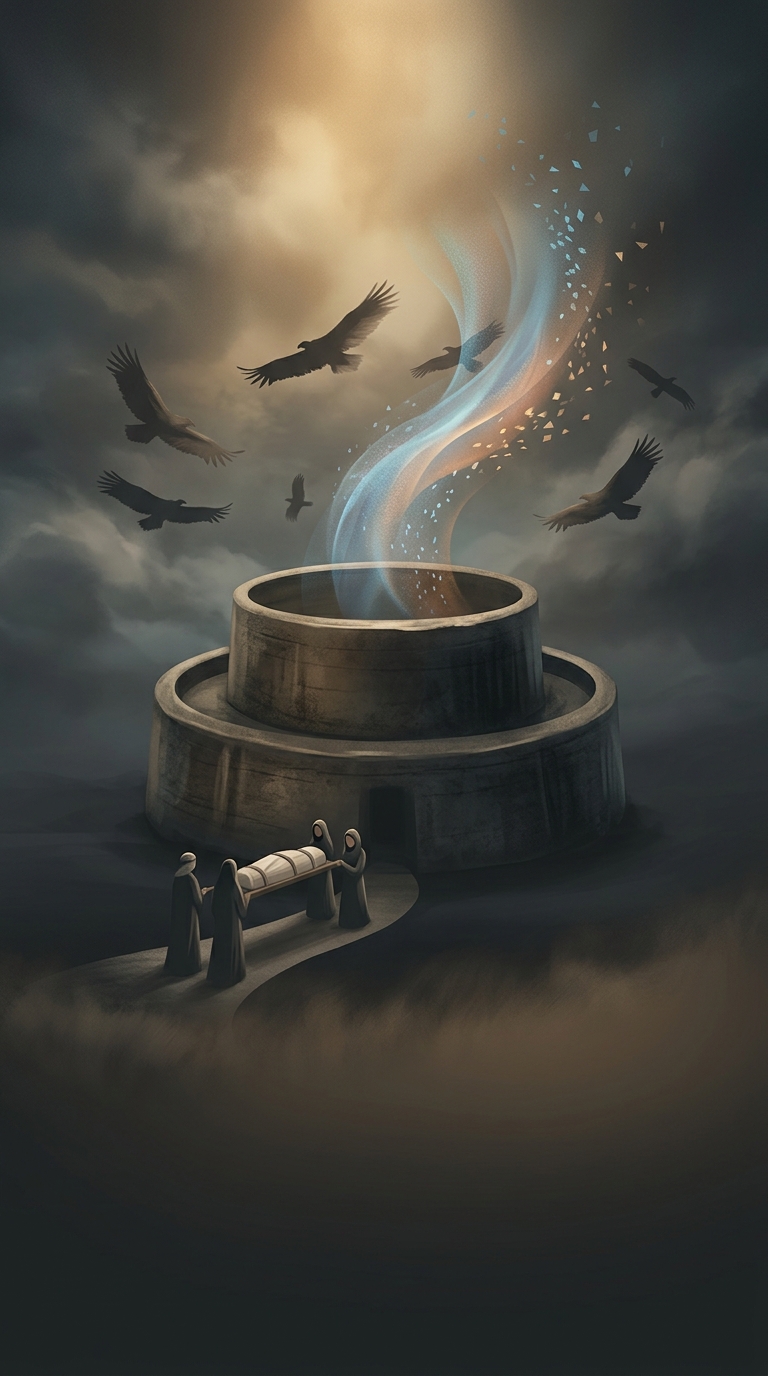
In Zoroastrian tradition, a corpse is not simply a body that has stopped living. Death is associated with nasu, a form of spiritual and ritual pollution. Because earth and fire are sacred, placing a corpse in the ground or burning it could defile those elements. Exposure on a dakhma—the structure commonly called a Tower of Silence—offers a way to dispose of the body without burying or cremating it.
The practice gives practical work to scavenging birds, especially vultures, whose consumption of the flesh was understood as part of the body’s return to nature. The tower’s raised, enclosed design also separates the rite from ordinary life and limits contact with the surrounding community.
What Happens After the Birds
A dakhma is typically a circular platform with open space inside its high outer wall. The body is placed on the platform, where the birds can reach it. After the remaining bones have dried, they are gathered into a central pit or well within the structure. This final step keeps the remains contained rather than scattering them through the landscape.
The arrangement reflects a wider Zoroastrian concern with maintaining purity: the dead are treated with care, but their remains are kept apart from the elements regarded as holy. The tower is therefore both a funerary structure and a boundary between the living community and ritual pollution.
The practice has not been followed in the same way by every Zoroastrian community, and its use has changed where exposure is difficult or restricted. But its underlying logic is striking: a funeral can honor the dead not by returning the body to earth or fire, but by carefully keeping it from them.