Why a Greeting Can Go Awkward in an Instant
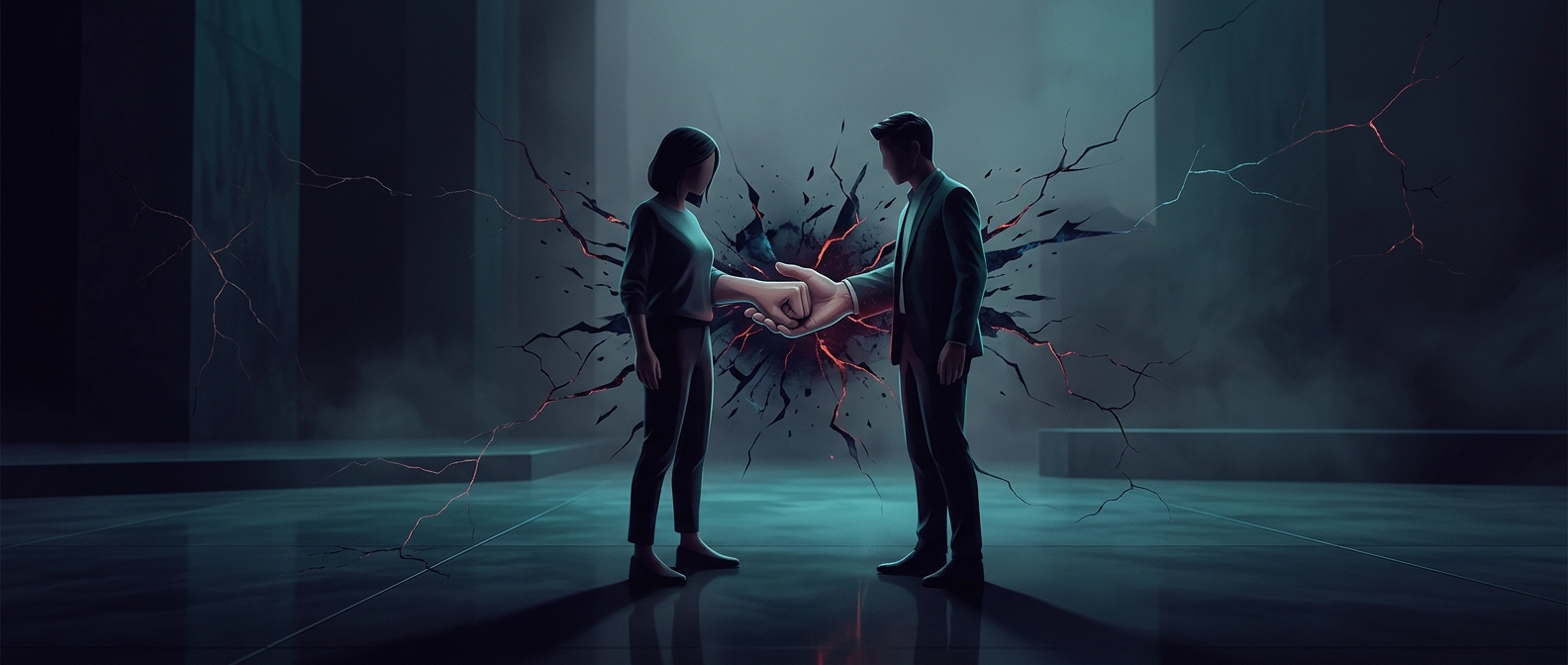
A handshake and a fist bump are both invitations to make contact, but they require different movements. One person extends an open hand; the other curls a hand into a fist. When both gestures begin at nearly the same time, each person has to interpret a moving target while committing to their own response. That is how a friendly greeting can turn into a brief, awkward collision.
Two People Guessing at Once
Social gestures are coordinated decisions. You watch another person’s posture and motion, infer what they intend, and choose how to respond. But those cues are not always clear early enough to remove uncertainty: a hand moving forward might become a handshake, a fist bump, or something else.
The difficulty is that neither person is simply reacting to a finished signal. Both are acting while trying to read the other. If one person starts a fist bump and the other starts a handshake, each may notice the mismatch only after their hands are already in motion. Changing course then takes time—and can produce the familiar midair shuffle as both try to adjust.
Why It Feels More Embarrassing Than It Is
A small greeting mishap can feel conspicuous because it happens face-to-face, in a moment when both people are paying attention to each other. The awkwardness comes partly from the sudden need to repair a shared interaction: laugh it off, switch gestures, or try again. Usually, neither person has done anything especially strange; they have just made different predictions from ambiguous movement.
A clear gesture or a beat of hesitation gives the other person more time to read the invitation. But the mistake is a reminder that even simple social routines depend on coordination—and that two people can both be trying to make the same moment smooth while moving in opposite directions.