A page became a repeatable object
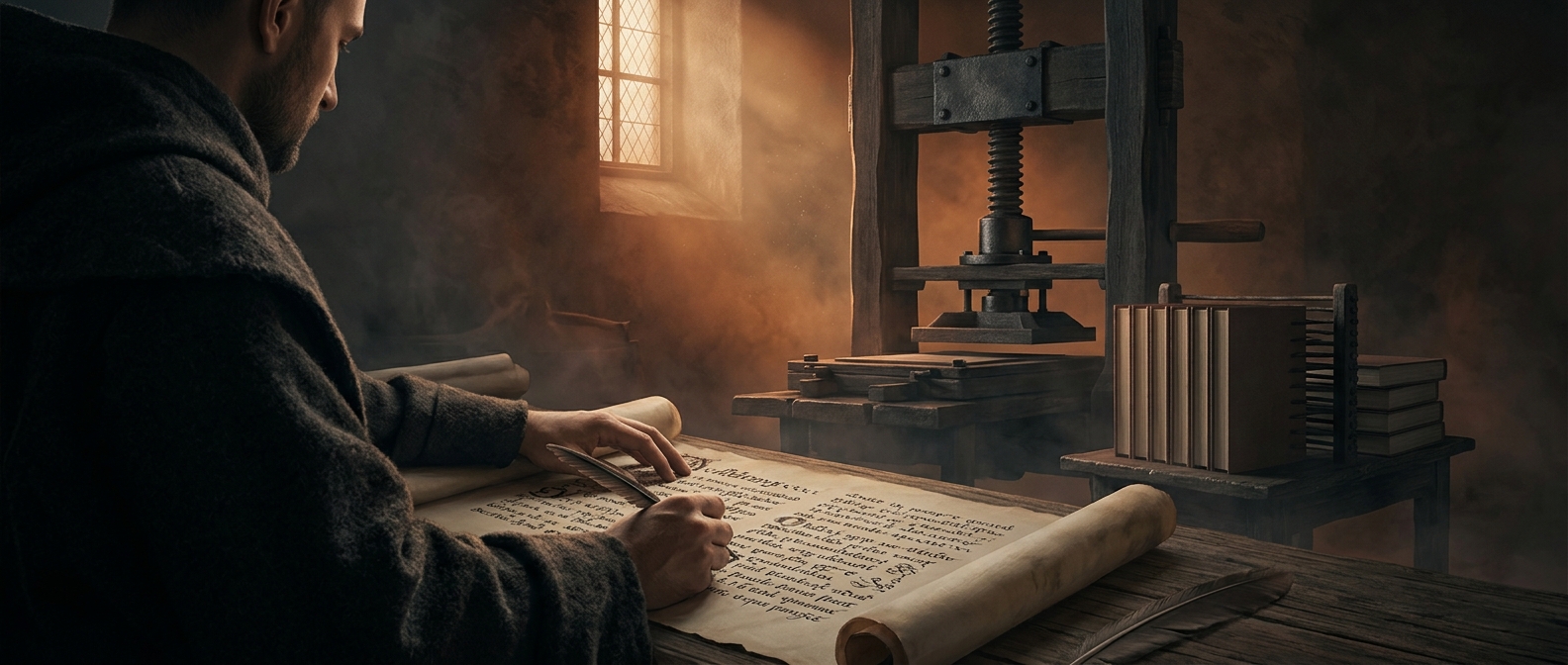
Before printing, a book usually had to be copied by hand. That made each manuscript slow to produce, expensive, and vulnerable to small differences introduced by its copyist. In the mid-15th century, Johannes Gutenberg helped bring together a different system: individual metal letters that could be arranged into a page, inked, and pressed onto paper.
The crucial change was reuse. After a page was printed, its letters could be taken apart and rearranged for another one. A screw press applied even pressure, while ink suited to metal type transferred clearly to paper. The printer still had to compose and check each page, but the same setting could produce many copies far faster than handwriting could.
Copies changed how ideas traveled
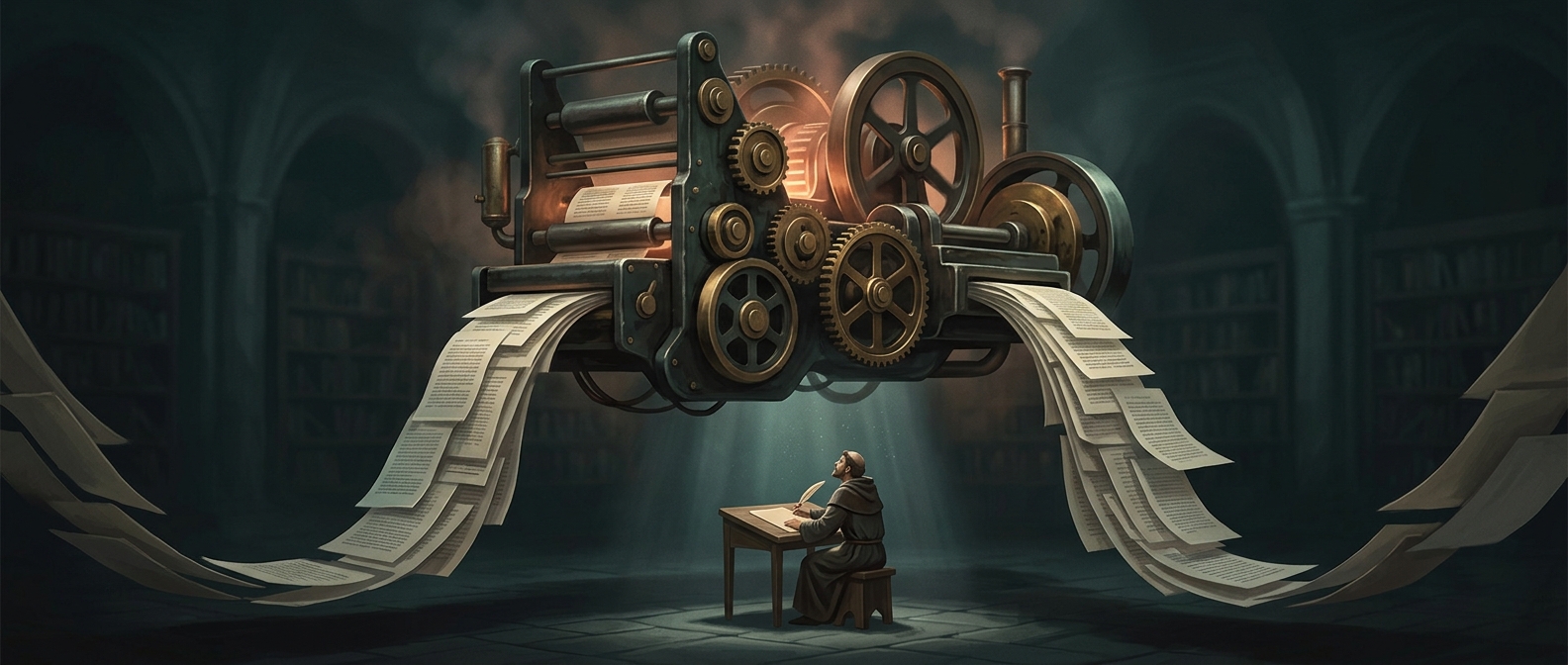
Printing did not create Europe’s appetite for books from nothing. Paper, trade routes, universities, and religious institutions already helped texts circulate. But printed editions made it practical to send the same text to many places. Readers could compare copies, and printers could reproduce works in quantities that made them less exclusive than hand-copied manuscripts.
That reach had consequences beyond convenience. Religious arguments, practical manuals, scientific observations, and political claims could travel farther and be repeated more consistently. Authors and authorities also lost some control over where a text went or how widely it was read. Printing did not make everyone literate, and it did not guarantee that printed claims were true; it made ideas easier to duplicate, preserve, and dispute. A reusable line of type turned a local message into something that could outlive its first audience.