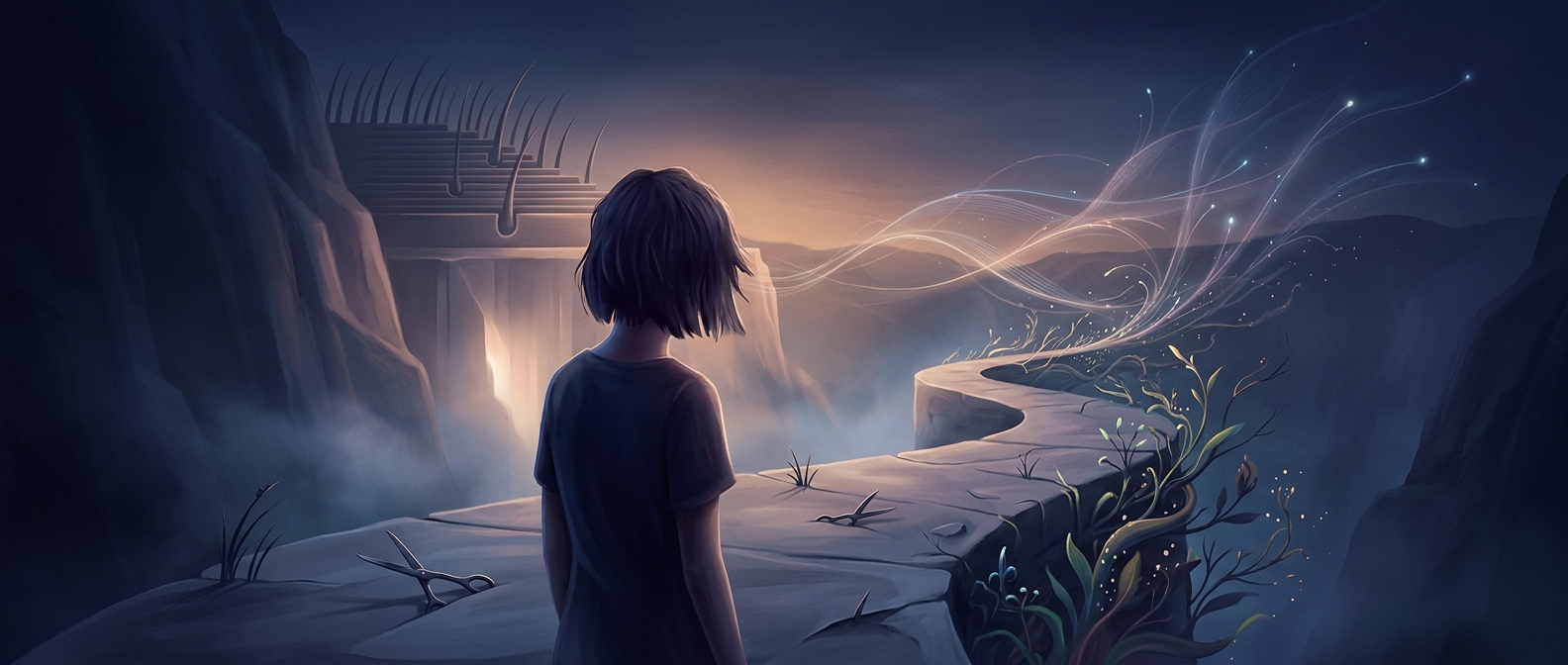
Why a haircut doesn’t stop at the scalp
Hair grows from follicles—small structures in the skin that contain the living cells responsible for making each strand. Those cells divide and add material at the strand’s base, pushing older hair outward. The visible length is made of dead, keratin-filled cells, so cutting it changes the strand’s exposed end, not the follicle’s activity.
That is why a haircut cannot tell the root to grow faster or slower. Growth continues according to the follicle’s own cycle, which includes periods of active growth and rest. Each strand follows its cycle independently, so a shorter style fills back in gradually rather than all at once.
Why the change takes time to show
Hair grows from the skin outward; it cannot lengthen from the cut end. A blunt trim may make the ends look thicker because many strands now terminate at a similar level, but it does not create more hair or increase growth at the roots. Nor does shaving or cutting make a strand grow back coarser: new growth can feel stubbly because its tip is blunt, rather than naturally tapered.
The practical consequence is that a too-short cut improves in small increments. The follicle keeps producing hair beneath the skin, while the visible repair depends on each strand adding length. The haircut happens in one appointment; growing it out happens one strand at a time.