Health
Discover facts about health. Small discoveries that change the way you see familiar things.
Health

How many times does your heart beat each day
Each beat is a squeeze of the heart muscle that sends blood onward, delivering oxygen and nutrients around the body. Add those squeezes across a day and the…
Discover more
Deep sleepers respond less to smells than sudden noises
During deep sleep, the brain is less likely to respond to smells than to sudden noises or bright lights. An odor can reach your nose without making it through…
Discover more
Your blood and joints contain tiny amounts of gold
A typical adult carries about 0.2 milligrams of gold, scattered in tiny amounts through places such as the blood and joints. That is a trace quantity, not a…
Discover more
Why you're shorter at night
Your spine loses a little height under the day’s load because the gel-like discs between vertebrae compress and shed fluid. Overnight, lying flat lets them…
Discover more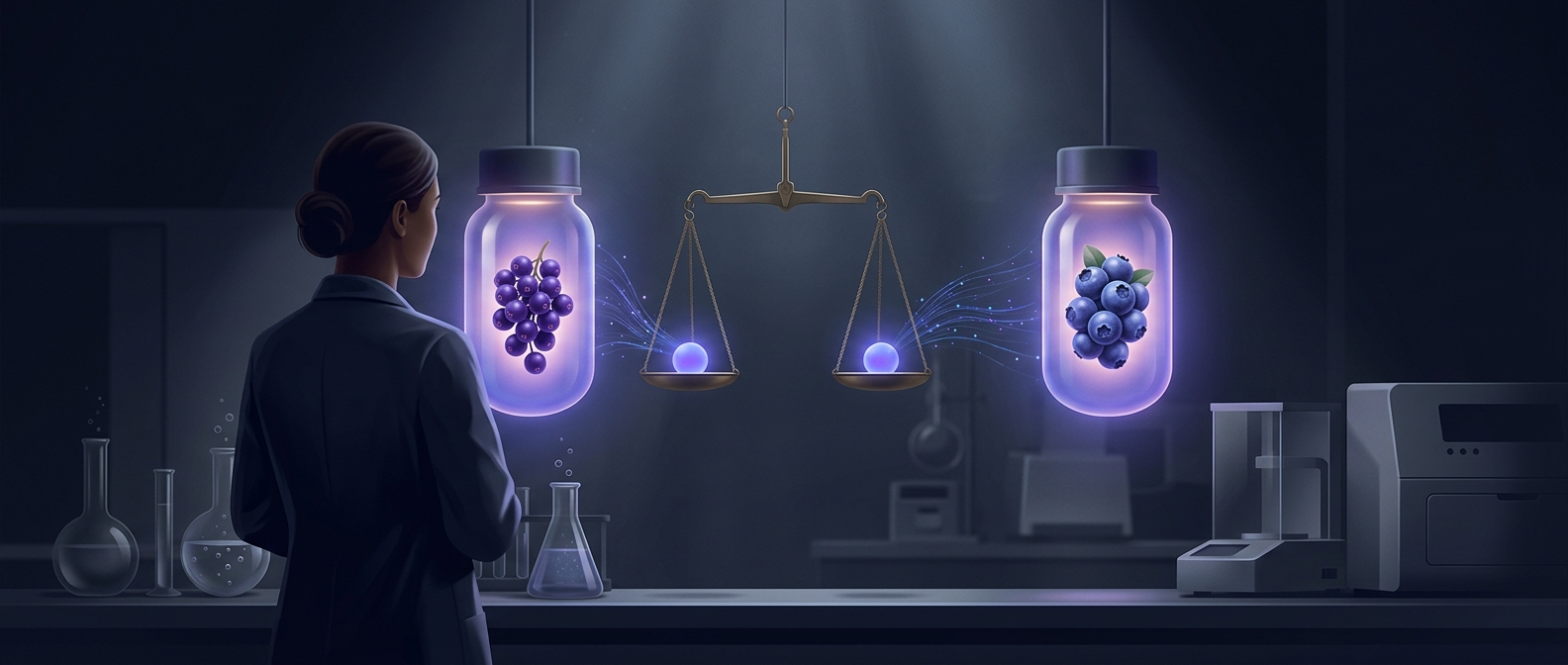
Blueberries offer many of acai's nutrients for less
Blueberries and acai can provide many of the same kinds of nutrients, including fiber and plant compounds, without costing the same. That doesn’t make the…
Discover more
Excess sodium makes the body retain more water
Your body responds to excess sodium partly by keeping more water in circulation. The added fluid increases blood volume and can raise blood pressure; it is a…
Discover more STACKY FOR IPHONE
A bigger world.
One discovery
at a time.
Keep discovering with Stacky. Interesting facts in an app that is always within reach.

Antibiotics can't stop viruses causing sore throats
Antibiotics attack features bacteria have that viruses lack, so they cannot stop a virus causing a sore throat or the flu. Taking them when they aren't needed…
Discover more
Trans fats in some margarines raised LDL and lowered HDL
Some margarines were made with trans fats, which can raise LDL, the cholesterol associated with artery buildup, and lower HDL, which helps carry cholesterol…
Discover more
The brain makes repeated thought patterns easier to repeat
The brain tends to make often-used patterns easier to repeat. If complaining regularly sends your thoughts down a negative path, those connections may become…
Discover more
Cold air weakens some defenses in the nose
The nose is one of the first places inhaled viruses meet the body’s defenses. When cold air cools the nasal passages, some of those local defenses can weaken,…
Discover more
Why 26,000 feet is called the death zone
The problem at extreme altitude is the pressure: it is low, so each breath delivers less oxygen to the bloodstream. Your body can compensate for a while, but…
Discover more
What “natural flavors” can legally mean
U.S. labeling rules define natural flavors by permitted sources and their flavoring role. Extracts can come from many plant or animal materials, while…
Discover more
Your eyes keep an oily film over a watery surface
Every blink helps spread the tear film. Its watery mixture moistens the eye, mucus-like molecules help it coat the surface, and an outer layer of oils helps…
Discover more
Fad dietary regimes are rarely backed by valid professionals
A certificate can show that someone completed a course, but it doesn’t by itself establish the training and qualifications of a nutrition professional. Viral…
Discover more
Your body is mostly water—and it matters
Water is the medium in which much of your body's chemistry takes place. It carries dissolved substances, helps regulate temperature, and supports the fluid…
Discover more
Two different versions of a gene can make you more resilient than matching pairs
Two different versions of a gene can sometimes give the body more options than two identical copies. If one version works less well in a particular setting,…
Discover more
Cryotherapy chambers use liquid nitrogen for a quick freeze
A cryotherapy chamber exposes the body to extremely cold gas for a few minutes, rapidly cooling the skin. That brief chill is real; claims that it treats a…
Discover more
A ten-second kiss can swap 80 million bacteria
A kiss brings the partners’ mouths into close contact, letting saliva and oral bacteria pass between them. More than 80 million bacteria can change hands—so…
Discover more
Your jaw has a favorite side too
Many people habitually chew more on one side, just as they prefer one hand for certain tasks. Researchers study whether those preferences align, but teeth,…
Discover more
The uterus has a cavity, but not an empty room
In a nonpregnant uterus, the front and back walls of the cavity normally lie close together. The muscular organ itself is substantial; it is the space inside…
Discover more
One kidney can do the work of two
When one kidney is doing the job alone, it can increase its filtering capacity to handle more of the body’s waste and fluid balance. That is why a second…
Discover more
Your reusable grocery bag could be a bacterial hotspot
The risk is cross-contamination: bacteria from raw meat or dirty produce can remain in a tote and transfer to other groceries on the next trip. A reusable bag…
Discover more
Your eyebrows are tiny sweat gutters
Forehead sweat runs toward your eyes unless something redirects it. Your eyebrows' curved shape and angled hairs catch some of that moisture and channel it…
Discover more
A sneeze can send droplets 30 feet
The force of a sneeze sends air and droplets outward, and smaller droplets can travel a surprisingly long way—up to 30 feet. A hand or tissue in front of your…
Discover more