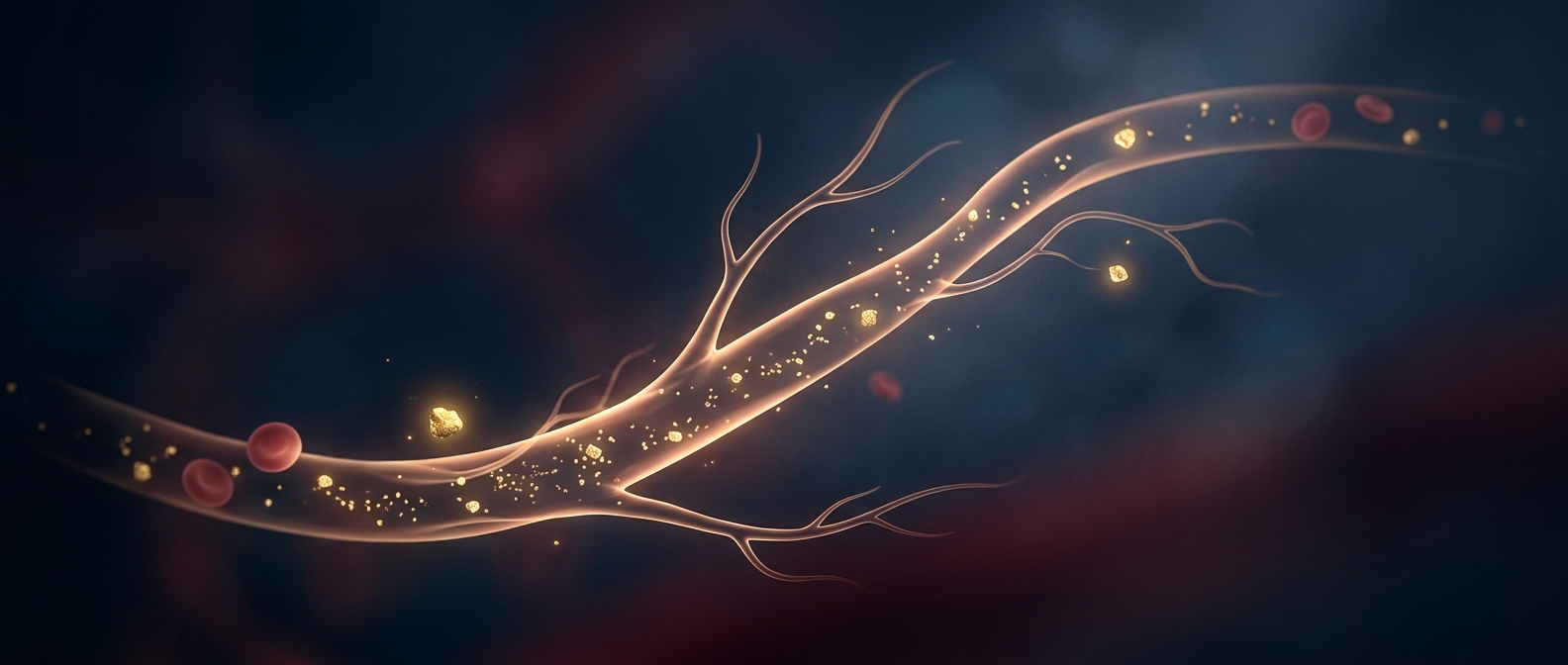
Gold has no known job in the body
Unlike iron, which the body uses to help carry oxygen, gold is not known to be an essential nutrient. The tiny amount present is not stored as a useful reserve or assembled into a piece of metal. It consists of atoms dispersed among the body’s tissues and fluids, where it has no established everyday biological function.
How a trace amount gets there
Gold can enter through ordinary exposure to the environment, including food and water. Most ingested gold is not absorbed; a small fraction may cross into the body and circulate or settle temporarily in tissues. The body continually processes and eliminates many substances, so this trace presence is not a permanent deposit that accumulates into a recoverable nugget.
That distinction matters: detecting an element in the body does not mean the body needs it or can make practical use of it. The gold is there in the same broad sense that many elements are present at minute levels—not as hidden jewelry, but as scattered atoms among the much larger chemical machinery that keeps a person alive.