Carbon is the body’s molecular framework
Carbon matters because it can bond with several other atoms—including other carbon atoms—in many different arrangements. That flexibility lets living things build the large molecules cells need. Proteins, fats, and sugars all contain carbon, though each has a different structure and job. Carbon is not stored in the body as a single supply of black material; it is distributed through countless molecules in cells and tissues.
Much of that carbon enters the body through food. Plants take carbon from carbon dioxide in the air and use it to build sugars; animals obtain carbon by eating plants or other animals. The body then rearranges those atoms as it builds and breaks down molecules. Some carbon eventually leaves in exhaled carbon dioxide, a waste product of using food for energy.
From living molecules to pencil graphite
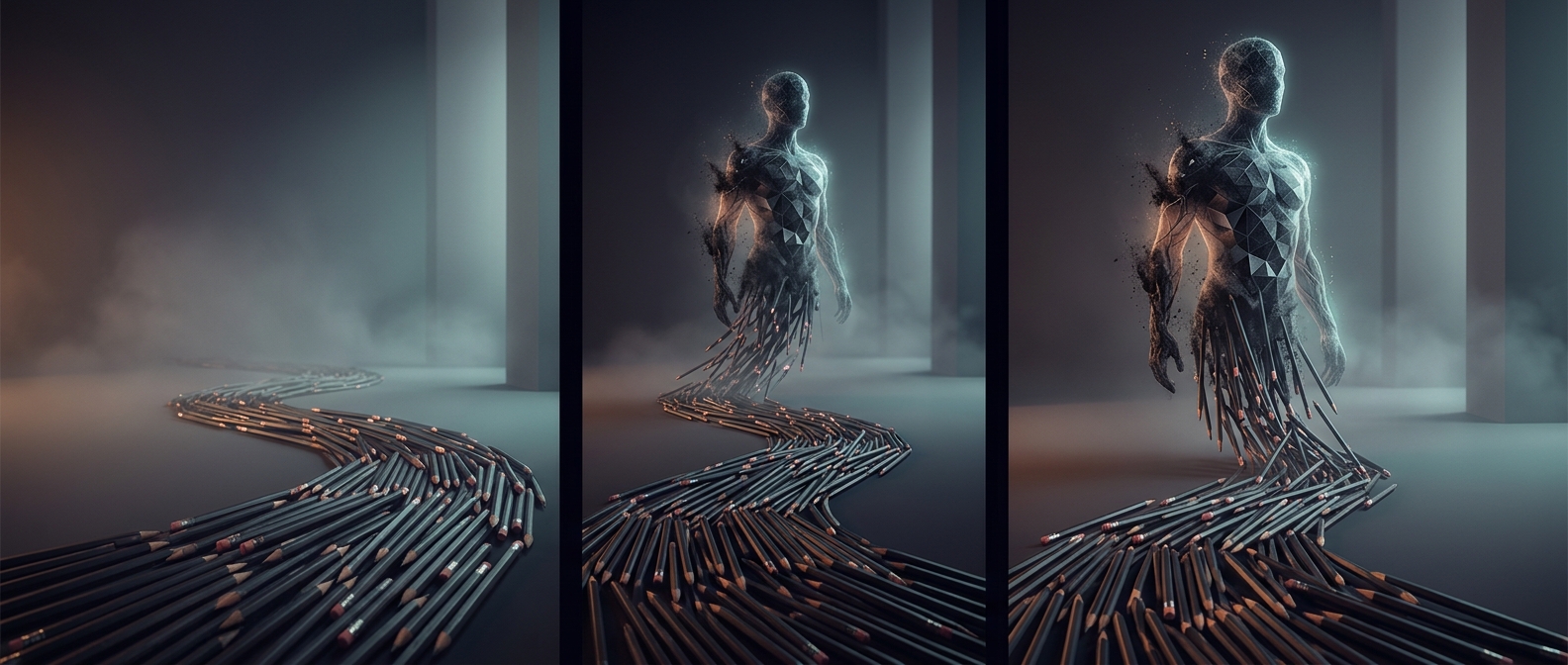
A pencil’s dark core is graphite, a form of carbon in which atoms are arranged in layers that slide across one another and leave marks on paper. The carbon in the body is not already graphite: turning it into pencil material would require separating it from other elements and reorganizing its atoms.
The comparison works by mass. Add up the carbon spread throughout the body, then imagine that same element assembled into pencil cores. The striking part is that an element used in delicate, constantly changing chemistry can also make a familiar writing material—depending on how its atoms are arranged.