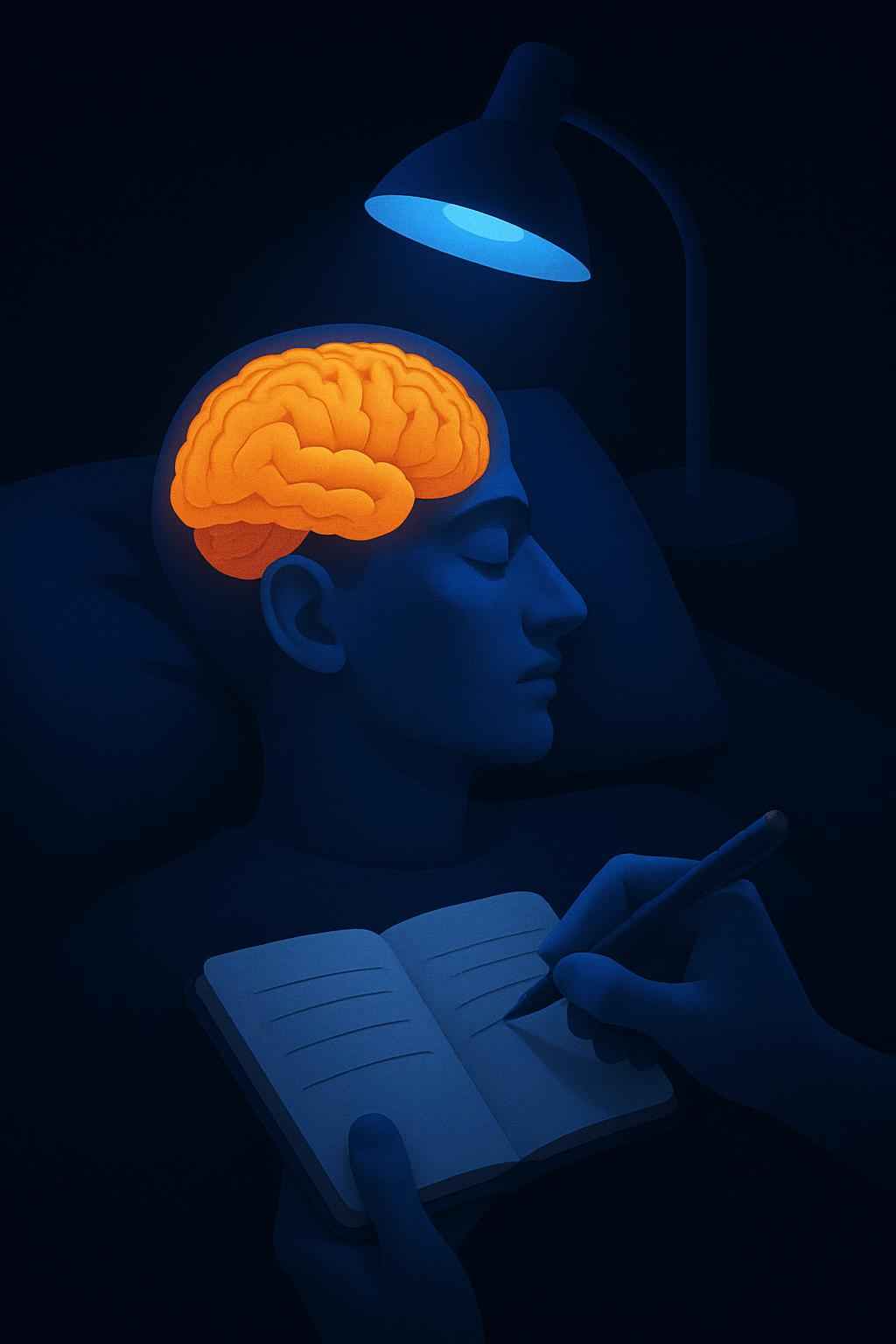
Deep sleep raises the threshold for waking
Sleep does not switch the senses off. The brain still receives some information from the surroundings, but during deep non-REM sleep it is less likely to turn that information into a full awakening. A stimulus has to be strong or important enough to trigger the brain’s arousal systems—the networks that shift the body toward wakefulness.
That threshold helps protect sleep from ordinary, harmless changes in the environment. It is not a sealed barrier: a loud bang, a touch, or another sufficiently compelling signal can still wake someone.
A smell is a quiet, gradual signal
Odor molecules can reach receptors in the nose and send signals into the brain while a person sleeps. But smells often build gradually and linger rather than arriving as a sudden, sharply timed event. The sleeping brain may register some of that input without treating it as a reason to wake. Repeated or familiar odors can also fade into the background through habituation—the brain’s tendency to respond less to a signal that keeps returning without consequence.
Sudden noise, by contrast, can produce an abrupt change that is harder to ignore. Bright light can also provide a strong sensory signal, though its effect depends on factors such as how intense it is and whether the eyes are exposed. None of these cues guarantees an awakening; the person’s sleep stage and the signal’s strength matter.
Why an odor is not a reliable alarm
The practical point is that smelling something does not mean a sleeping person will wake up to it. The nose may detect an odor while the brain’s transition-to-wake response remains below threshold. That is why smell should not be relied on to alert someone to smoke or another hazard: a dedicated alarm uses a direct warning signal designed to demand attention, rather than depending on the brain to treat an odor as urgent.