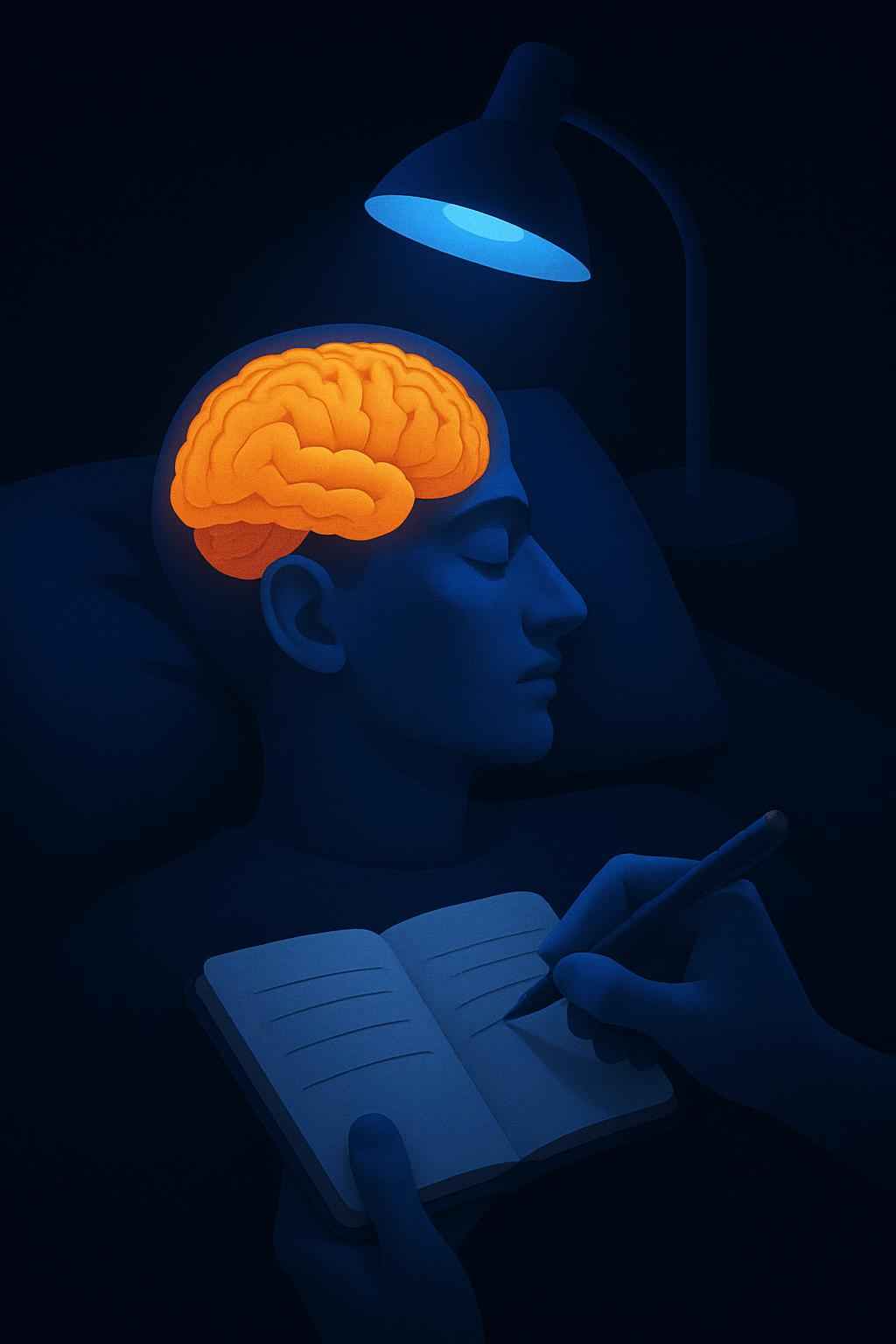
Why putting unfinished tasks on paper can help
An unresolved task can keep returning to mind because it still feels as if it needs attention: remember the email, make the appointment, decide what to do next. Writing it down moves the reminder out of working memory—the limited mental space used to hold and manipulate information right now—and gives it a place to wait. A brief note about the next step can make the task feel more contained than a vague, open-ended worry.
That is the practical idea behind a “cognitive dump.” It does not empty the brain or switch off anxiety; it can reduce the effort of mentally rehearsing what must not be forgotten. A small study of bedtime writing found that people who wrote specific to-do lists fell asleep faster than those who wrote about completed activities. The useful distinction is not simply writing versus not writing, but an unfinished concern versus a concrete plan.
Make the note a handoff, not a new project
Keep the exercise short. Record what remains unresolved, then name one manageable action and when you might take it. The point is to create a reliable reminder, not solve the problem in bed. If writing turns into detailed planning or self-criticism, it may keep the mind activated instead.
A steady wind-down can support the same transition. Bright light in the evening can delay the body’s natural melatonin rise, though screens are not the only source and their effect depends on brightness, timing, and duration. Dimming room lights is a practical cue that the day is ending. Over time, repeating a simple sequence—make the note, lower the light, go to bed—can help separate nighttime from the work of remembering and deciding.