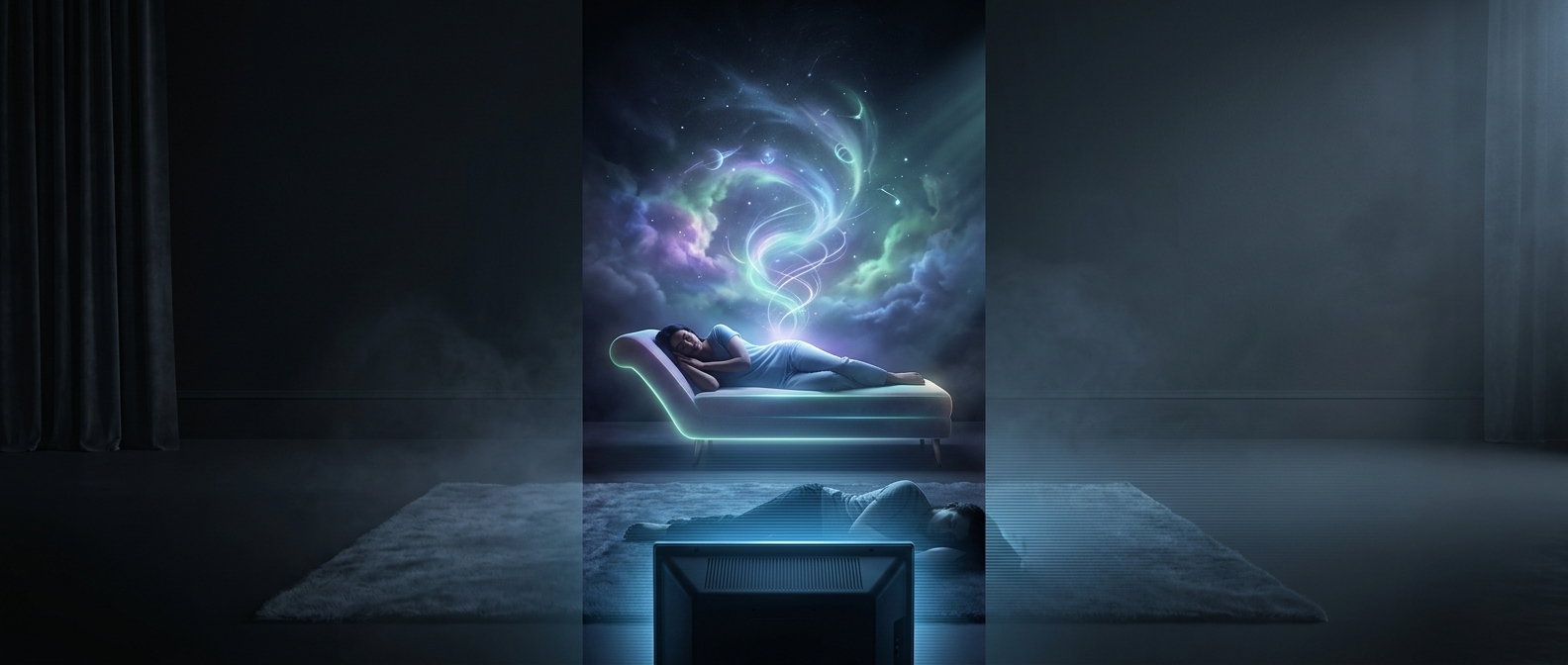
Sleep is active—but not a calorie-burning workout
Deep sleep can look like the body has switched off: muscles are relaxed, movement is minimal, and brain activity shifts into slow, synchronized waves. But essential systems keep running. The heart pumps, breathing continues, body temperature is regulated, and cells carry out maintenance. All of that requires energy, even when you are motionless.
The brain’s slow waves are not a sign that it has stopped working. They reflect a different pattern of activity from wakefulness, while the sleeping brain and body move through processes involved in recovery and upkeep.
Why the TV comparison needs a little care
Watching television while seated also uses energy: the body maintains its basic functions, and the brain remains awake and responsive to what it sees and hears. Stillness alone does not tell you how much energy the body is using. Deep sleep is not generally a higher-calorie state than sitting awake and watching TV; energy expenditure usually falls during sleep compared with waking rest.
The useful contrast is that sleep is not inactivity. A resting body continues essential internal work, while a viewer may appear equally still from the outside. The next time someone says they “did nothing” all night, the body’s quiet maintenance is the important exception—not a claim that sleep outburns a night in front of the screen.