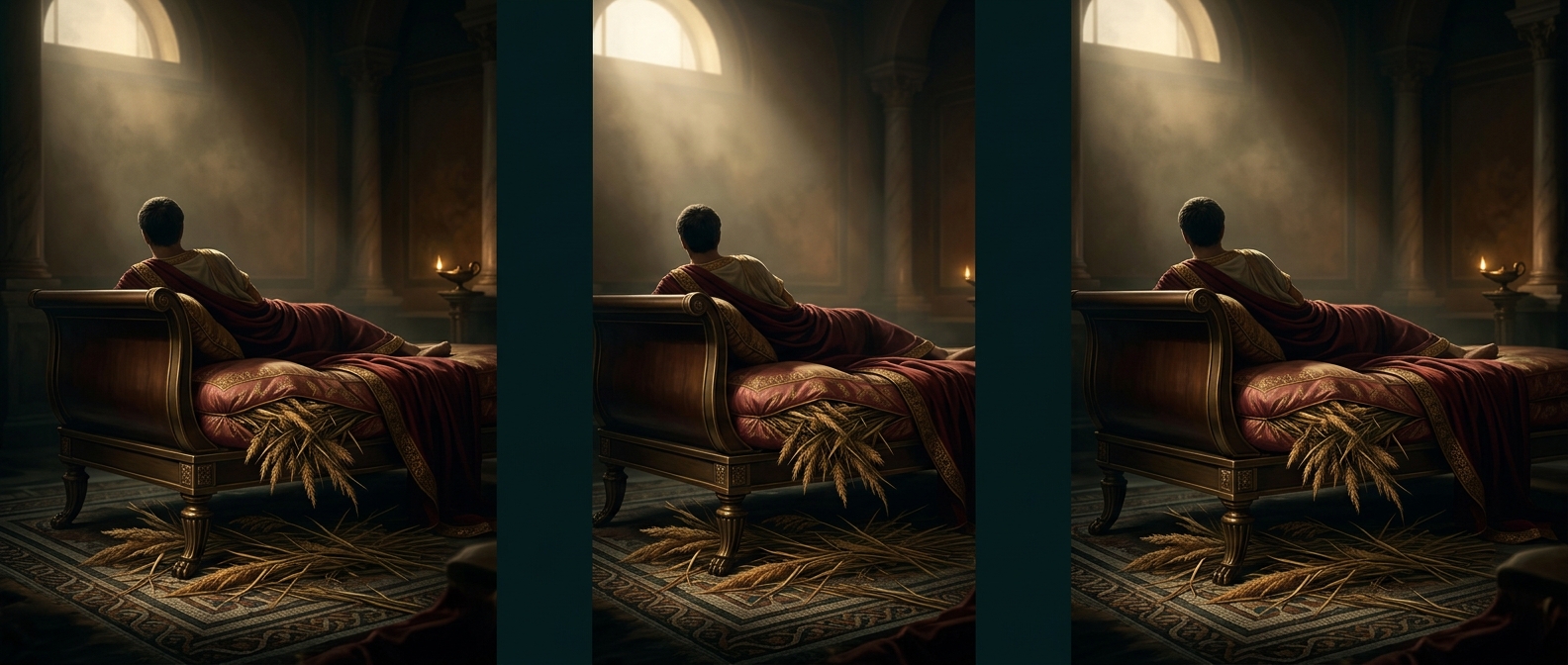
A mattress was only as soft as its stuffing
A Roman mattress was a cloth case filled with whatever cushioning its owner could obtain. Wealthier sleepers could use softer reeds and raw wool; poorer people often relied on straw, which could feel rough and itchy against the body. The difference was not just in the outer fabric: what went inside determined how the bed felt night after night.
Reeds and wool offered a more comfortable alternative, but they did not make a mattress smooth by modern standards. Plant material could still poke through or shift beneath the cloth, and raw wool was not the same as a finely processed, uniform cushion. Comfort came by degrees, not as a simple divide between luxurious and unbearable.
Comfort came with a combustible tradeoff
The same dry, lightweight stuffing that made a mattress usable could also burn. Reeds and straw are plant fibers, and a cloth mattress packed with such material could become fuel if exposed to flame. The upgrade therefore addressed one everyday problem—scratchy bedding—without removing another hazard built into the materials.
That tradeoff makes the Roman bed a practical object, not merely a status symbol: a better filling could soften sleep, but it remained an improvised cushion made from materials that were rough, variable, and vulnerable to fire.