How stress can change the color of new hair
Hair gets its color from melanin, a pigment made by specialized cells in each follicle. Those pigment-making cells are replenished by melanocyte stem cells, a reserve that helps a follicle produce colored hair through successive growth cycles.
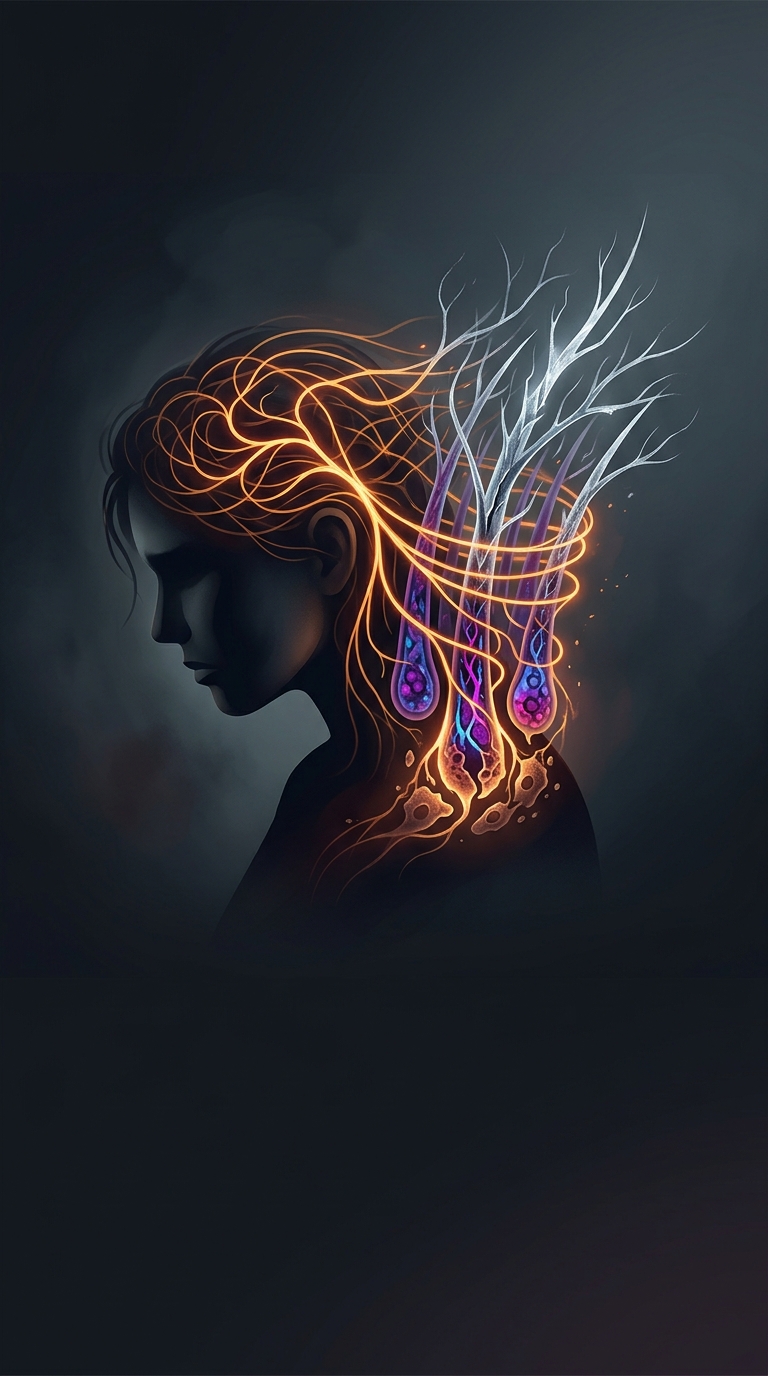
During intense stress, the sympathetic nervous system—the network that prepares the body for rapid action—can release the chemical messenger norepinephrine near hair follicles. In the proposed chain, that signal pushes pigment stem cells into unusually intense activity. Rather than remaining in reserve, they mature into pigment-producing cells; as the reserve is used up, the follicle can no longer reliably make colored hair.
Why the change appears as hair grows
A strand that has already emerged from the scalp is made of dead, keratin-filled cells. It cannot be recolored from within by a stress signal. The effect, when it occurs, is at the follicle: later growth may contain less pigment, so gray appears in the new portion of the hair.
That distinction also helps explain why stress-related graying would not necessarily happen overnight. Hair has to grow out from the follicle before a change in its pigment becomes visible. And because follicles operate individually, the timing and pattern can differ across the scalp.
A mechanism, not a simple clock
This pathway offers a biological explanation for how severe stress could contribute to graying, but it does not mean every stressful period will turn someone’s hair gray. Hair color is shaped by multiple influences, including age and inherited traits, and the stem-cell mechanism does not make stress the sole cause of gray hair.
The key idea is more specific: stress can affect the follicle’s future supply of pigment, rather than stripping color from a strand that has already grown.