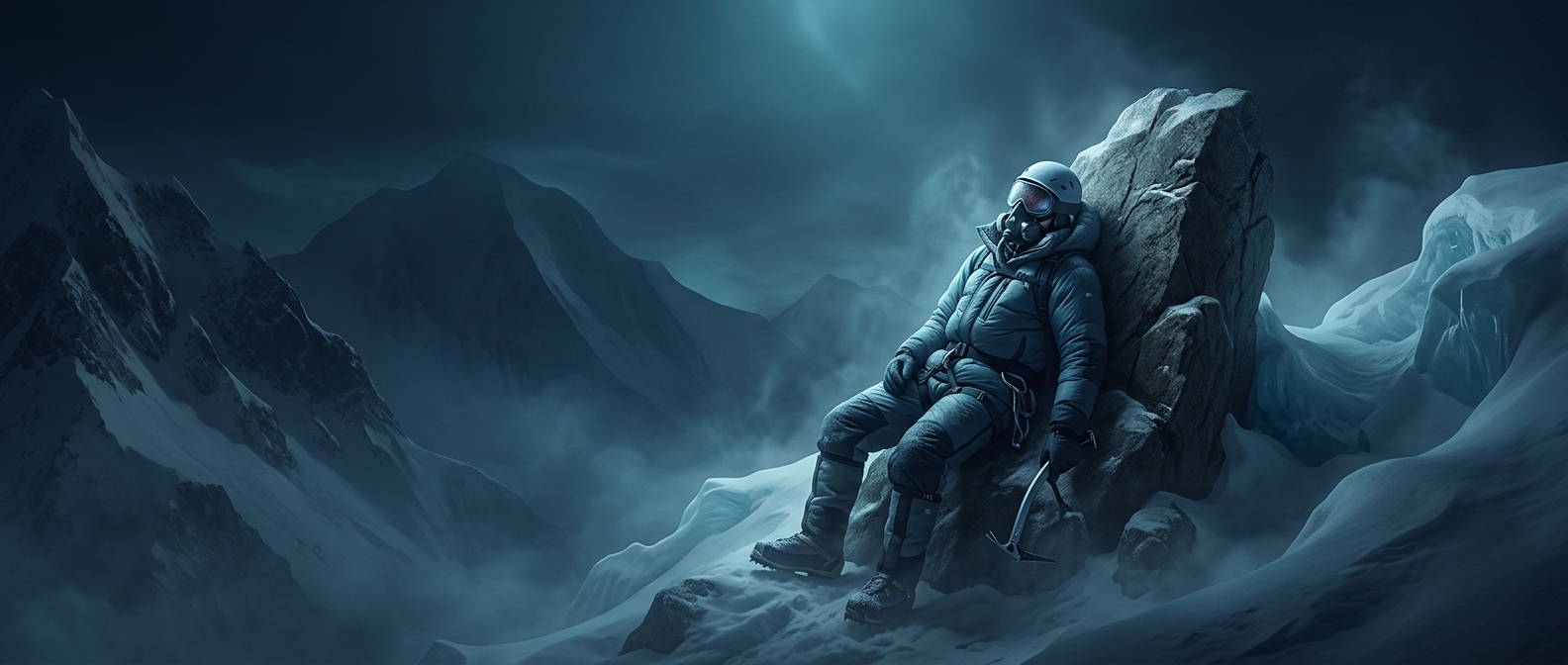
Why the air stops sustaining the body
At roughly 26,000 feet, the air still contains about the same proportion of oxygen as it does at sea level. The crucial difference is air pressure: it is much lower, so oxygen molecules are more spread out. Each breath therefore pushes less oxygen across the lungs and into the blood.
The body tries to compensate by breathing faster and making the heart work harder. Given time at altitude, it can make further adjustments, but those changes cannot restore the oxygen supply available lower down. The brain and muscles are left working with less fuel, affecting coordination, judgment, and strength—abilities climbers need to stay safe.
Why time becomes the danger
The name “death zone” describes the risk of staying at this height, not a precise boundary where everyone immediately dies. Above it, the body’s limited compensation cannot keep pace with the strain. A climber may become increasingly exhausted or confused, and severe altitude illness can cause dangerous swelling in the brain or lungs.
That is why high-altitude climbs are organized around limiting exposure: climbers aim to spend as little time as possible at these heights and descend when they can. Supplemental oxygen can help by increasing the oxygen available with each breath, but it does not make prolonged exposure harmless. In the death zone, even ordinary tasks consume time and energy the body struggles to replace.