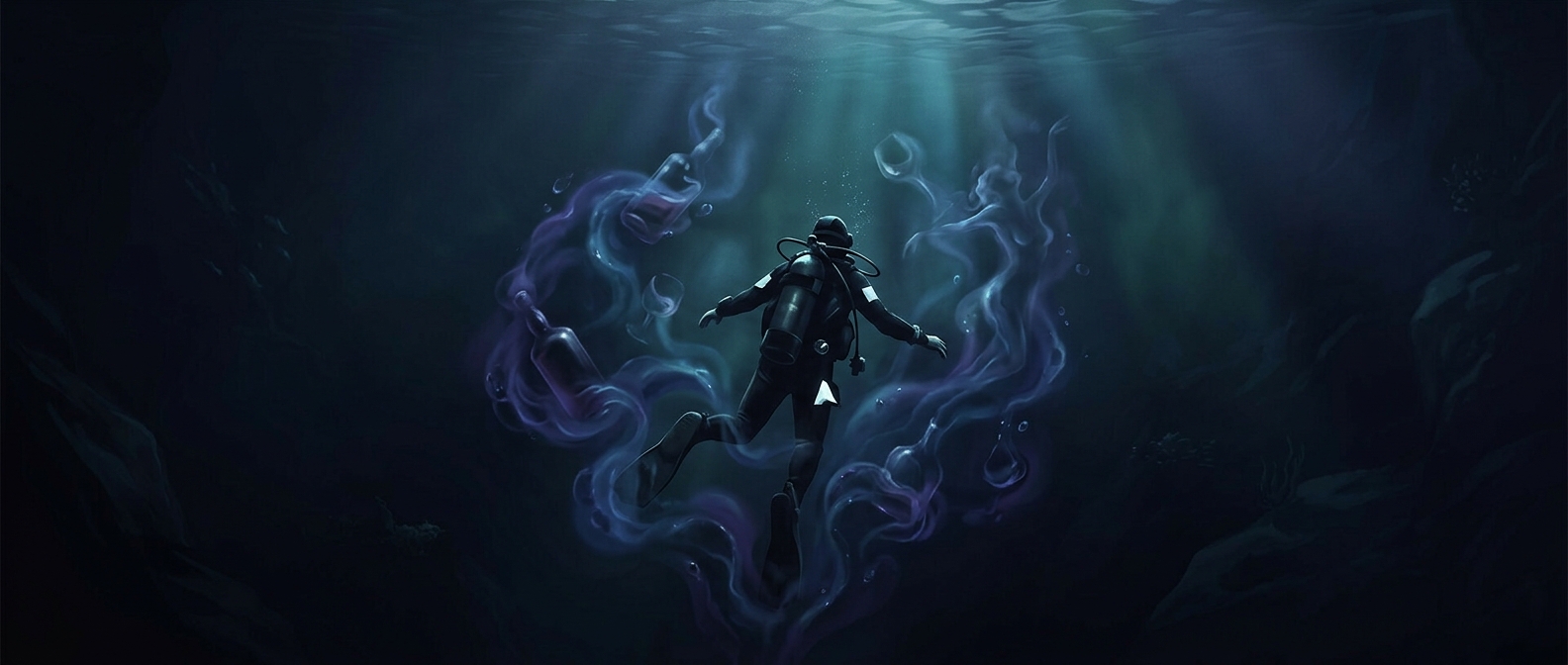
Why nitrogen changes the mind underwater
As a diver descends, the surrounding water pressure rises. The breathing gas in a scuba tank is delivered at that pressure, so each breath contains nitrogen at a higher pressure than it would near the surface. More nitrogen then dissolves into the body’s tissues, including the brain.
There, nitrogen can disrupt how nerve cells communicate. The result is nitrogen narcosis: a temporary change in thinking and behavior that can resemble alcohol intoxication. A diver may feel unusually relaxed or euphoric, but also become confused, slow to react, or overconfident. The effect is not caused by oxygen deprivation, and it does not mean the diver has literally consumed alcohol.
A dangerous mismatch between feeling and ability
Narcosis is risky partly because it can undermine the judgment needed to recognize it. Someone may feel capable while struggling to follow a plan, read instruments, or respond to a problem. Underwater, a small mistake—such as losing track of depth or failing to manage equipment—can quickly become serious because the diver cannot simply surface without considering decompression and other hazards.
The effect generally eases as the diver ascends and pressure falls. That makes depth management and a controlled response important: a diver who notices impaired thinking needs to signal a buddy and move to a shallower depth safely, rather than relying on confidence that may itself be part of the narcosis.
Why divers plan around it
Narcosis varies among people and circumstances, so divers cannot count on a precise personal warning point. Training and dive plans account for the possibility by limiting exposure to depth and keeping procedures simple. In some technical dives, divers use breathing-gas mixtures with less nitrogen to reduce the risk. The practical danger is not just feeling “drunk” below the surface; it is making a consequential decision while believing your judgment is fine.