Where the virus waits
After chickenpox clears, the varicella-zoster virus does not necessarily leave the body. Some of it moves from the skin into sensory nerves—the nerves that carry information such as touch and pain—and settles in clusters of nerve cells called ganglia, located near the spinal cord and brain. There, the virus can remain inactive: it is present, but not making enough new virus to cause the familiar itchy rash.
The immune system keeps this dormant infection under control. That is different from eliminating every trace of it, which is why a past infection can matter long after the spots have healed.
When a nerve becomes the route back
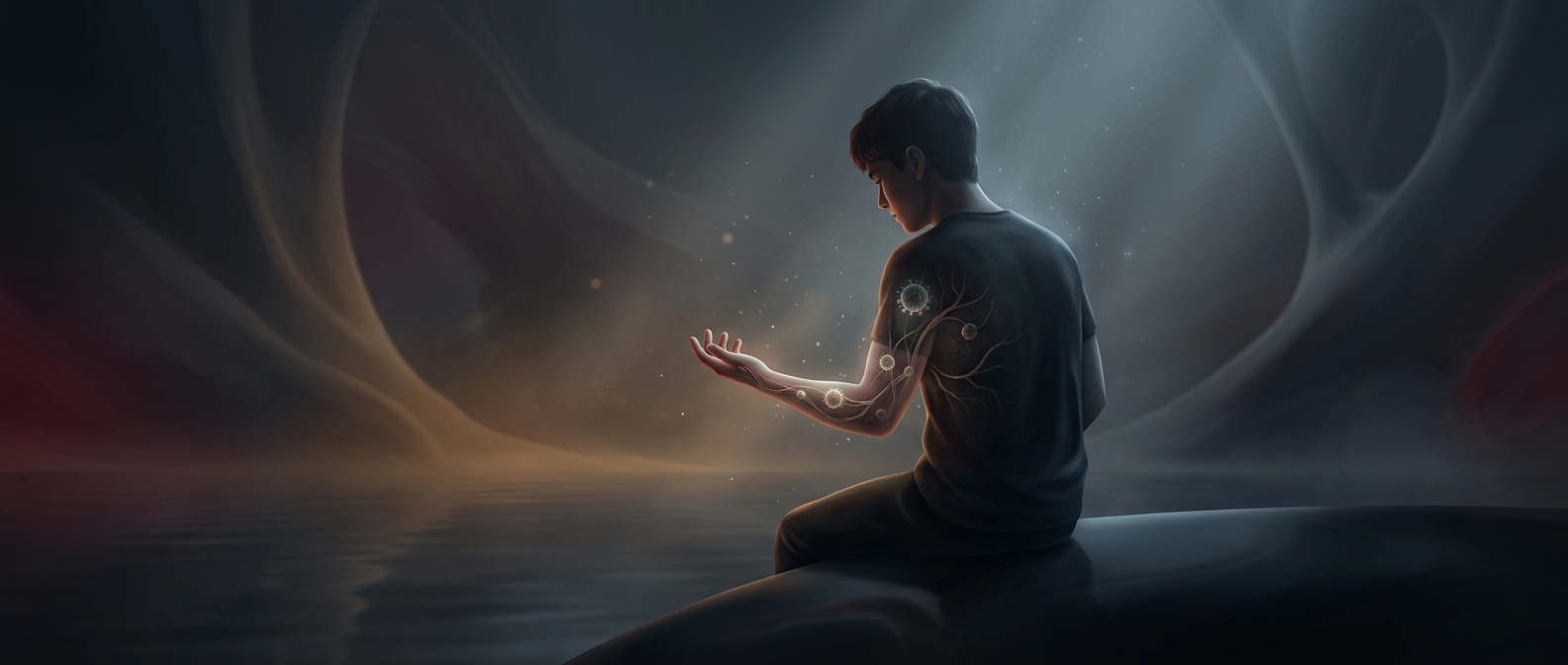
If control weakens, the virus can begin multiplying again inside a nerve cell. It then travels outward along the nerve toward the skin. Because each sensory nerve serves a particular patch of skin, the resulting rash and pain often form a band or cluster on one side of the body rather than appearing everywhere at once.
This reactivation is shingles. The nerve itself can become irritated, so burning, tingling, or pain may start before the rash appears. In some people, nerve pain continues even after the skin has healed.
Why the old infection still matters
Age and a weakened immune system can make reactivation more likely, though shingles can occur without an obvious trigger. The key difference is that chickenpox is a new infection spreading through the body, while shingles comes from virus already lodged in nerve tissue.
A person with shingles can pass the virus to someone who has never had chickenpox or its vaccine; that person would develop chickenpox, not shingles. The long-hidden virus therefore links two seemingly different illnesses—and can make a childhood infection relevant again decades later.