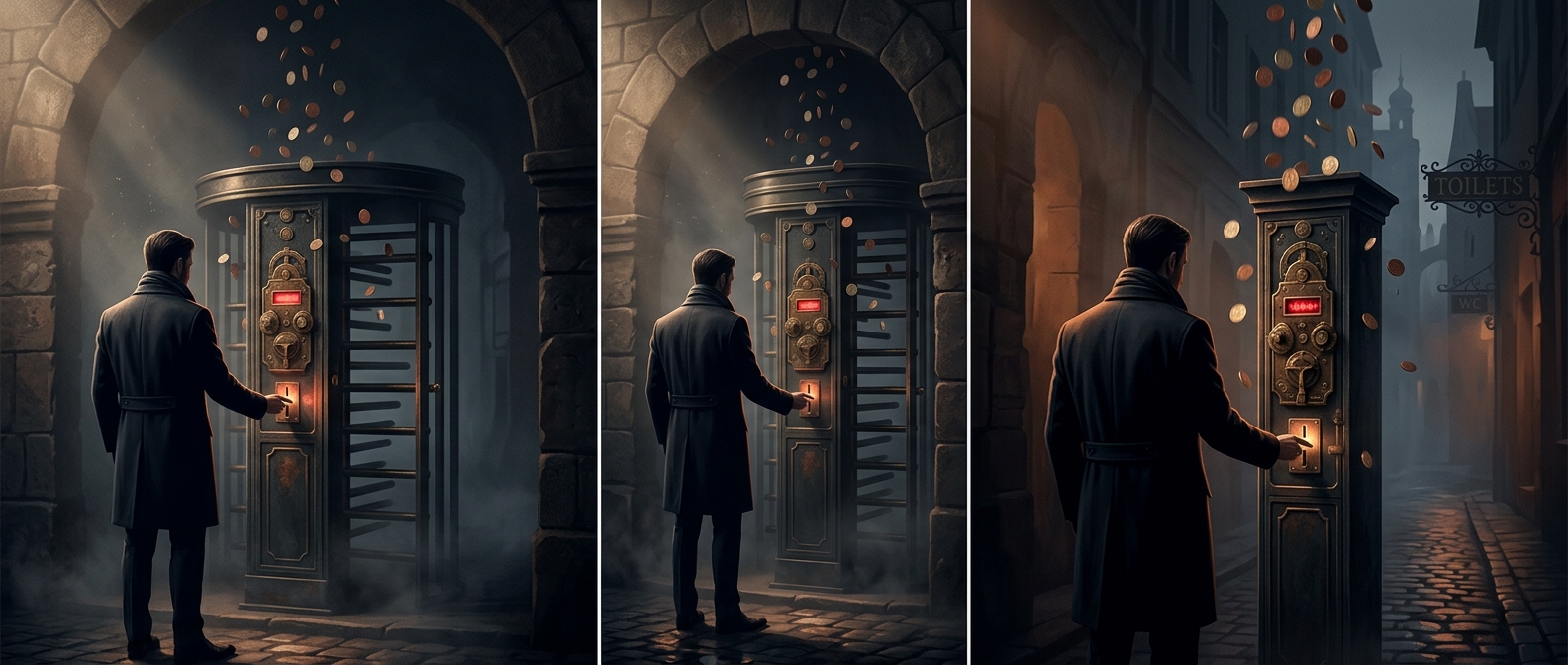
Why a public toilet might have a turnstile
In some European cities, stations, parks, and busy shopping areas, a public restroom is treated as a small service with ongoing costs—not simply an open room. Someone has to clean it, restock soap and paper, and repair plumbing. A small entrance fee helps pay for that work, especially where heavy foot traffic would quickly wear the facilities down.
The coin is also a simple access-control system. A coin-operated turnstile or door releases when it receives the required amount; some facilities have an attendant instead. The barrier helps limit entry to people using the restroom and makes it easier to collect fees, though it can also make access awkward if you arrive without the right change.
The fee is local, not a European rule
There is no single policy across Europe. Charges vary by city and location, and paid toilets often exist alongside free ones in public buildings, cafés, or other venues. A fee may reflect who operates a particular facility and how it is maintained, rather than a countrywide requirement.
For travelers, the practical lesson is to keep a little change handy when exploring a busy transit hub or public square. A 50-cent coin can be the difference between walking straight in and searching for another restroom.