Why Lettuce Belonged to Min
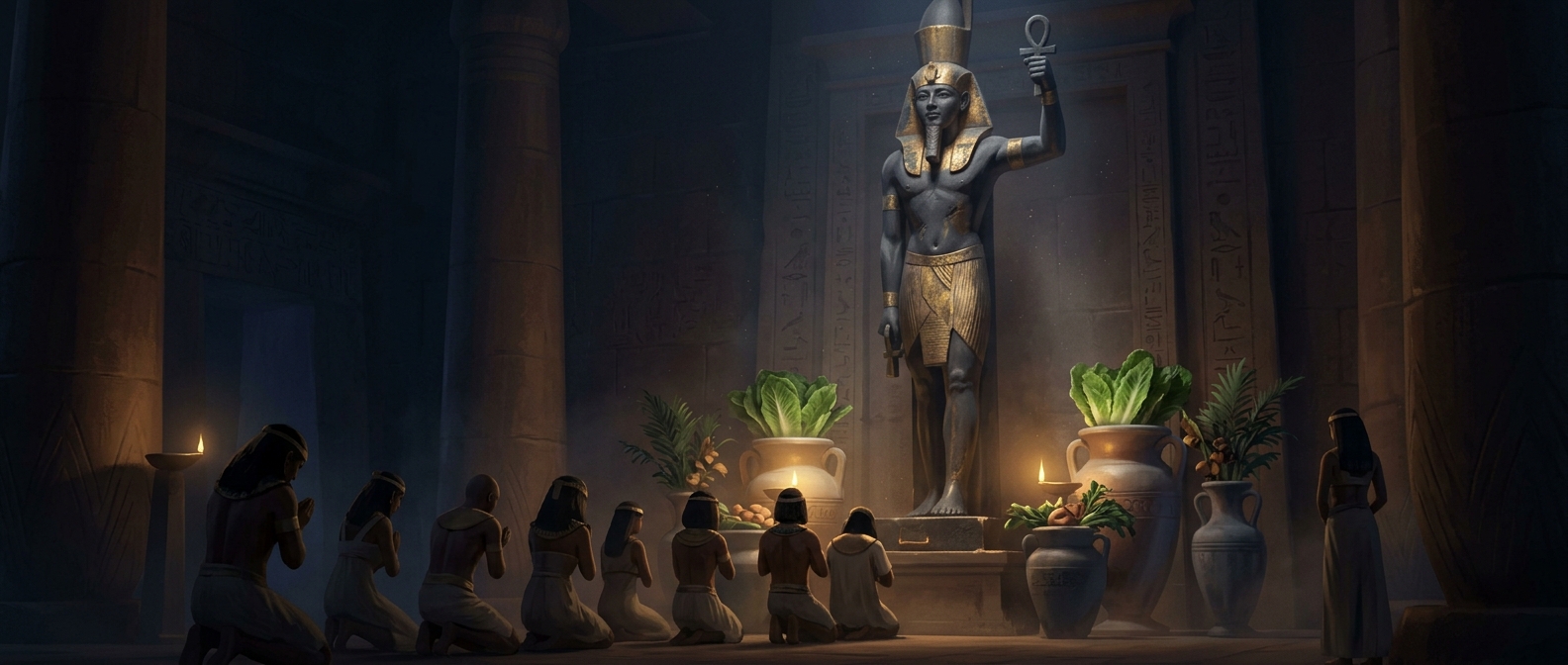
In ancient Egyptian religion, lettuce was more than food: it was associated with Min, a god of fertility and sexual potency. Images and offerings connected the plant with the deity, making an everyday crop part of religious expression. The link gave lettuce a meaning that could travel from the temple into popular belief: people thought it could support stamina.
A Plant as a Sign of Vitality
The association is best understood as a symbolic one, not as evidence that Egyptians had tested lettuce as a medicine. In a world where fertility mattered to households and the continuity of society, a plant linked to a fertility god could carry ideas of generative power. Offering lettuce to Min placed that meaning in a ritual setting; believing it might boost stamina extended it into ordinary life.
The lettuce of ancient Egypt also should not be pictured automatically as the crisp head of a modern salad. Cultivated forms varied, and the plant’s role in religious imagery mattered as much as its place on a plate. A familiar green could serve both as nourishment and as a sign of the power to produce life—which helps explain its unexpectedly charged reputation.