Why Thirteen Became a Lunar Number
A lunar cycle—the time from one new moon to the next—lasts about 29½ days. That makes the moon’s rhythm feel distinct from the solar calendar: twelve lunar cycles fall short of a solar year, while thirteen would run longer. Still, the near-fit gives thirteen an evocative place in traditions that organize time around the moon.
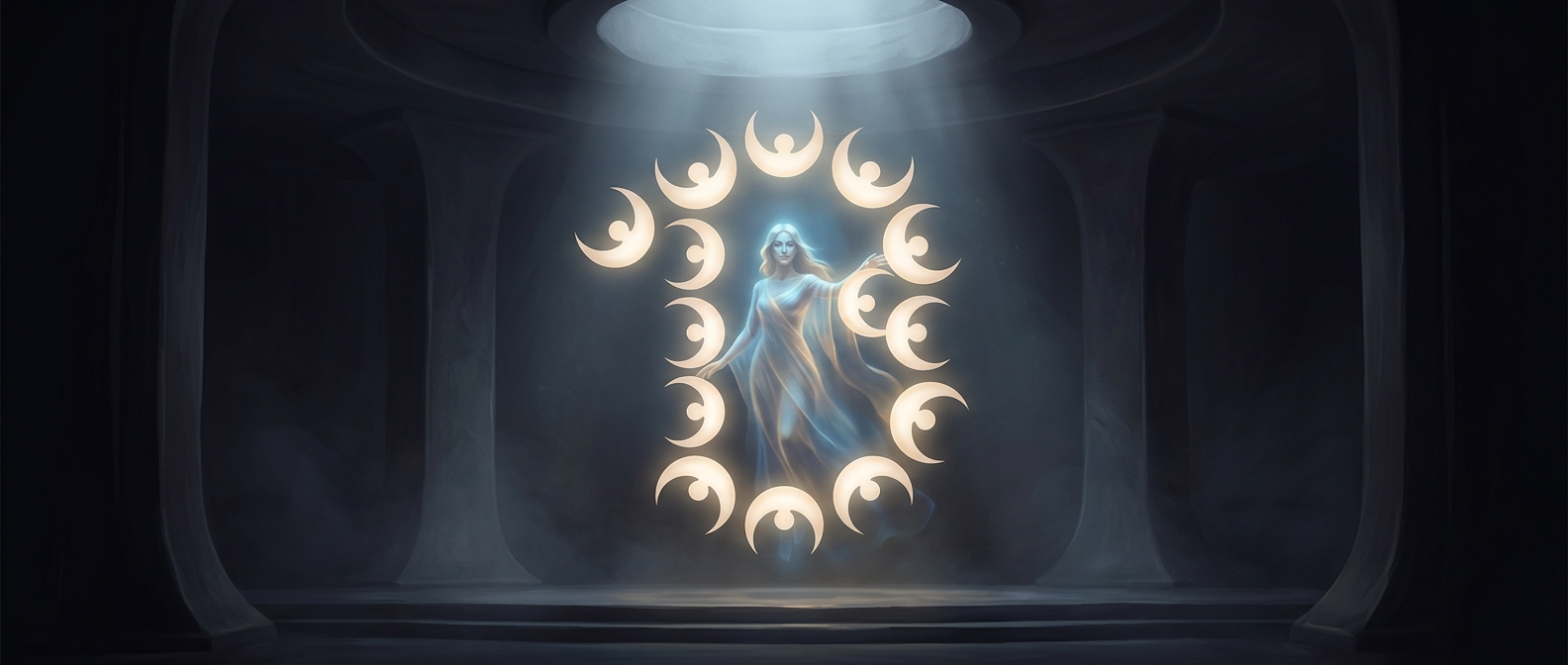
In some esoteric systems, the moon’s recurring phases are linked with feminine power, fertility, or bodily rhythms. Thirteen can therefore serve as a symbol of cyclical change and feminine divinity, rather than as merely an unlucky number. The association is symbolic, not a single calendar rule shared by all lunar traditions.
A Different Reading of Bad Luck
The number’s negative reputation is sometimes interpreted through that symbolic lens: if thirteen carries feminine or lunar meaning, its bad luck status can be read as evidence of efforts to diminish those associations. That is an interpretation of cultural symbolism, not a settled account of how the superstition began. Traditions differ, and the same number can carry conflicting meanings.
The contrast is what makes thirteen compelling in these traditions: a number treated elsewhere as ominous can also mark the moon’s recurring presence and the feminine symbolism attached to it.13 is not inherently sacred or unlucky; its meaning changes with the story a culture tells about it.