Why underwater stages can make a good game feel awkward
A water level often changes more than the scenery: it changes the rules your hands have learned. On land, movement is usually immediate. Underwater, a character may drift, rise, sink, or keep moving after the player lets go. That inertia can make a familiar jump or turn feel imprecise, especially when the game’s camera and controls were built for running across solid ground.
The challenge is not simply that swimming is slower. Designers have to make the player understand where they are going in three dimensions while preserving the clear routes and quick reactions that work on land. If the camera lags behind, the character blocks the view, or the background offers few visual landmarks, it can become hard to judge distance and direction. A small navigation mistake then feels like a control problem.
One environment adds several kinds of pressure
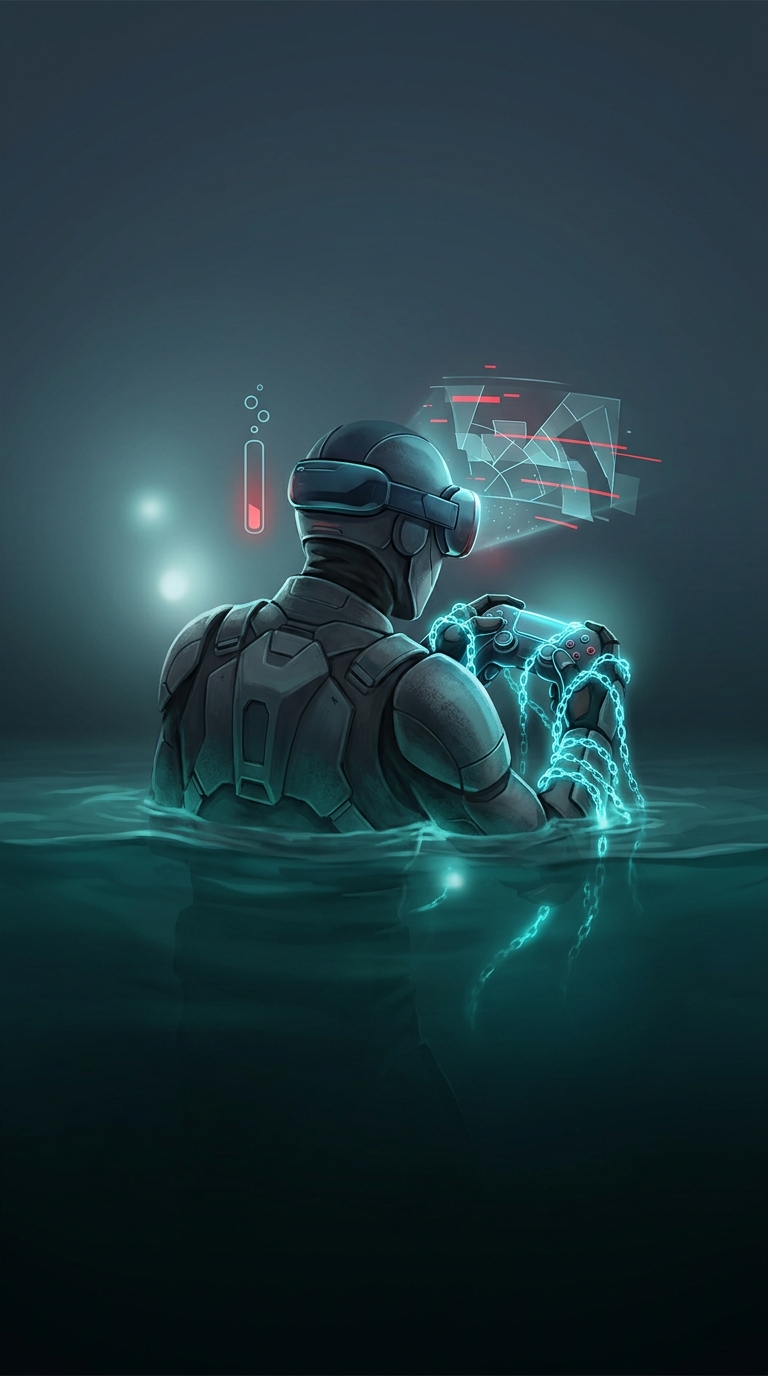
Water also reshapes combat and exploration. Attacks may travel differently, enemies can approach from above or below, and familiar tools may no longer work. Add limited oxygen or a current that pushes the player off course, and the level is asking them to manage a new hazard while they are still learning how to move.
That combination can produce tension, but it can also interrupt the game’s rhythm. A timed air supply turns sightseeing into a countdown; a long swim can make returning to a missed path feel like a chore. The effect is strongest when the game introduces all these rules at once, without safe space to practice them.
The tradeoff behind the reputation
Water stages endure because they make a world feel larger and give designers a way to change the pace. The most successful ones treat swimming as a deliberate variation, with readable routes, forgiving movement, and hazards that teach rather than merely punish. When those supports are missing, the player is not just navigating a new setting—they are relearning the game at the moment it is least familiar.