Foosball Spacing Is a Coverage Problem
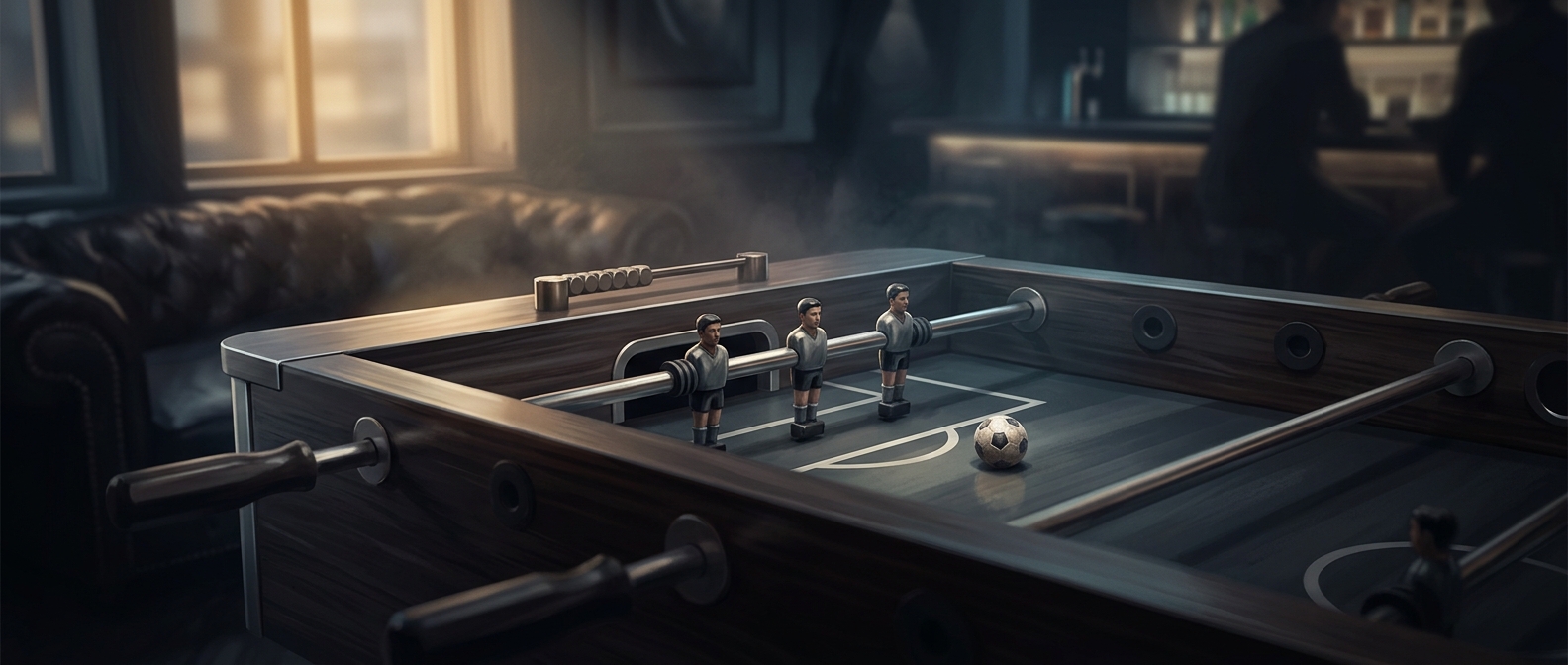
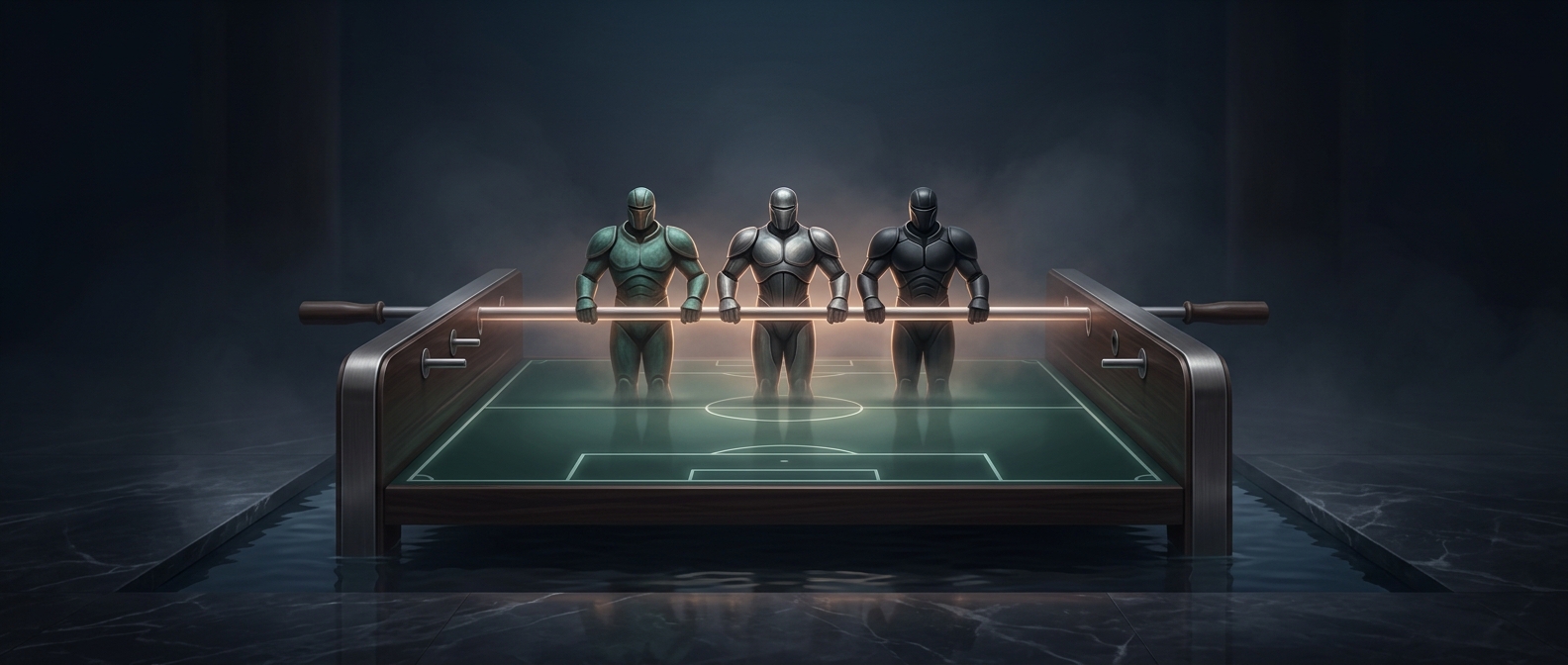
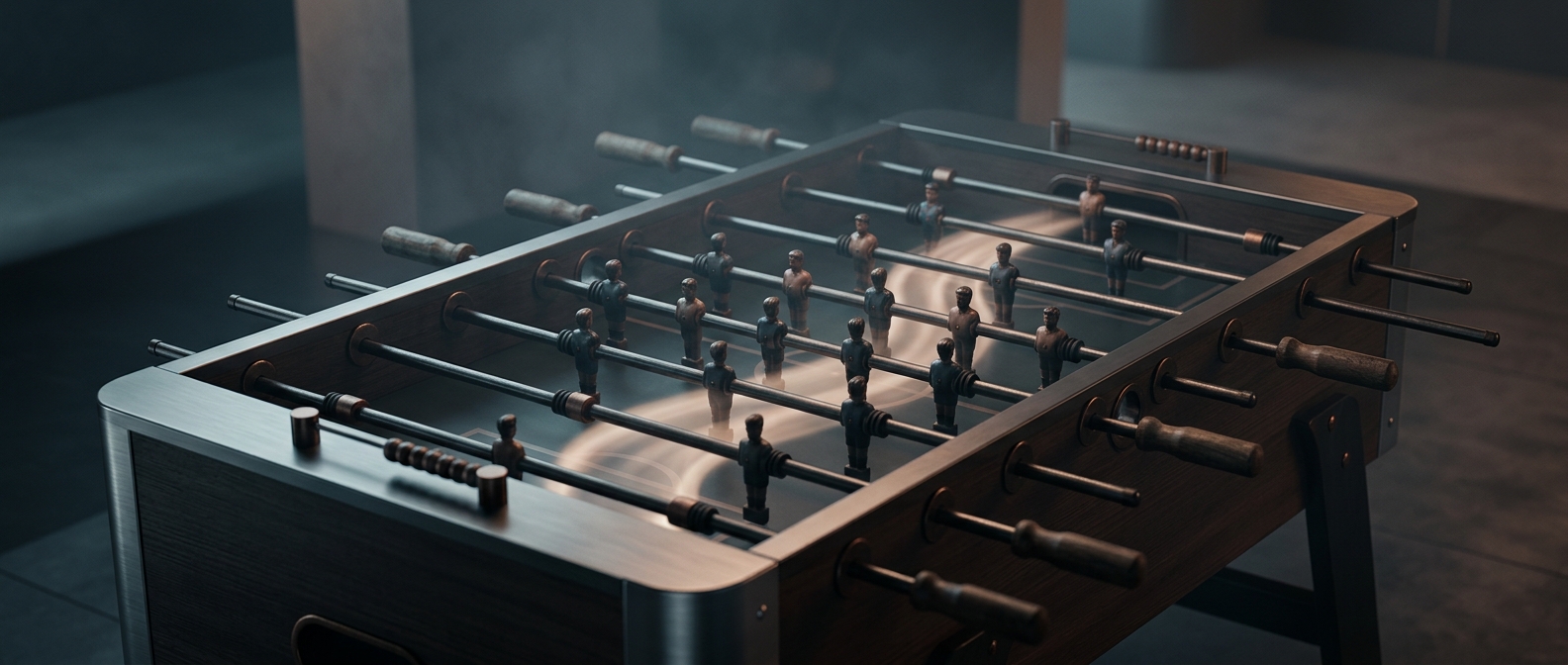
Each row of foosball figures is fixed to a rod, so its players cannot move independently. The rod can slide sideways and rotate, sweeping the figures across part of the table. Their spacing is chosen to make those sweeps overlap: as the ball travels across the field, a player should be able to reach it somewhere along the row’s path.
That geometry is a compromise. Figures packed too tightly would crowd one another and leave less room for the ball and the rods to move. Spaced too far apart, they would leave broad lanes that a ball could cross untouched. The goal is not to seal every opening, but to give players useful coverage while preserving room for play.
Why the Ball Still Finds a Gap
“Within reach” describes what a figure could cover, not what it can intercept at every instant. The ball keeps moving while a player is being lined up, and a rod’s sideways travel and rotation are limited. An opening can therefore be theoretically covered by a figure yet remain exposed during the brief moment the ball passes through it.
The table’s walls and the opposing row add another complication: the ball can be squeezed into a narrow space where a foot cannot make a clean strike. That is the maddening difference between a layout that offers coverage on paper and a shot a person can actually stop. The figures are spaced to make interception possible—not to make the ball impossible to lose.