Three figures spread the defense
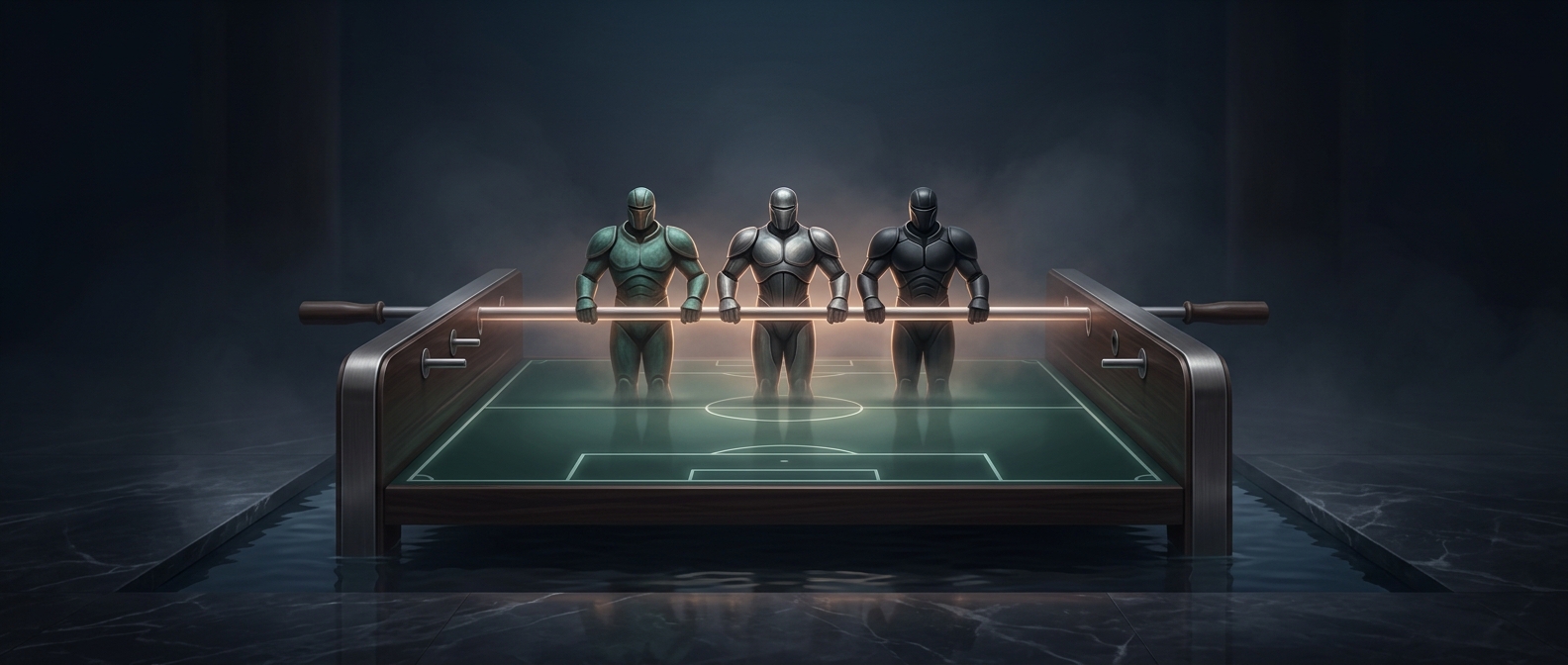
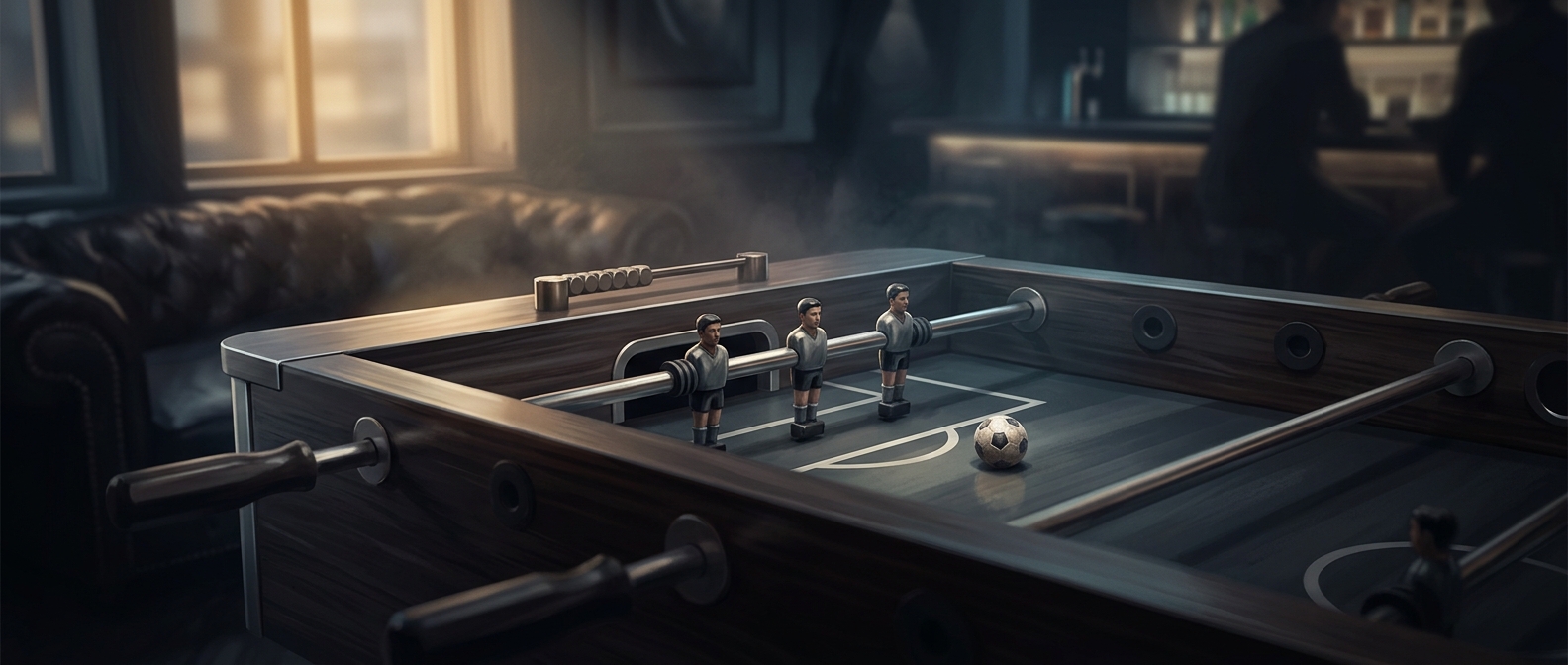
On an American-style foosball table, the goalie rod carries three figures across the goal mouth. When a player turns or slides that rod, the figures move together, letting the goalie line cover more of the opening than a single figure can at once. That extra width makes it harder to slip a shot into an exposed corner.
The figures are not a solid wall: gaps remain between them, and timing still matters. A defender must position the rod to meet the ball rather than simply leave it in place.
A different kind of challenge
Many European-style tables use one goalkeeper, who can be moved side to side to guard the goal. That concentrates defense in a single figure; the player has to track the ball and shift the goalie precisely to cover the angle of a shot. The American arrangement instead puts several blockers across the opening, so defense depends more on finding and exploiting the gaps between them.
The difference changes the feel of a match: a corner shot that might beat a lone keeper can meet a figure on a three-goalie rod. The extra coverage does not make scoring impossible—it changes where a shooter looks for an opening.