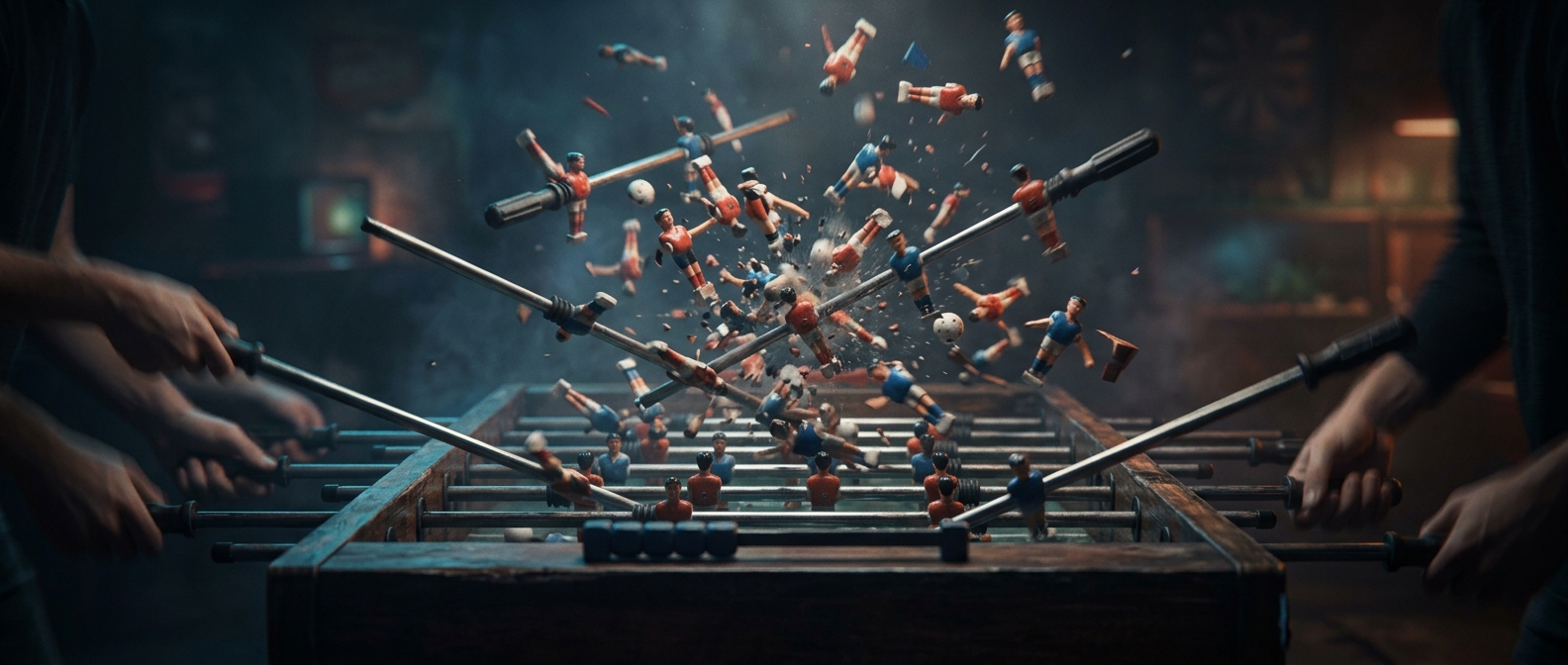
Why a spinning rod stops being a useful shot
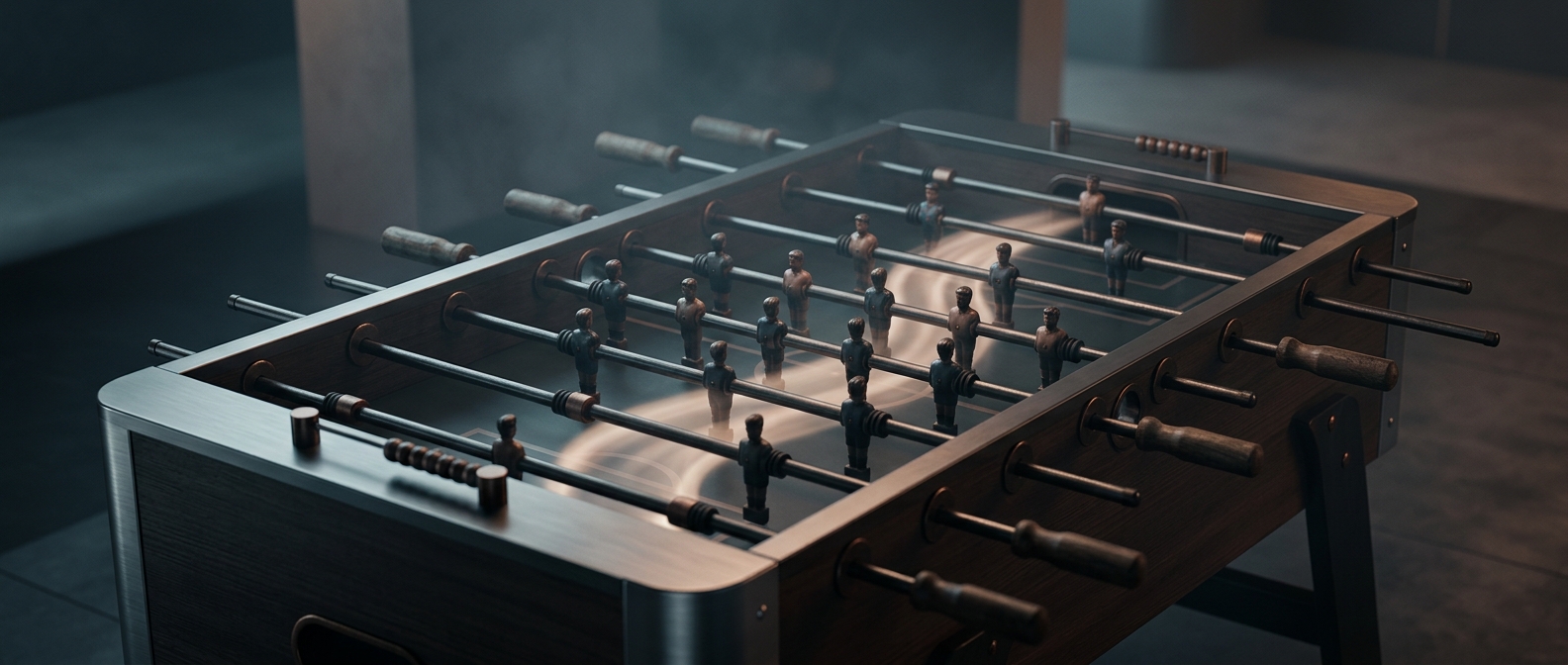
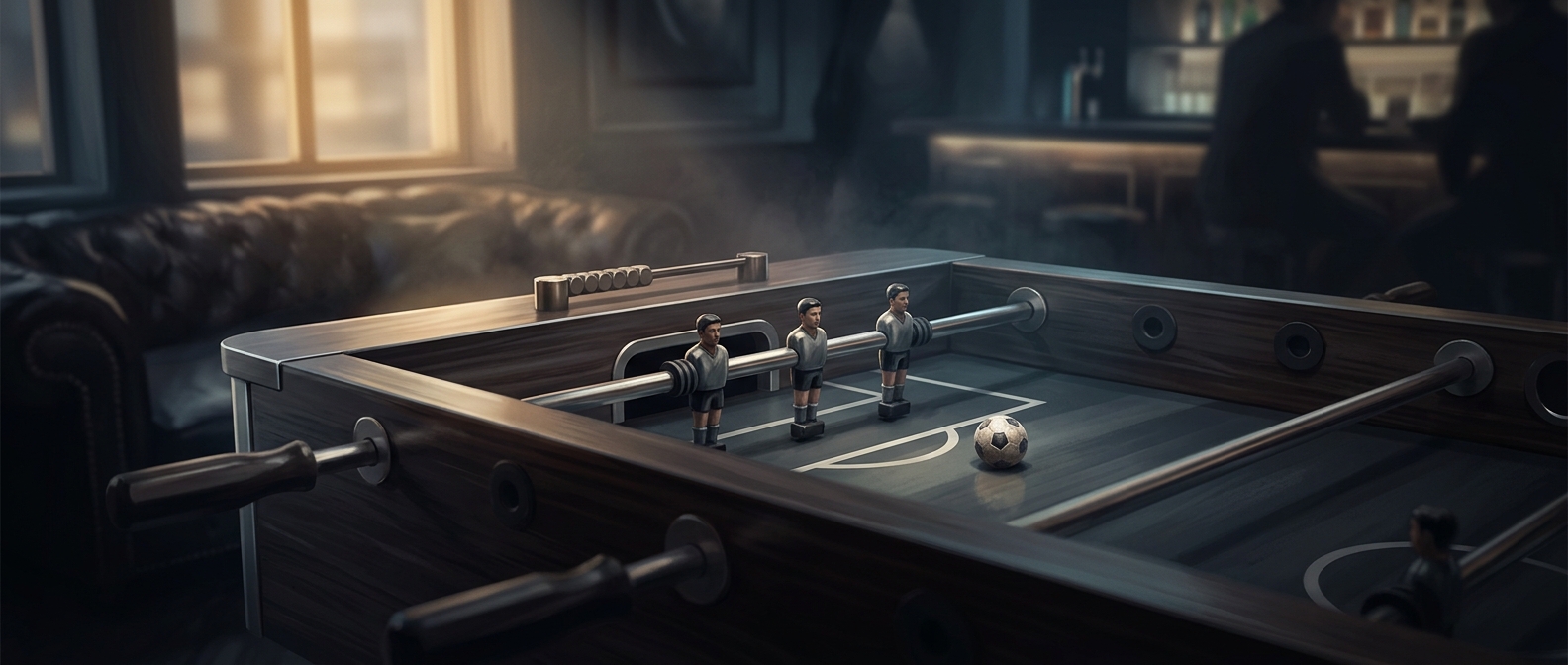
A foosball rod is a lever: turn the handle, and every player attached to it swings across the field. For a controlled shot, the player’s foot needs to meet the ball at the right angle and speed. A fast, full rotation sweeps the foot through a wide arc instead. It may hit the ball hard, but the contact is difficult to aim—and the ball can ricochet off the table walls, other figures, or the goal area.
That makes wild spinning less like a powerful version of passing and more like surrendering control. The ball’s next path depends on a tangle of collisions, while the spinning figures are poorly positioned to trap it or set up a teammate.
Speed also creates a safety and rules problem
The rods project beyond the sides of the table, where players’ hands and wrists are close to the handles. A fast rotation can make those handles harder to control, which helps explain the bruised-knuckle risk when a crowded game gets frantic.
Many organized forms of foosball restrict spinning, though rules vary. The restriction preserves the skill the game is built around: positioning a figure, controlling the ball, and striking it deliberately. When players spin instead, the table gets louder and less predictable—but not necessarily more effective.