How Air Hockey’s Airflow Can Send Dust Flying
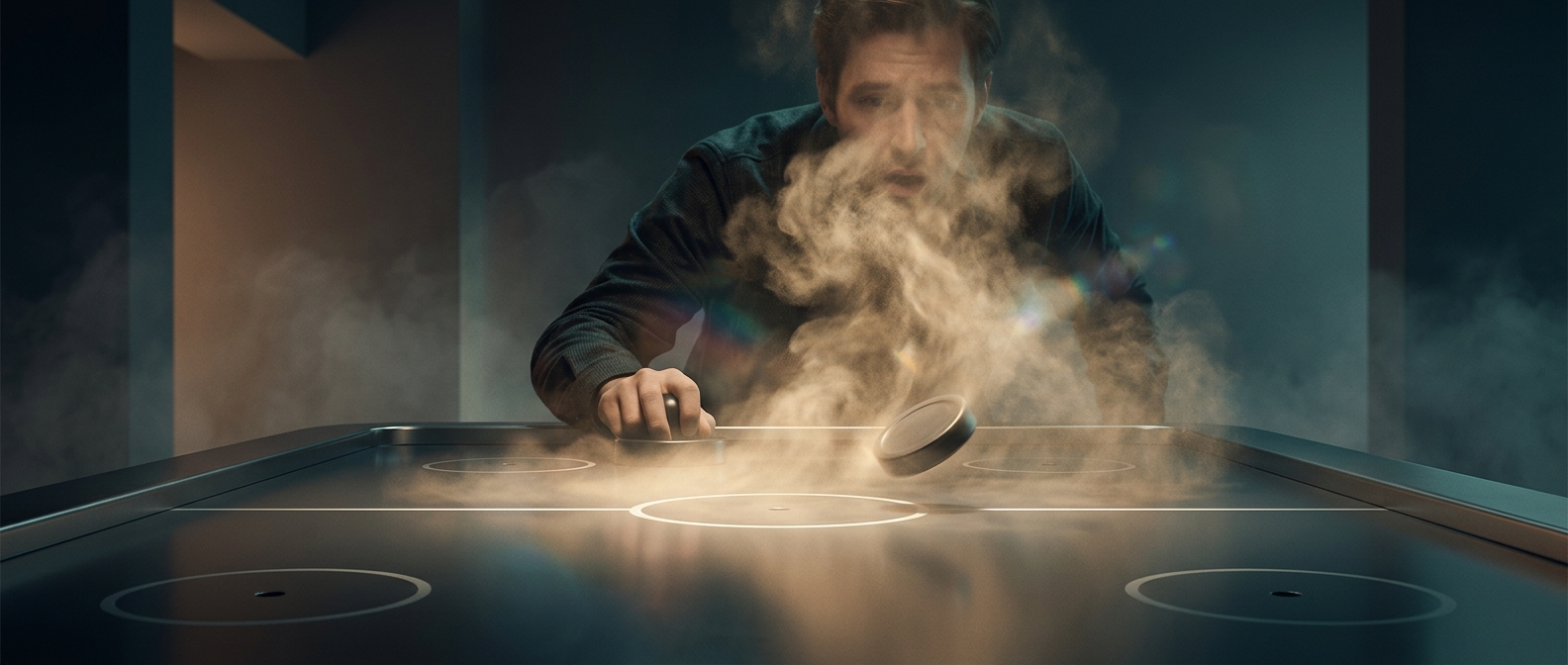
An air-hockey table is more than a smooth surface: a blower pushes air through many tiny holes, creating a thin cushion beneath the puck. That cushion reduces contact with the table, so the puck can slide quickly with little friction. But the moving air does not stop at the puck’s underside. It can also stir loose dust or small bits of debris on the playing surface, while a fast-moving puck may scatter particles when it skims or strikes the table.
Squinting Is a Quick Protective Response
If particles drift toward a player’s face, narrowing the eyes can help limit what reaches them. Squinting partly shields the eye and reduces the opening through which dust could enter. It is an automatic, practical reaction—not a special effect of the game’s speed itself.
The same airflow that makes the puck glide can therefore create a small nuisance around the table: it keeps play moving, but may also send loose particles into the air. Keeping the surface clean reduces the debris available to be stirred up in the first place.