A game built around controlled motion
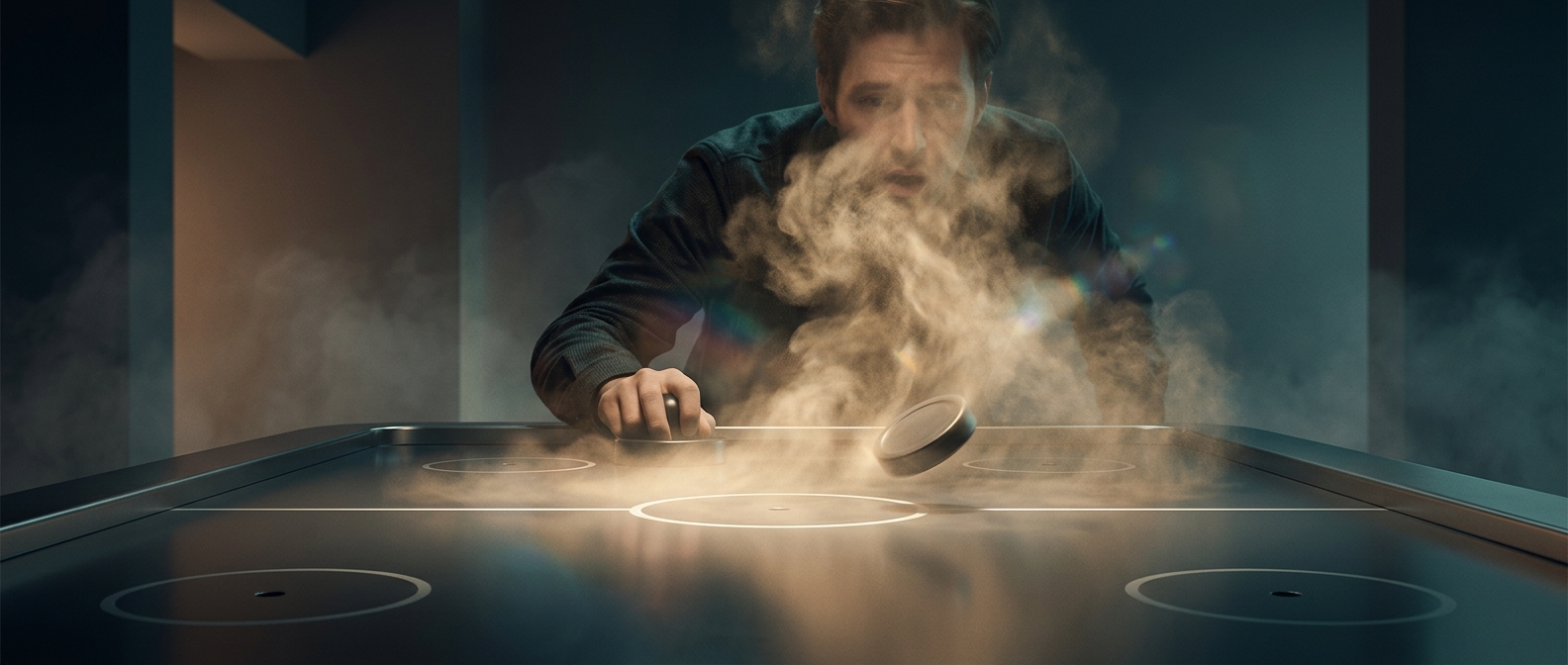
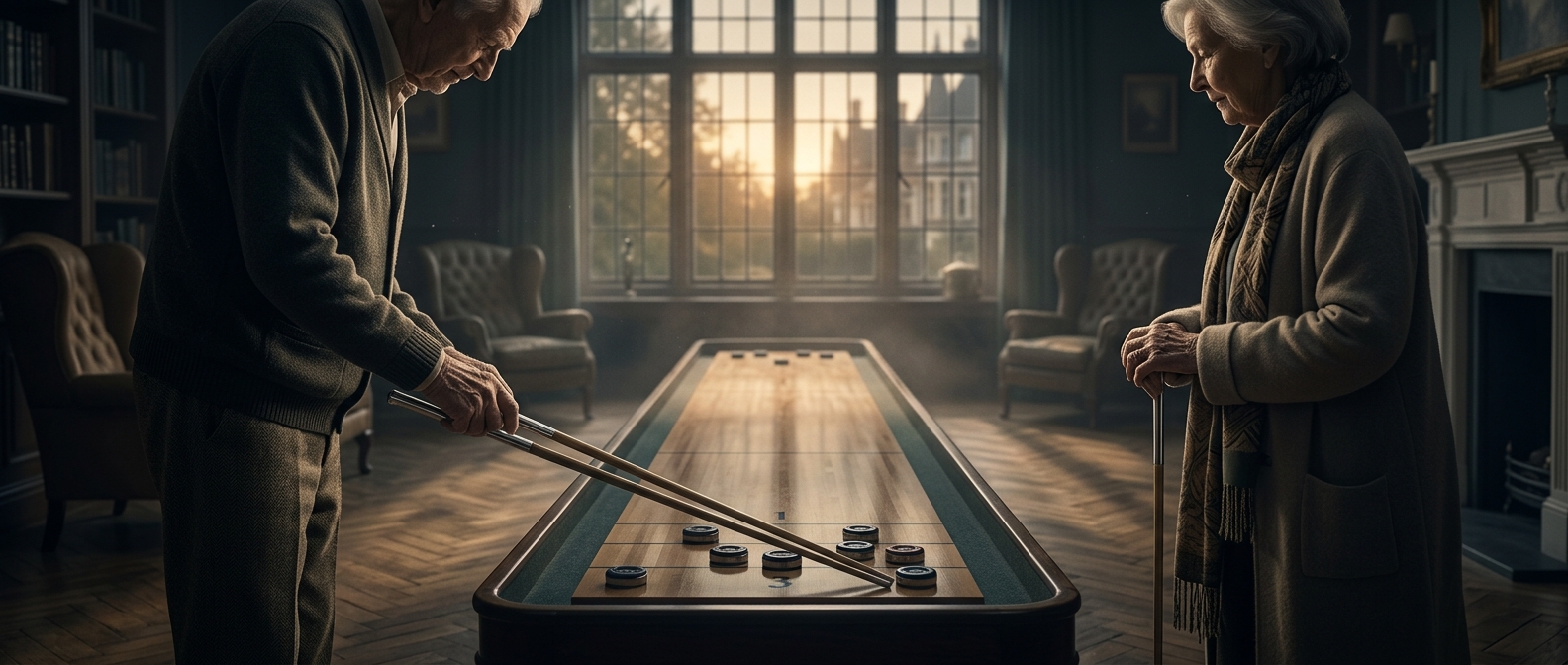
Table shuffleboard rewards a skill that is easy to underestimate: judging how a puck will travel after it leaves your hand. The playing surface is treated with fine shuffleboard wax, often called “sand” even though it is not ordinary sand. The tiny beads reduce friction, letting a puck glide a long distance while still responding to its speed, angle, and the surface beneath it.
That makes each turn a small calculation. A player can aim for a scoring zone, try to knock an opponent’s puck away, or leave a puck in a position that blocks the next shot. A shot that arrives too fast may slide off the far end; one that is too cautious may stop short. The simple equipment hides a contest of touch and tactics.
Why it suits retirement communities
The table keeps the action at a fixed height, and players can take turns without running or chasing equipment across a court. That makes it practical in a shared indoor room, where people can gather around the same game and play at a pace that suits them. It is low-impact, but not merely a pastime: because pucks can be displaced and positions can be defended, a close game can turn on a single shot.
The result is a useful combination for communal recreation: the rules are visible as soon as play begins, while skill develops through experience. A newcomer can slide a puck on the first turn; a practiced player is already thinking about where it will stop—and what the opponent will be able to do next.