Sweeping changes the stone’s contact with the ice
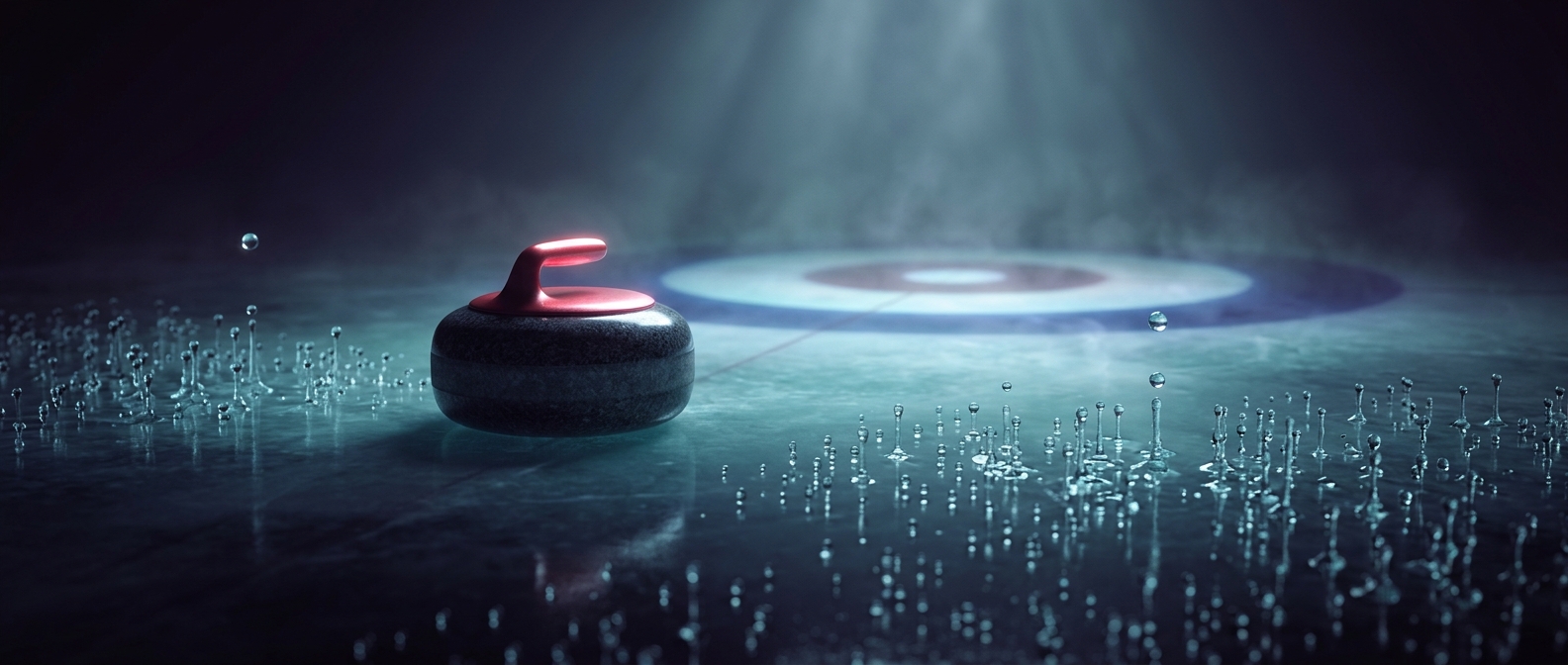
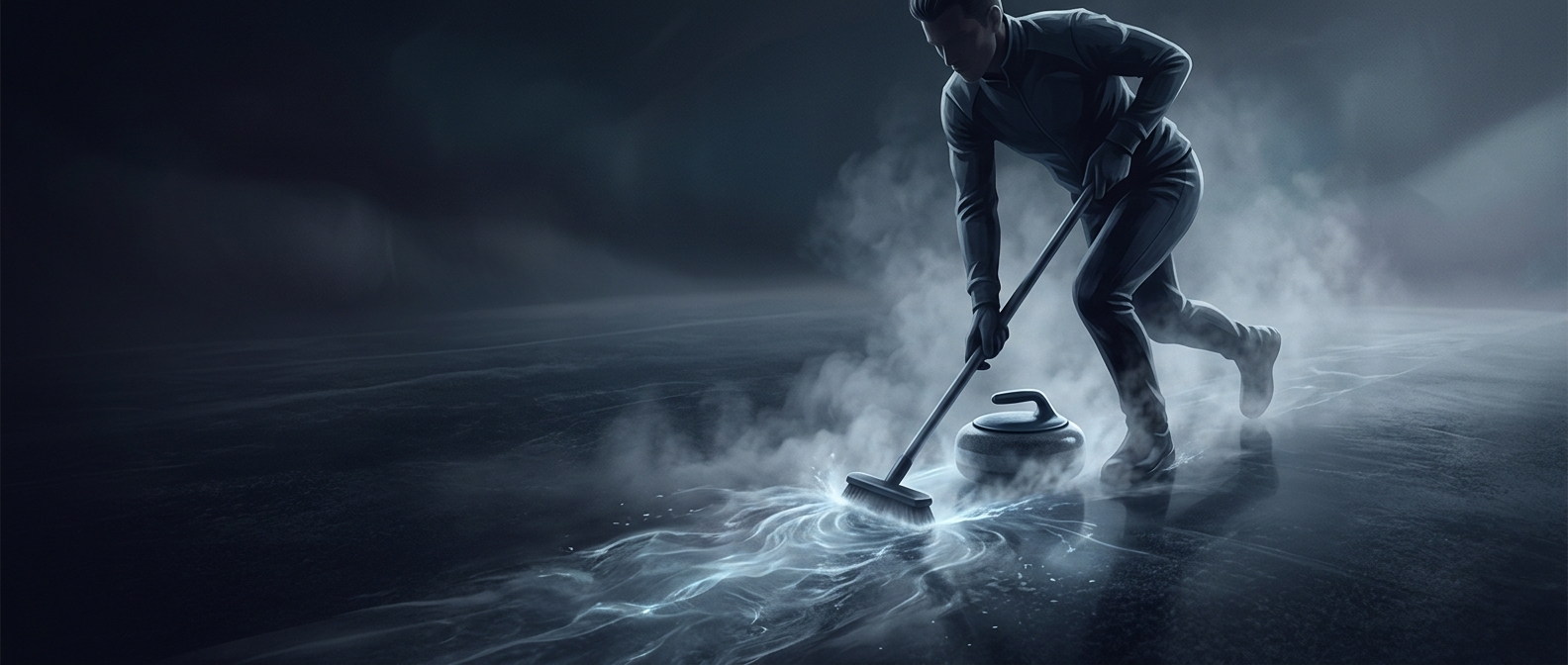
A curling stone does not glide over a perfectly flat sheet. The ice is covered with tiny frozen bumps called pebble, and the stone rides on a narrow ring on its underside. As sweepers brush rapidly in front of it, friction warms the surface just enough to create a very thin film of water. That film lowers resistance between the stone and the ice, allowing it to travel farther before slowing.
The effect is subtle: sweepers are not pushing the stone. They are changing the surface it is sliding over, and the advantage lasts only while the stone is moving across the swept area.
The brush can influence the stone’s path, too
A curling stone naturally bends as it travels; that sideways curve is called curl. Sweeping can reduce the friction that contributes to this bend, helping the stone stay straighter for longer. By choosing where and when to sweep, the team can affect both how far the stone travels and how much it curves—useful when a small change determines whether it reaches a target or bumps another stone aside.
That is why sweeping is a real-time judgment call. Brush too little, and the stone may fall short or curl too much; brush at the right moment, and a few seconds of work can change where it comes to rest.