A rainstorm pushed tennis indoors
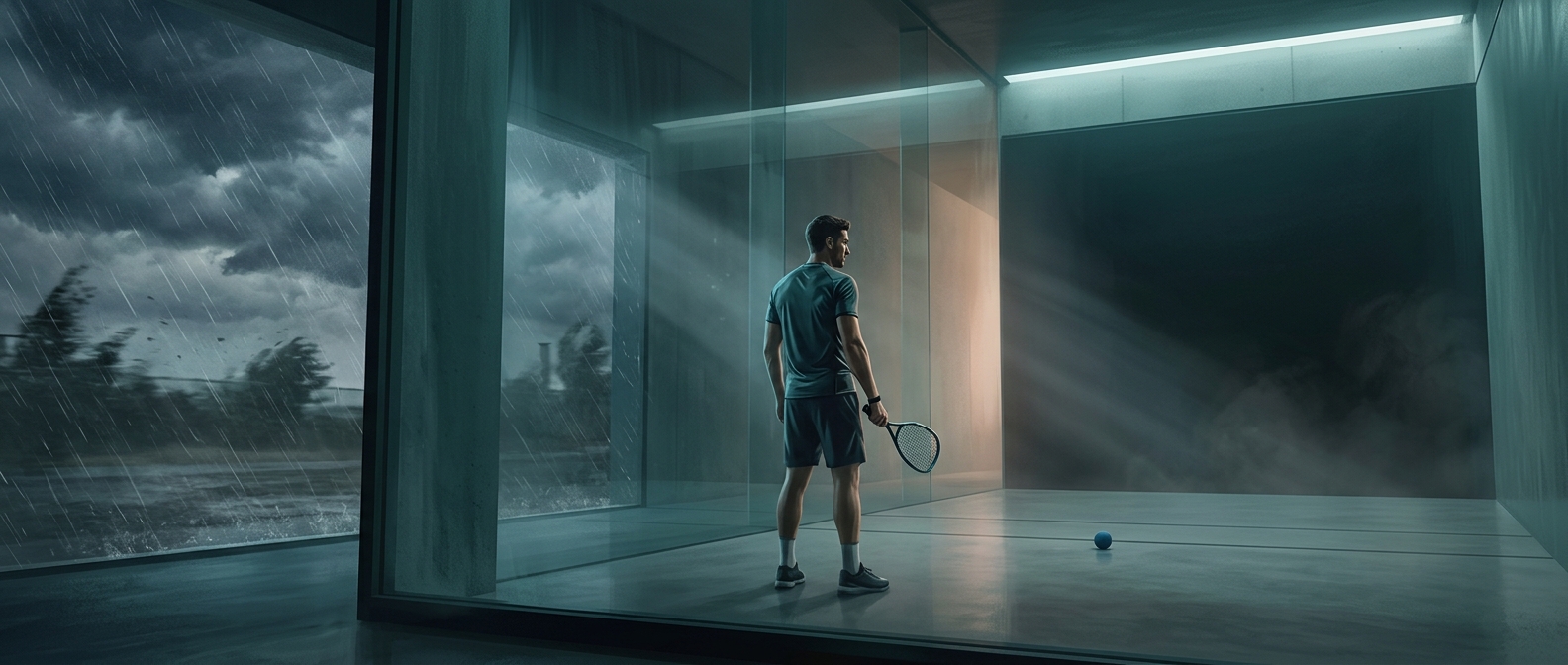
In the early 1950s, American player and tennis enthusiast Joseph Sobek wanted a way to play when weather made outdoor tennis impossible. Rather than wait for dry courts, he experimented with a ball and racquet suited to a small enclosed space. The result became racquetball, a game built around walls instead of a net.
Why the walls change the game
In tennis, a shot must clear the net and land inside the opponent’s court. In racquetball, players hit the ball against the front wall; after it rebounds, the other player must return it before it bounces twice. The side and back walls are also in play, so a shot can ricochet through the room rather than simply traveling across an open court.
That changes what counts as a useful shot. Players can send the ball low, high, or toward a side wall to make its rebound hard to predict. They also share the enclosed playing space, so positioning and avoiding one another matter alongside accuracy and speed.
A game shaped by its setting
The indoor court was not merely a shelter from bad weather; its boundaries supplied the game’s central tactic. Tennis could be played inside only by preserving its net-and-court logic, but Sobek’s version made the walls active parts of every rally. The same rain that stopped a tennis match helped inspire a sport in which a rebound, not a net, organizes the play.