A ball that changed the game
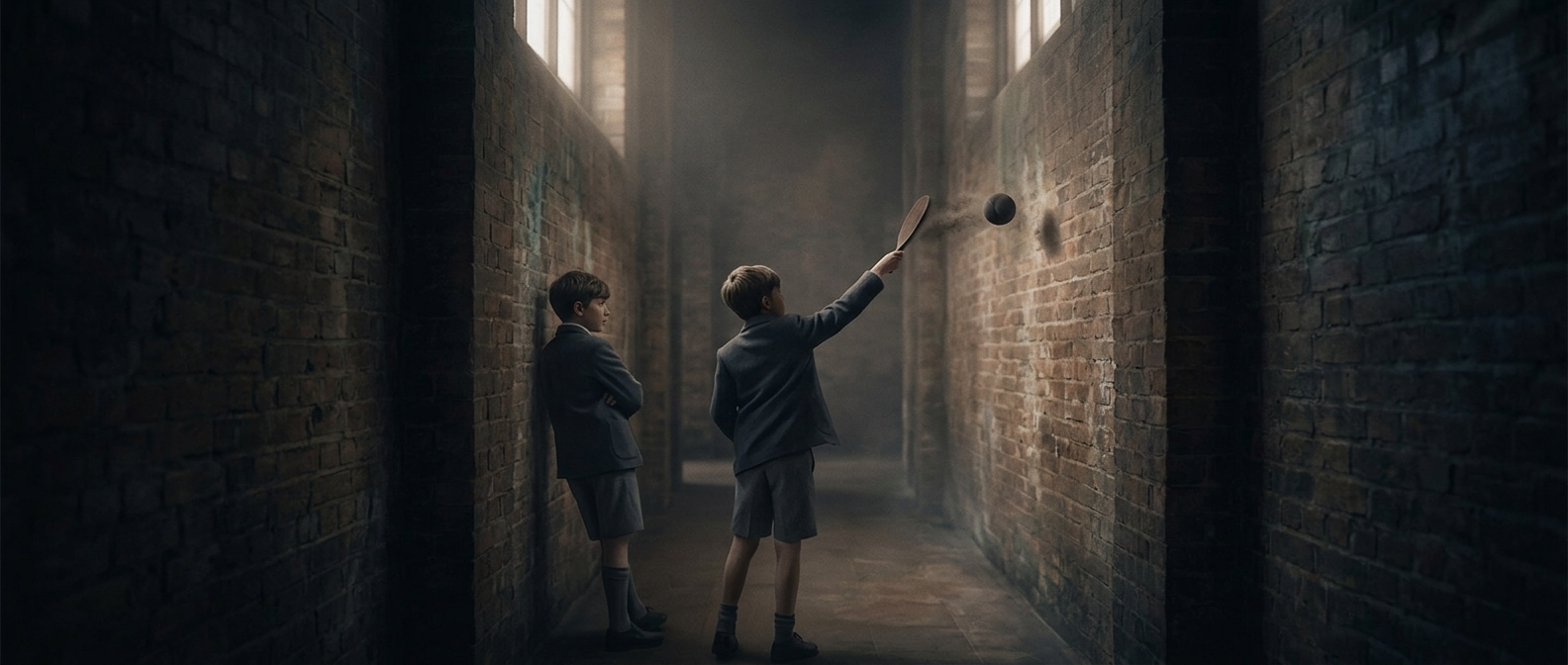
At Harrow School in England, pupils used punctured balls for an improvised wall game while they waited for tennis courts. Unlike a firm tennis ball, a damaged ball could flatten on impact and spring away at an awkward angle. That made the alleyway wall more than a practice surface: it became a source of unpredictable rebounds players had to chase and answer.
The name squash refers to the ball’s tendency to compress when struck. That softness helped distinguish the pastime from games played with harder balls, which rebound more sharply. A ball that lost some of its bounce could also keep play close to the wall, demanding quick movement and careful timing rather than long, powerful shots.
From waiting-time pastime to sport
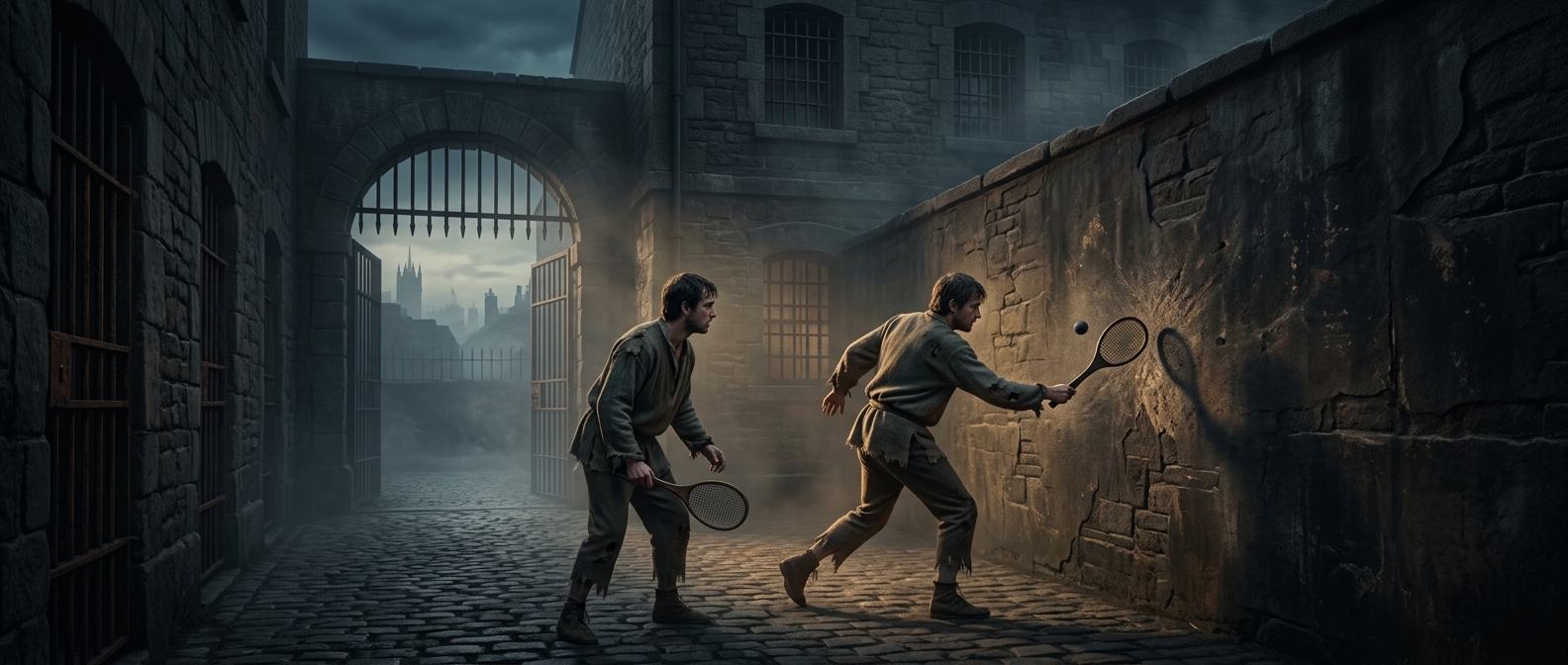
The pupils were adapting an existing idea—hitting a ball against a wall—rather than inventing wall games from scratch. What made their version distinctive was the combination of an enclosed alley, rackets, and a soft ball whose response was difficult to predict. Each rally turned the wall into an active part of the contest: a shot’s angle and pace shaped where the next player had to move.
That constraint gave the game its character. Players could not simply rely on a clean, uniform bounce; they had to adjust to the ball and to the limited space around them. A makeshift way to fill time while tennis courts were occupied thus supplied the central challenge that squash would develop into a sport.