When pretending looked like a threat
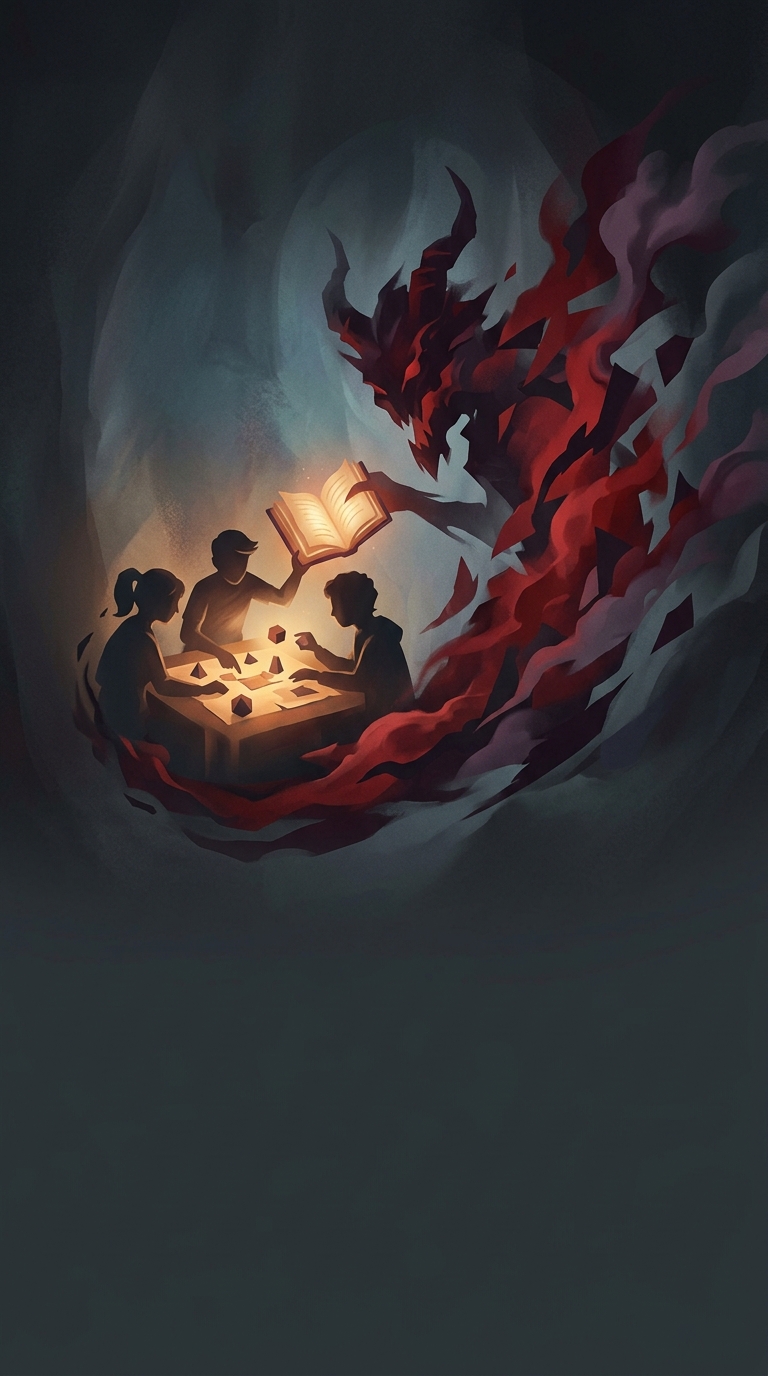
Dungeons & Dragons asked players to speak and act as imaginary heroes in a fantasy world. One person—the Dungeon Master—described the setting and played its monsters and other characters; the rest made choices for their own characters, using dice to settle uncertain outcomes. For fans, that was collaborative storytelling. To some parents and religious activists, the same ingredients—spells, demons, occult-sounding rituals, and sustained identification with a character—looked like an invitation to dabble in the occult.
That gap in interpretation helped turn a game into a public danger. In the 1980s, warnings circulated in pamphlets and media coverage that linked role-playing to witchcraft, Satanism, or violence. The fear was part of the broader “Satanic panic,” a period when some people treated signs of occult influence as evidence of hidden, organized danger. A game built around imaginary worlds was especially easy to misread: its rulebooks supplied elaborate fantasy lore, while play itself could be difficult to explain to someone who had never joined a session.
A fictional warning reached television
The anxiety also became entertainment. Mazes and Monsters, a 1982 made-for-television movie starring a young Tom Hanks, portrayed a player whose involvement in a fantasy role-playing game blurs into a dangerous break with reality. Its plot gave viewers a dramatic version of the fear, not a documentary account of what ordinarily happened at a gaming table.
That distinction mattered. The game’s combat and supernatural creatures were features of a shared fiction, not instructions for real-world violence or worship. But pamphlets and a television drama could make an unfamiliar pastime feel more consequential than its ordinary practice: friends gathered around a table, described imaginary actions, and rolled dice to find out what happened next.