Dungeons & Dragons grew out of miniature wargaming
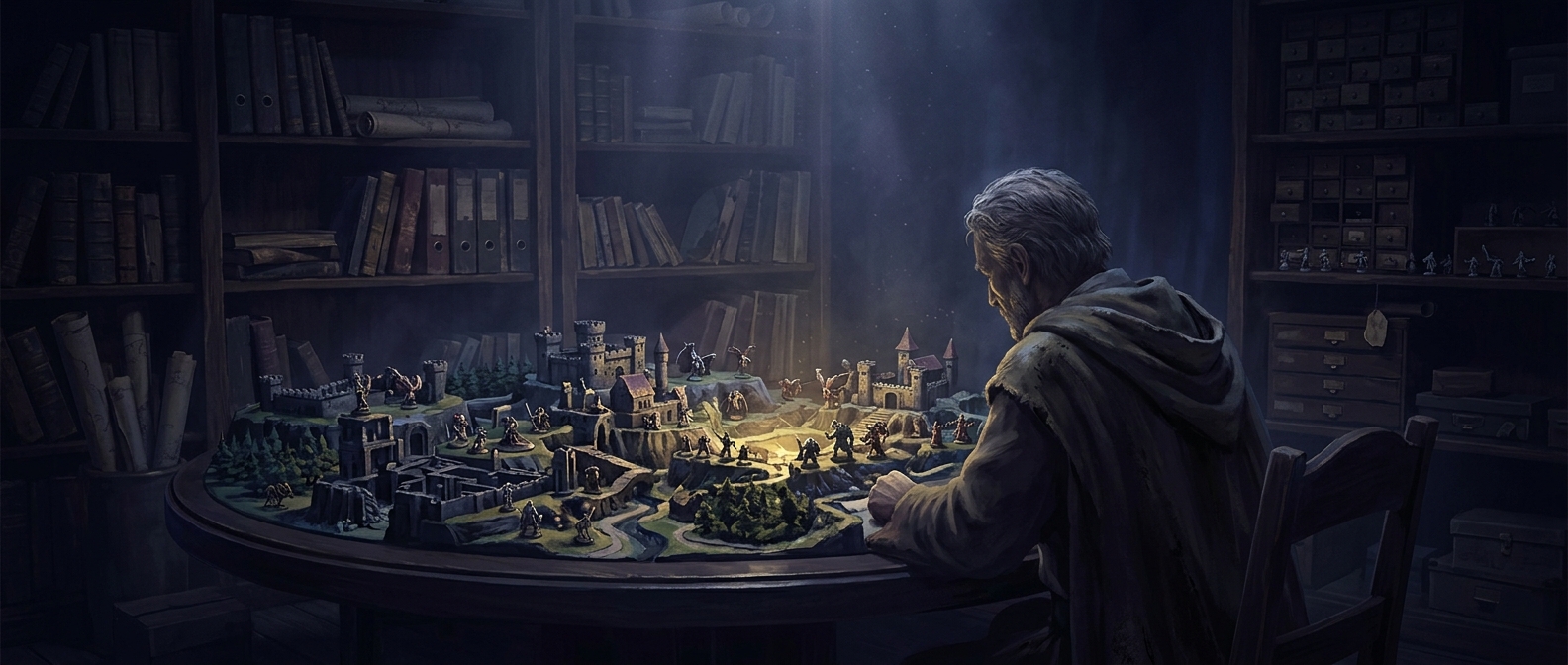
Before players were guiding individual heroes through dungeons, the hobby at the heart of Dungeons & Dragons was tabletop wargaming: moving miniature armies across a map, measuring distances, and resolving battles with rules and dice. Gary Gygax was active in that scene, and his fantasy battle rules, Chainmail, supplied part of the game’s early foundation.
The key shift came when Dave Arneson used fantasy wargame ideas in a continuing campaign called Blackmoor. Instead of each player commanding an army, a player could focus on a single character and what that character tried to do. Gygax and Arneson developed those ideas into Dungeons & Dragons, first published in 1974.
From battlefield rules to shared storytelling
That change in scale transformed the activity. A battle game asks how units fare against one another; a roleplaying game can ask whether one adventurer can sneak past a guard, persuade a stranger, or survive a trap. Dice and rules help settle uncertain outcomes, while a referee—later commonly called the Dungeon Master—describes the situation and applies the rules.
The game still carried its wargaming toolkit: maps, tactical movement, combat procedures, and careful rule use. But the focus had moved from winning a battle with an army to making choices as a character in an unfolding adventure. D&D did not discard the miniature-wargame hobby so much as turn its battlefield into a place for players to explore.