How a D&D campaign can outlast its original players
A tabletop role-playing campaign is not a single game with a fixed ending. Players take on fictional characters, while one person—the Dungeon Master—describes the world, plays its other inhabitants, and responds to the group’s choices. An adventure can lead into another, leaving the same imaginary world open for years of new stories.
That flexibility helps explain how a campaign begun in 1982 could still be running. The game’s rules provide a way to resolve uncertain actions, but the group supplies the continuity: remembered events, familiar characters, and consequences that carry forward. When players’ children join, they can enter a world already shaped by earlier generations rather than start from nothing.
What 30,000 miniatures add
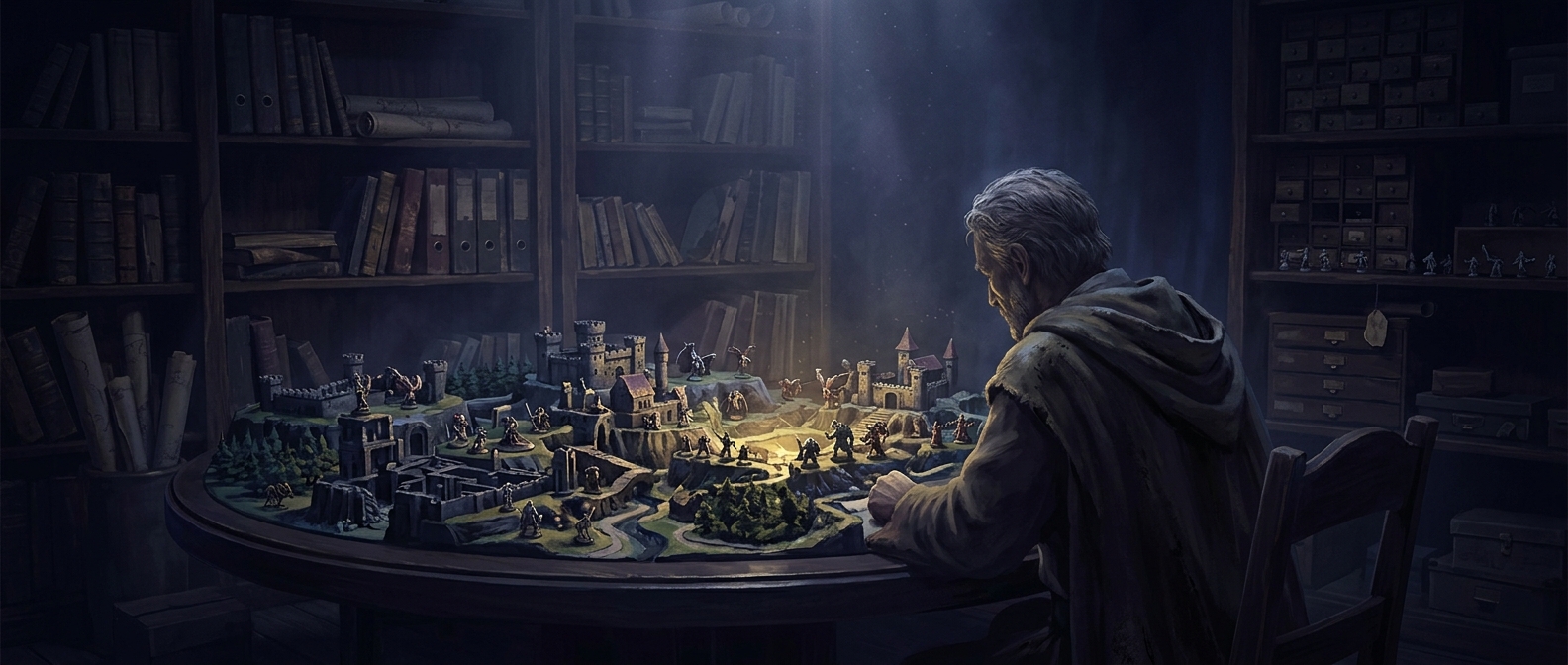
Miniatures are small figures used to represent characters and creatures, often on a map during a scene. A collection of more than 30,000 gives a game host an enormous physical cast to draw on; different figures can make a battle or encounter easier to picture than descriptions alone. The collection also records the hobby’s material side: decades of play can accumulate into a basement-sized archive.
The striking part is not just that the campaign has lasted. It is that its history can be handed on through both stories and shared play: children can meet characters and places that their parents already know, then help decide what happens next.