Why Some Foosball Goals Have Three Defenders
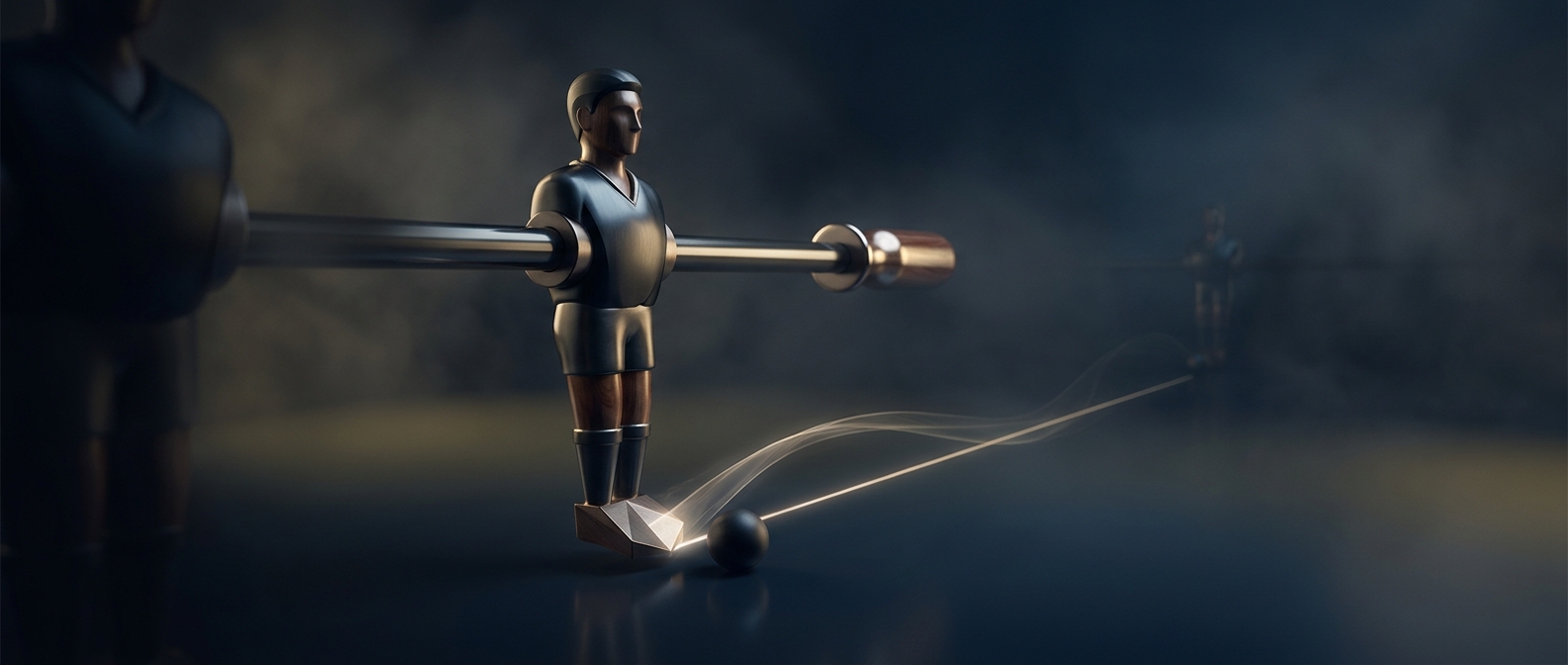
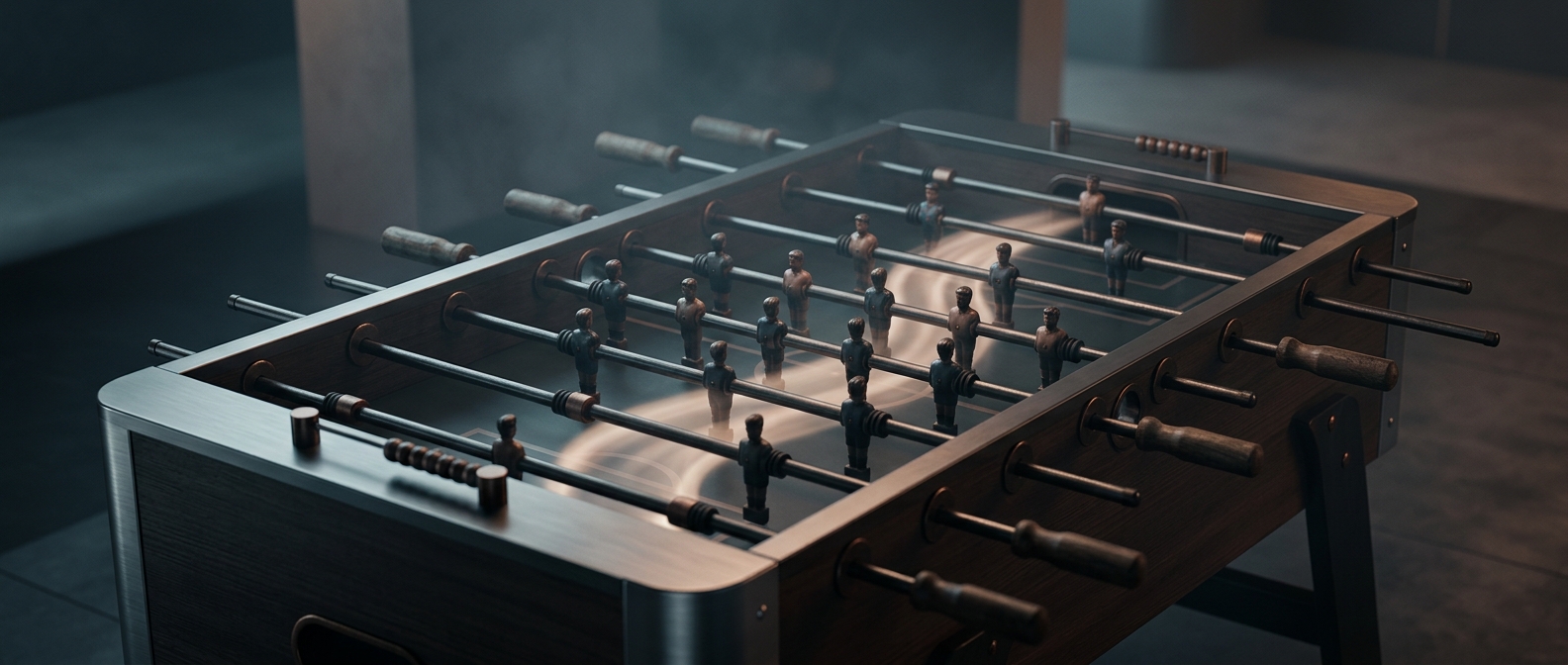
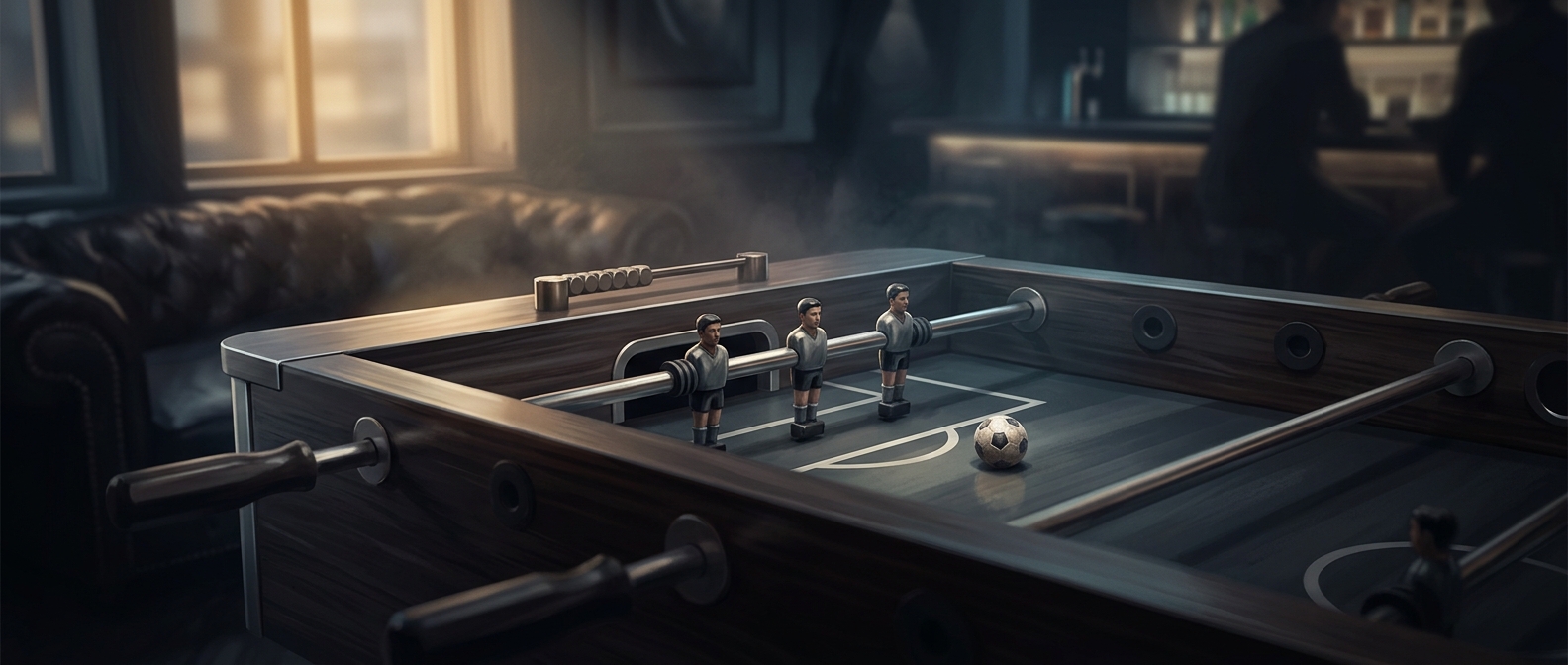
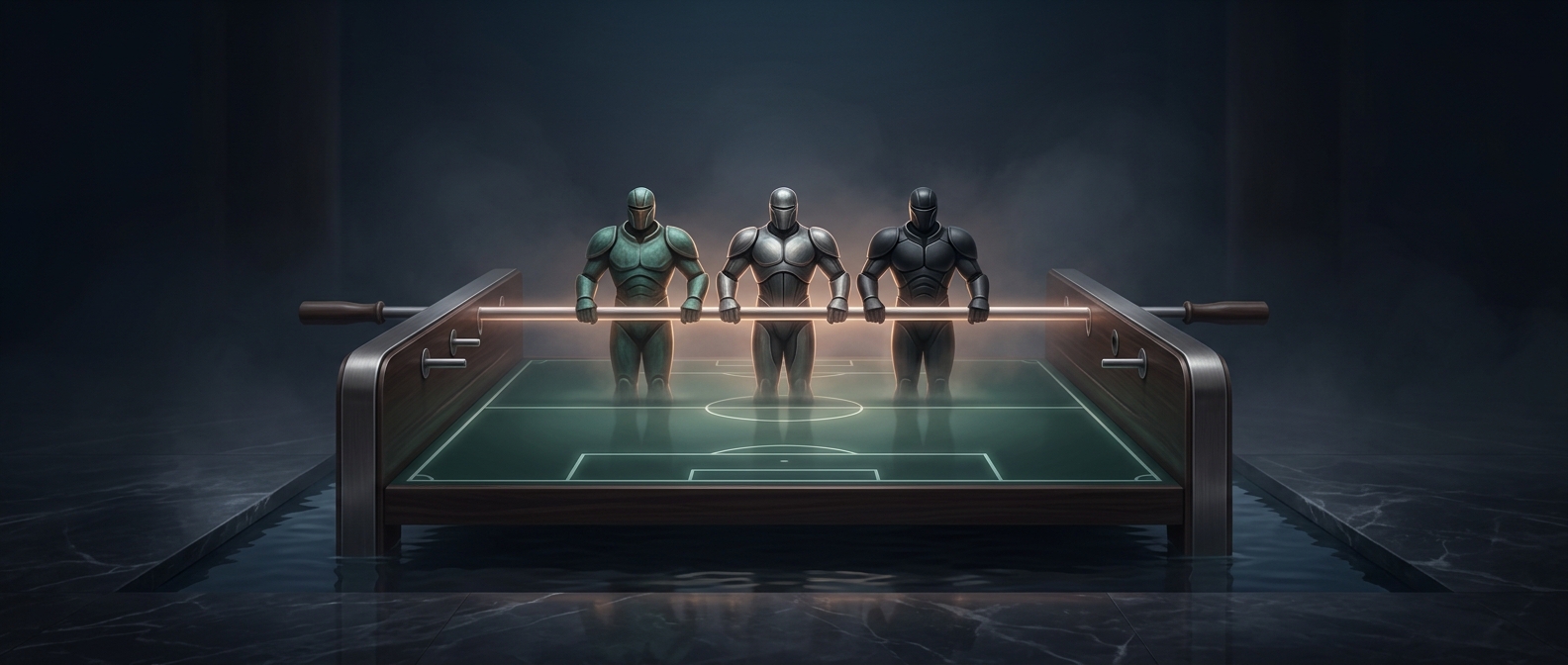
On these tables, the goalkeeper rod carries three figures across the goal mouth rather than one. The figures move together: a player slides the rod side to side to cover different parts of the goal, then turns it to block or strike the ball. That makes the goal a moving wall, not simply a target guarded by a lone goalie.
A Narrower Window for Every Shot
The extra figures reduce the open space a shooter can aim through. A straight shot toward the center is more likely to meet a defender, so players look for gaps between figures, time a shot while the defenders are shifted aside, or move the ball into position for a sharper angle. Defenders, meanwhile, have to track the ball without leaving an easy lane behind them.
The result is a tactical exchange in a very small area. A quick lateral slide can close one opening but expose another; a shot may also glance off a figure and change direction. Adding defenders does not just make the goal harder to reach—it changes how players create and protect a shooting lane.
The Table Shapes the Tactics
Foosball figures are attached to rods, so a player cannot move one defender independently of the others on that rod. The three-goalkeeper setup therefore rewards controlling the whole row: positioning it to cover likely shots while staying ready to move when the ball shifts. Compared with a single-goalie arrangement, the denser barrier puts more emphasis on finding a precise opening rather than simply beating one figure.
A shot that looks clear from across the table can disappear when the three defenders slide into line—which is why, in this version of the game, a fraction of space can decide whether the ball reaches the goal.