The Tableau Is a Puzzle of Uneven Information
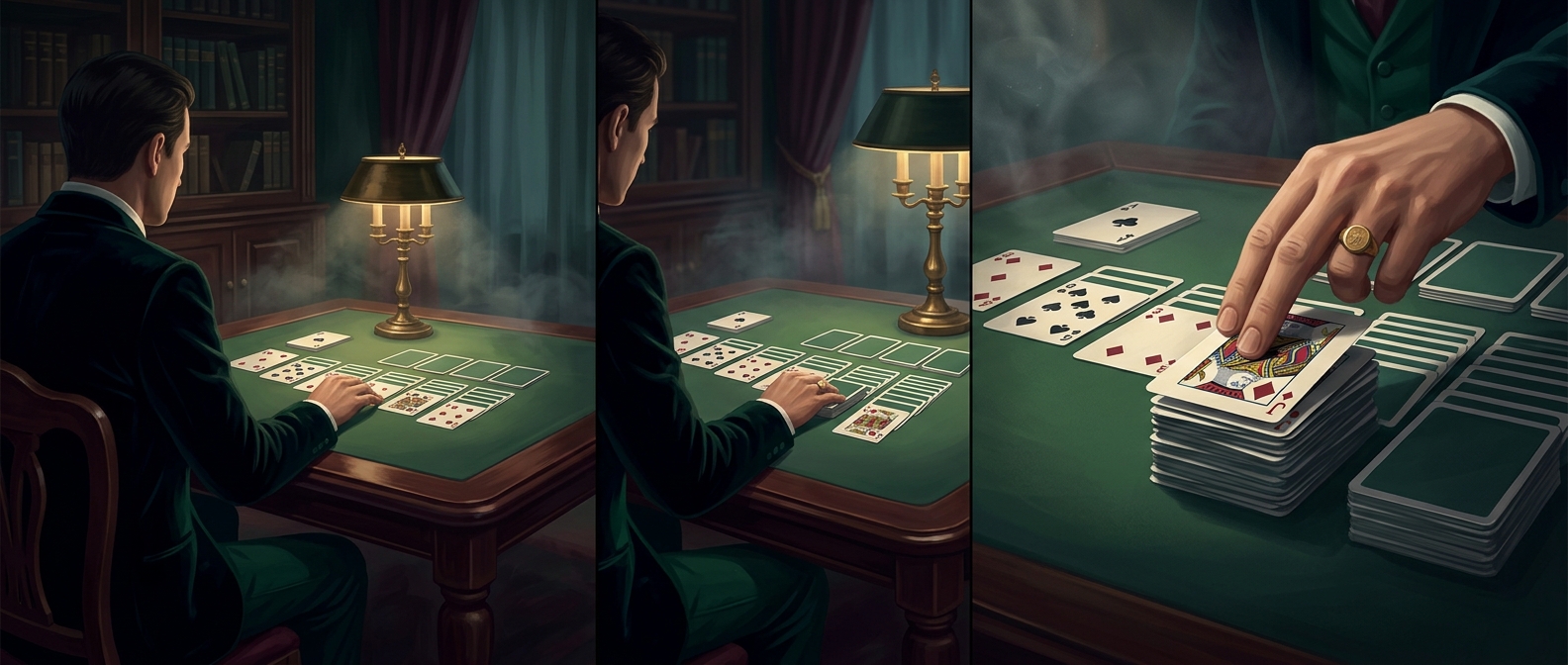
Klondike’s seven-column tableau is built as a staircase: the first column has one card, the next has two, and so on up to seven. That makes 28 cards in all. In each column, the bottom cards are covered, while its top card can be played. The arrangement is more than a tidy way to spread out the deck: it gives players a small set of clues and a much larger set of unknowns.
Why Revealing Cards Matters
When you move a column’s top card, you may uncover the card beneath it. That newly exposed card can change what moves are possible, so a move’s value is not just the card you place—it is also the information and access it creates. Emptying a column can be especially useful because a king can be moved into the space, opening another place to build a descending sequence in alternating colors.
This creates a recurring choice: make a move that works now, or favor a move that exposes a covered card and may unlock more options. A card buried deep in a column cannot help until the cards above it are cleared, so the tableau’s shape affects how quickly useful cards become available.
The Deal Sets the Challenge
The remaining 24 cards form the stock, which supplies additional cards as play unfolds. The goal is to build four suit-specific foundations from ace through king, but progress depends on coordinating those cards with the tableau. The staircase therefore serves as both workspace and obstacle: every revealed card can expand the player’s choices, while every covered card marks a problem still waiting to be opened.