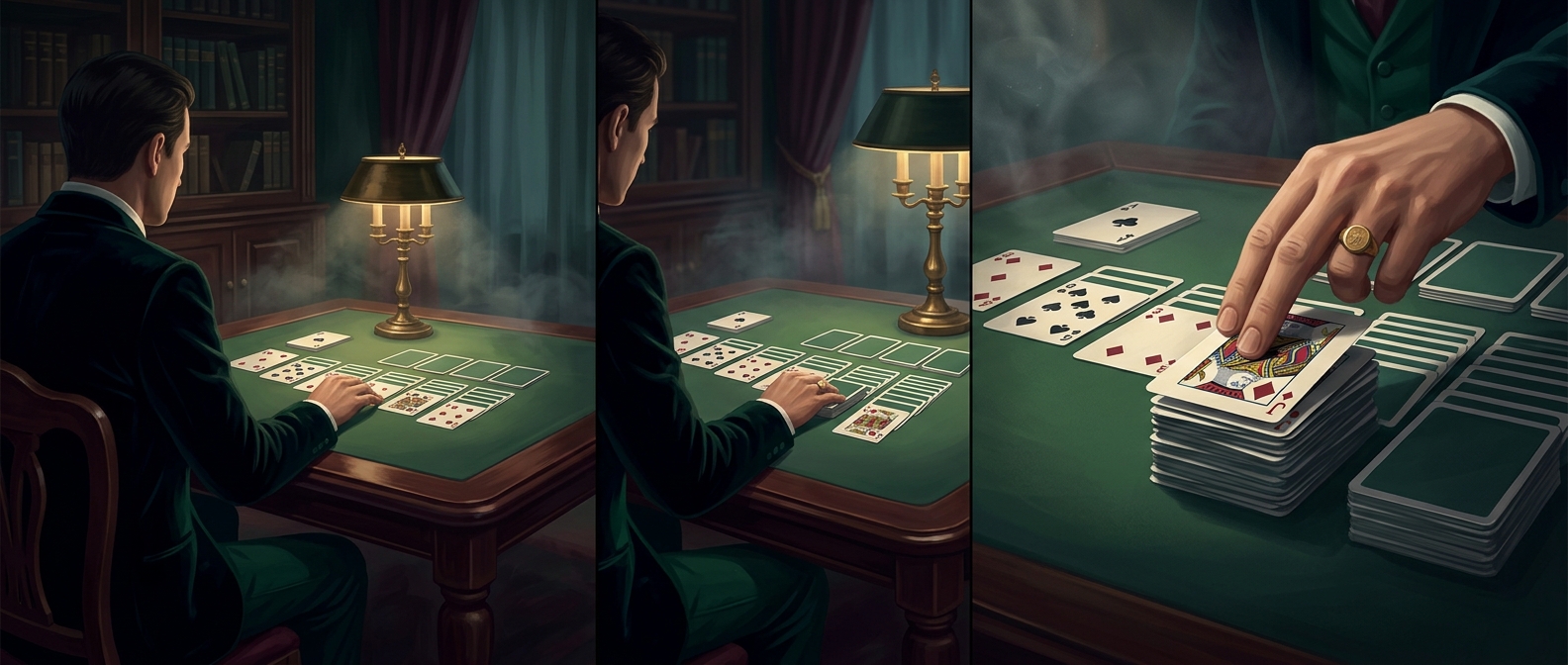
An open deal turns the game into a planning puzzle
In FreeCell, seeing every card does not mean you can move any card whenever you like. The tableau is built downward in alternating colors, so a red card can go on a black card one rank higher, but not on another red card. A card buried beneath that sequence may be visible yet still inaccessible until the cards above it are moved.
That distinction shifts the challenge from guessing what lies underneath to managing access. Players can inspect the whole layout and spot a route toward the aces, but each move changes which cards are available and what space remains for rearranging them.
Space is the scarce resource
The four free cells are temporary parking spots, each able to hold one card. They can unblock a useful card, but filling them all leaves little room to maneuver. Empty tableau columns are even more flexible: they can hold a whole descending sequence, making it possible to reorganize a crowded column.
So a long sequence that looks like one move may depend on several smaller moves, using free cells and open columns as staging space. The more of those spaces are occupied, the fewer cards can be shifted safely.
Visibility makes consequences easier to judge
Because the cards are known, players can trace the likely cost of a move before committing: which card will it uncover, where can that card go, and will the temporary space be needed later? The puzzle is not finding a hidden card; it is keeping enough room to reach the cards you already know you need.